
Main Courses
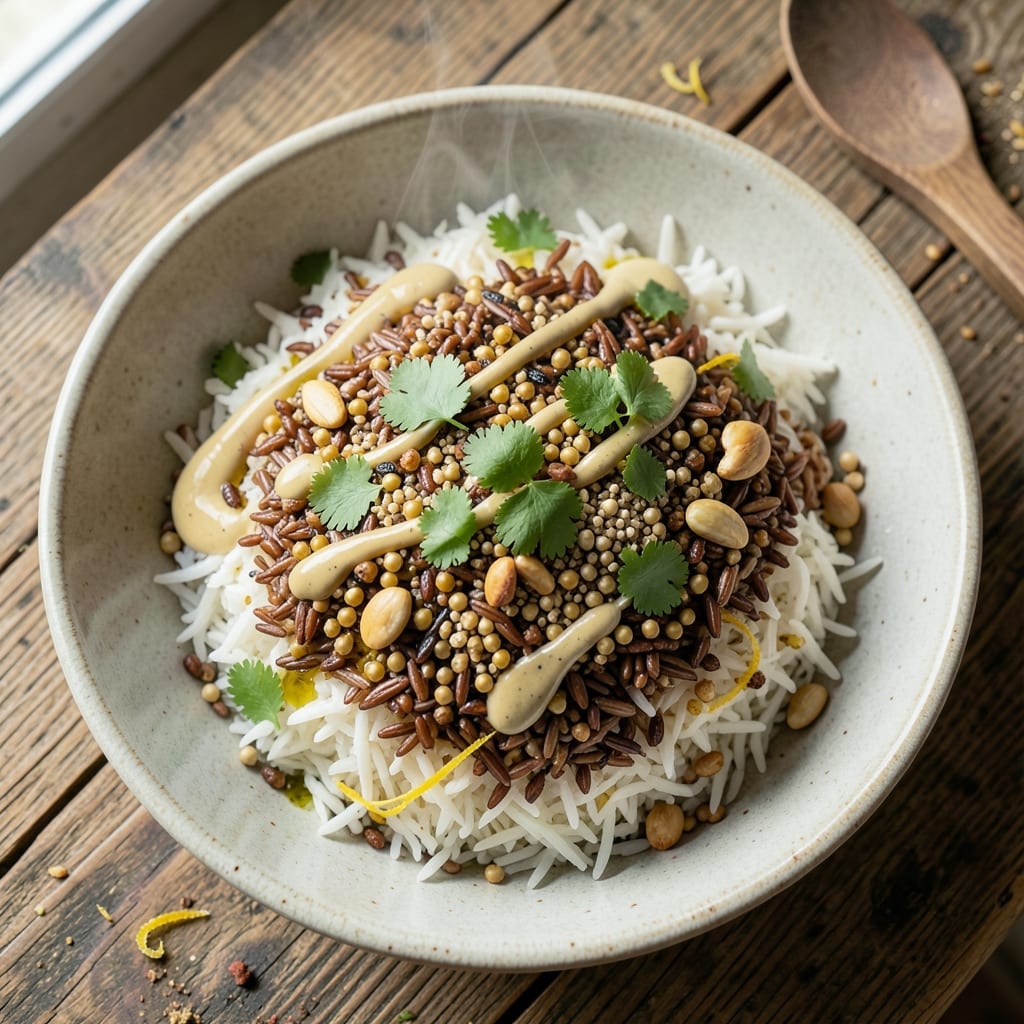
This 7-grain rice recipe transforms simple grains into a symphony of textures and flavors—where nutty wild rice meets fluffy basmati, barley adds heartiness, and quinoa brings protein-packed balance. The key lies in toasting each grain individually before simmering them together, unlocking their distinct aromas while ensuring even cooking. Unlike pre-mixed blends, this method lets you control ratios for a dish that’s as satisfying as it is nutritious.
What sets this apart is the harmony of textures: crisp edges on toasted grains contrast with tender, fluffy centers, while the nutty undertones from wild rice and barley create depth that store-bought blends can’t match. The recipe uses equal parts basmati, wild rice, quinoa, barley, brown rice, millet, and amaranth, simmered in broth for a rich, cohesive flavor. It’s perfect for weeknight dinners or elegant gatherings—just adjust the seasoning to complement your main.
The process is straightforward but precise: toast each grain separately to enhance their natural nuttiness, then combine with broth and simmer until perfectly tender. The result is a versatile side dish that pairs equally well with roasted meats, grilled vegetables, or as a standalone bowl with herbs and toasted nuts. Every bite delivers a balance of crunch and softness, making it a standout centerpiece.
For extra flair, finish with a drizzle of olive oil, fresh herbs, and a sprinkle of toasted sesame seeds. This method ensures no grain goes undercooked or mushy, and the flavors develop as they simmer—transforming basic pantry staples into a restaurant-worthy dish. Ready in about 45 minutes, it’s a game-changer for home cooks who crave complexity without fuss.
Ingredients for 7 grain rice
Seven distinct grains, one balanced symphony of textures and flavors—where precise toasting unlocks their full potential.
| Ingredient | Amount | Notes |
|---|---|---|
| Long-Grain Basmati Rice 🌾 | 1 cup | Uncooked, rinsed thoroughly |
| Wild Rice Blend 🌾 | 1 cup | Uncooked, natural or brown |
| Quinoa 🌾 | 1 cup | Uncooked, rinsed well |
| Pearled Barley 🌾 | 1 cup | Uncooked, rinsed thoroughly |
| Long-Grain Brown Rice 🌾 | 1 cup | Uncooked, rinsed thoroughly |
| Millet 🌾 | 1 cup | Uncooked, rinsed thoroughly |
| Amaranth Grains 🌾 | 1 cup | Uncooked, rinsed thoroughly |
| Low-Sodium Vegetable Broth 🍲 | 6 cups | Homemade or high-quality store-bought |
| Extra-Virgin Olive Oil 🫒 | 2 tbsp | For toasting grains |
| Salt 🧂 | 1 ½ tsp | Diamond Crystal preferred |
| Fresh Thyme Leaves 🌿 | ¼ cup | Chopped, for finishing |
| Toasted Sesame Seeds 🌰 | 2 tbsp | For garnish |
| Garlic Cloves 🧄 | 2 cloves | Minced, optional for extra flavor |
The quality of your grains makes all the difference here. Bulk bins at Whole Foods or Trader Joe's offer the freshest options, but any reputable grocery store carries these staples. Look for grains labeled 'natural' or 'organic'—they maintain their nutty flavors better during toasting. Wild rice should be plump and unbroken, while quinoa and amaranth should be uniformly sized. The barley and millet can be pearled or steel-cut; pearled cooks faster but retains slightly less texture. Store grains in airtight containers away from light—they'll stay fresh for up to 12 months.
No wild rice? Substitute with black rice or sorghum for similar earthy notes. Running short on quinoa? Buckwheat groats add a similar chewy texture. The broth is non-negotiable for depth—homemade vegetable broth elevates the dish, but low-sodium store-bought works in a pinch. For extra richness, infuse the broth with a bay leaf or sprig of rosemary while heating. The garlic is optional but recommended—it harmonizes beautifully with the nutty grains. If you prefer a milder flavor, reduce to 1 clove or omit entirely.
Toast each grain separately over medium heat in batches—this enhances their natural aromas and prevents uneven cooking. The olive oil is essential for even toasting; don't skip it. Once combined with broth, simmer uncovered for 35-40 minutes until all grains are tender but still retain a slight bite. Leftovers keep for 5 days in the fridge, though the texture softens slightly. For best results, reheat with a splash of water or broth. This dish reheats beautifully—ideal for meal prep. Store in airtight containers with a layer of parchment paper between grains to maintain crispness.
Why You'll Love This Recipe
- One-Pot Magic: I swear by this—just toss all seven grains (basmati, wild rice, quinoa, barley, brown rice) into one pot with broth, stir, and walk away. No measuring cups for each grain, no separate timers. The basmati stays fluffy while the barley softens—it’s the kind of dish that lets you not stress.
- Nutty, Toasty Depth: That wild rice blend adds a smoky richness, while the quinoa brings a pop of chew. Honestly, the pearled barley makes it taste like a fancy pilaf, even when I’m too tired to do anything fancy. Toast it lightly in the pot first, and you’ll get this incredible nutty aroma that smells like a hug.
- Meal Prep MVP: I make a big batch on Sundays and it lasts me all week—breakfast bowls, lunch leftovers, even stuffed into veggie wraps. The basmati holds up better than plain rice, and the barley adds heartiness that keeps everyone full. (Yes, even my picky teenager asks for seconds.)
- Budget Stretch: Between us, this is my secret for stretching a dollar. Brown rice and barley are cheap, but together with the wild rice and quinoa, they feel like a splurge—without the splurge price. Plus, the grains cook at different rates, so you’re not wasting anything. Leftovers? They’re even better the next day.
Step-by-step instructions for 7 grain rice with perfect texture balance
This method ensures each grain achieves its ideal texture while harmonizing flavors into one cohesive dish.
Toast the Grains Individually for Enhanced Flavor
Heat a large skillet over medium heat and add 1 tablespoon of the extra-virgin olive oil. Add the 1 cup quinoa and toast for 2-3 minutes, stirring constantly until you notice a nutty aroma. Remove and set aside in a bowl.
Repeat with the remaining grains in batches: 1 cup pearled barley, 1 cup millet, and 1 cup amaranth grains, each toasted for 2-3 minutes until fragrant. The 1 cup wild rice blend and 1 cup long-grain brown rice don't need toasting—they'll develop flavor during cooking. Save the remaining 1 tablespoon olive oil for later.
Combine Grains and Cook with Broth
In a large pot with a tight-fitting lid, combine all toasted and untoasted grains with the 6 cups low-sodium vegetable broth. Bring to a boil over high heat, then immediately reduce to a simmer. Add the 1.5 teaspoons salt and the 2 minced garlic cloves (if using).
Cover and cook for 15 minutes on medium-low heat. Stir once halfway through to prevent sticking. The grains will absorb liquid differently—this initial simmer ensures even hydration before the final resting phase. The amaranth and quinoa will cook faster than the brown rice and barley, so timing is key.
Rest and Fluff for Optimal Texture
Remove from heat and let the grains rest covered for 10 minutes. This crucial step allows residual heat to finish cooking the grains evenly. After resting, fluff the grains gently with a fork to separate them. The 1 cup long-grain basmati rice should be tender but still slightly firm, while the wild rice blend and barley will be creamy.
If the mixture appears dry, add 2-3 tablespoons of hot broth to loosen. The texture should be moist but not saucy—each grain should maintain its distinct character while contributing to the overall harmony. This is where the nutty crunch of the toasted grains meets the fluffy body of the longer-cooking varieties.
Finish with Aromatics and Garnish
Return the pot to low heat and stir in the 0.25 cup chopped fresh thyme leaves. Cook for 1-2 minutes just to infuse the aroma—don't let the thyme turn bitter. Remove from heat and transfer to a serving dish. The thyme should brighten the earthy flavors of the grains without overpowering them.
Garnish generously with the 2 tablespoons toasted sesame seeds just before serving. The sesame seeds add a delicate crunch that contrasts beautifully with the tender grains. Serve immediately while still warm, as the textures and flavors are at their peak. This dish delivers both visual appeal and a satisfying mouthfeel with each bite.
Pro Tips For Making 7 Grain Rice
- TOAST THE GRAINS FIRST: I learned this the hard way—skipping toasting means your barley and brown rice will taste raw no matter how long you simmer. Dry-toast the pearled barley and brown rice in a skillet for 3-4 minutes until fragrant and just starting to color. The quinoa and wild rice don’t need this, but the basmati will thank you too if you give it a quick 30-second pre-toast.
- RINSE THE BASMATI TWICE: That first rinse removes the surface starch, but I’ve ruined perfectly good basmati by stopping there. Swirl it around in cold water, drain, then repeat—this time swish it vigorously to break up any lingering starch clumps. Trust me, the grains will stay separate and fluffy instead of turning into a gluey mess.
- USE TWO POTS: I used to cram everything into one pot and pray, but this recipe deserves better. Cook the basmati, quinoa, and wild rice together in one pot (they all finish around 15-18 minutes), then transfer the barley and brown rice to a second pot. Their longer cook times (45-60 minutes) will turn to mush if they sit in the hot liquid too long.
- SALT THE WATER LATE: Adding salt early makes the barley and brown rice absorb water too fast, leaving them undercooked. Wait until the water’s boiling before tossing in the salt—then let everything simmer uncovered for the first 10 minutes to evaporate excess moisture. This guarantees even cooking and prevents a soggy final texture.
Pro cooking tips for this recipe
Toast Grains Properly
Toast each grain separately in batches over medium heat with 1 tablespoon olive oil for 2-3 minutes until fragrant. This step unlocks their nutty flavors—skip it, and your dish will taste flat. I use a 10-inch cast-iron skillet for even heat distribution. Stir constantly to prevent burning, especially with quinoa and amaranth, which cook faster than others. 🔥
Batch Cooking Matters
Cook grains in stages if your pot is small—wild rice and barley need longer simmering than quinoa or millet. Start with the longest-cooking grains first, then add the rest after 10 minutes. This prevents some grains from becoming mushy while others stay undercooked. A large Dutch oven (like Le Creuset) handles this best.
Broth Quality Elevates
Use homemade vegetable broth for depth, but low-sodium store-bought works in a pinch. Infuse it with 1 bay leaf while heating to add herbal notes. Avoid tap water—it lacks the mineral content that helps grains cook evenly. I simmer broth for 20 minutes before using to concentrate flavors.
Resting Prevents Mush
Let the grains rest covered for 10 minutes after cooking. This redistributes moisture and develops texture—skipping it leads to a gummy mess. Fluff gently with a fork to separate grains. If dry, add 2 tbsp hot broth to restore moisture without over-saucing.
Garnish at the Last Minute
Add toasted sesame seeds and fresh thyme right before serving. The sesame seeds provide crunch, while thyme brightens the earthy flavors. For extra aroma, lightly toast 1 tsp sesame seeds in the same skillet used for toasting grains—double duty!
Repurpose Leftovers
Store grains in an airtight container for up to 5 days. Reheat with 1 tbsp broth per cup to restore texture. Or use cold grains as a base for grain bowls with roasted veggies and tahini dressing. They also make great stuffing for baked fish or chicken.
Nutrition facts
Frequently asked questions
Can I use a rice cooker for this 7-grain blend?
Yes, but with adjustments! Most rice cookers can handle this, but the longer-cooking grains like barley and wild rice may need extra time. Start with 1 cup broth per 1 cup grain mix (instead of 6 cups total) and cook on the "white rice" setting. Check at 25 minutes—if grains aren't tender, add 2 tbsp more broth and cook another 10 minutes. The key is stirring halfway to prevent sticking.
What if I don't have all 7 grains? Can I substitute?
The recipe is flexible. Replace missing grains with equal parts:
- Black rice for wild rice (earthy flavor)
- Buckwheat groats for quinoa (chewy texture)
- Farro for barley (nutty depth)
- Couscous for millet (faster cooking) Just adjust total broth to 1:2 grain-to-liquid ratio if substituting faster-cooking grains.
Why does my 7-grain mix turn mushy?
Overcooking or insufficient resting time causes mushiness. To fix:
- Toast grains properly first (this prevents gumminess)
- Simmer uncovered for even evaporation
- Rest covered for 10 minutes after cooking If already mushy, stir in 1 tbsp toasted nuts (like almonds) to add texture. For next time, reduce broth by ½ cup.
How do I make this gluten-free?
Skip the barley and pearl millet (check labels—some are gluten-free), then use:
- Quinoa (naturally GF)
- Amaranth (GF)
- Brown rice (GF)
- Wild rice blend (GF) Verify all grains are certified gluten-free. Use tamari instead of soy sauce if garnishing with Asian-inspired toppings.
Can I prep this ahead for meal prep?
Yes! Cook the grains up to 2 days ahead and store in an airtight container. Reheat with 1 tbsp broth per cup of grains over low heat, stirring occasionally. For best texture, add fresh thyme and sesame seeds just before serving. This works great for lunches—pair with roasted veggies or grilled protein.