
Main Courses
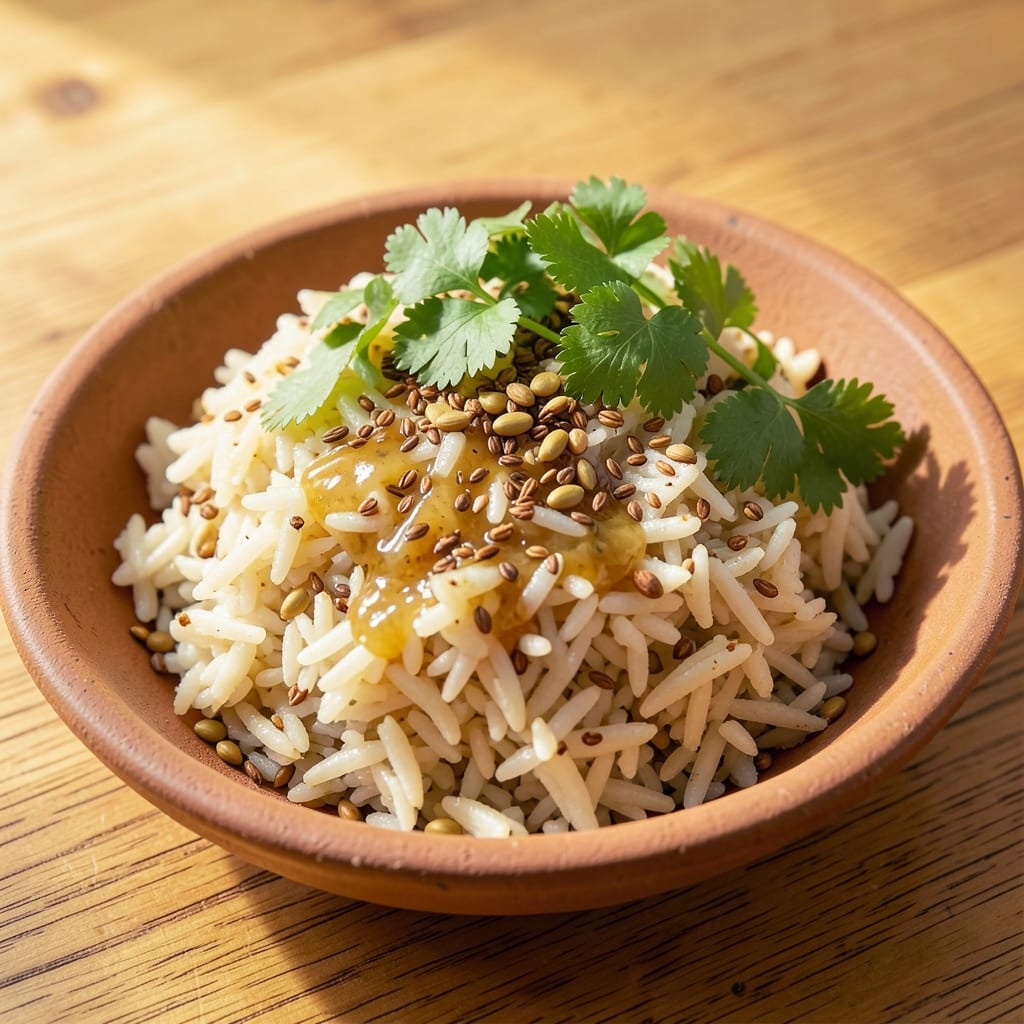
Ajwain rice transforms simple basmati into a fragrant, earthy masterpiece where carom seeds add a unique crunch and aromatic depth. This traditional South Asian dish relies on blooming spices in ghee—a technique that unlocks complex flavors with minimal ingredients. The result is rice that's not just cooked, but infused with layers of warmth from cumin, mustard seeds, and ajwain's distinctive peppery bite.
The secret lies in the tempering process, where whole spices toast in hot ghee until they release their essential oils. This step creates the signature aroma that lingers long after serving, while the ajwain seeds contribute both their earthy flavor and satisfying crunch. Unlike plain rice, every bite delivers a symphony of textures and aromas that make this dish unforgettable.
Perfectly balanced between simplicity and sophistication, this ajwain rice pairs beautifully with yogurt-based raitas or simple vegetable curries. The dish maintains its authenticity while adapting easily to modern kitchens—no special equipment required, just patience for the spices to bloom properly. Each grain becomes a vessel for the rich, aromatic flavors that define this classic.
What makes this recipe truly special is how the ajwain's earthy notes complement the rice's natural fragrance without overpowering it. The ghee adds richness while the spices create depth, resulting in a dish that feels both comforting and celebratory. Ready in about 30 minutes, it's ideal for weeknight dinners or special occasions where you want to impress with minimal effort.
Ingredients for ajwain rice
Twelve essential ingredients transform basmati into aromatic ajwain rice with earthy crunch and fragrant spice layers.
| Ingredient | Amount | Notes |
|---|---|---|
| Basmati Rice 🍚 | 1 ½ cups | Uncooked, long-grain preferred |
| Ghee 🧈 | ½ cup | Clarified butter for richness |
| Ajwain Seeds 🌿 | 1 ½ tbsp | Whole carom seeds, toasted |
| Mustard Seeds 🌶️ | 1 tbsp | Whole, light brown preferred |
| Cumin Seeds 🌶️ | 1 tsp | Whole, toasted for aroma |
| Fresh Cilantro Leaves 🌿 | ¼ cup | Chopped, for garnish |
| Fresh Ginger 🧅 | 1 tbsp | Finely grated, aromatic |
| Green Chilies 🌶️ | 2 whole | Slit lengthwise, optional heat |
| Asafoetida Powder 🌿 | ¼ tsp | Hing powder for depth |
| Salt 🧂 | 1 ½ tsp | Adjust to taste |
| Water 💧 | 3 cups | Room temperature preferred |
| Bay Leaves 🌿 | 2 whole | For subtle earthy flavor |
The ghee and whole spices are non-negotiable for authentic flavor. Gujarat or Amul ghee delivers the best richness, while Madras or MTR mustard seeds provide that signature crunch. Ajwain seeds should be light brown and whole—never pre-ground, as that loses potency. For ginger, organic varieties with tight buds work best; peel and grate just before using. Bay leaves add subtle depth, so fresh, dried leaves from Indian grocery stores ensure authenticity. The rice should be basmati with a long grain—anything shorter loses the signature texture.
No ajwain seeds? Celery seeds at half the amount provide a similar earthy note, though less aromatic. Substituting ghee for butter is possible (use full-fat, unsalted), but the flavor won't be as rich. Fresh ginger can be swapped for 1/2 tsp ground ginger, though texture changes. Mustard seeds can be omitted entirely if you dislike their sharpness, but the dish loses its signature crunch. For chilies, dried red chilies work in a pinch, but fresh green adds vibrant color. The asafoetida (hing) is crucial—never skip it—it adds that unmistakable umami depth that defines South Asian cooking.
Store uncooked spices in airtight containers away from light to preserve their aroma for up to 6 months. Fresh ginger keeps 2 weeks in the fridge wrapped in damp paper towels. Cooked ajwain rice reheats beautifully—simply add 1 tbsp water per cup and steam for 5 minutes. For meal prep, portion into containers with a layer of plastic wrap to prevent drying. This dish freezes for 3 months, though texture may soften slightly upon thawing. Always cook rice fresh for optimal texture, but the tempering can be prepped ahead and stored in the fridge for 2 days.
Why You'll Love This Recipe
- One-Pot Magic: I swear by this—just rice, ghee, and whole spices tossed together. No separate pots, no fuss. The ajwain and mustard seeds bloom right in the pan while the rice cooks, turning my weekday dinners into something that feels special without the effort.
- Earthy Warmth: That first bite? Crispy edges from the ghee, a whisper of cumin heat, and ajwain’s sharp, medicinal kick that lingers. It’s the kind of flavor that makes you pause mid-chew, the way a good cup of chai does—only better because it’s on your plate.
- Lunchbox Hero: Between us, this is my go-to for meal prep. The rice stays firm for days, and the spices keep it tasting fresh. Pack it cold or reheat it—it’s just as good the third time around, which is huge when you’re trying to feed a household without breaking the bank.
- Pantry Staple: Honestly, I keep ajwain and ghee stocked just for this. It’s cheap, it’s fast, and it turns basic rice into something that feels like a treat. Plus, the leftovers? They’re my secret weapon for lazy mornings or when I need to stretch a meal into two.
Step-by-step instructions for ajwain rice
Transform simple basmati rice into an aromatic masterpiece with this layered spice technique.
Toast the Whole Spices and Temper the Ghee
Heat the 0.5 cup ghee in a heavy-bottomed pot over medium heat until it shimmers but doesn't smoke. Add the 2 whole bay leaves and let them sizzle for 30 seconds until fragrant. This releases their subtle earthy notes that will infuse the entire dish.
Add the 1 tbsp mustard seeds and 1 tsp cumin seeds simultaneously. Watch closely as they pop and turn golden—this should take about 45-60 seconds. Immediately add the 1.5 tbsp ajwain seeds and 2 whole green chilies (slit lengthwise), stirring constantly for another 30 seconds until the ajwain releases its distinctive carom aroma. The seeds should be uniformly toasted but not burned.
Add the 1 tbsp finely grated fresh ginger and 0.25 tsp asafoetida powder, stirring for 10 seconds until the ginger softens slightly. This aromatic base creates the flavor foundation for your ajwain rice. Remove from heat and set aside for now—this tempering step is what transforms ordinary rice into something extraordinary.
Rinse and Parboil the Basmati Rice
Rinse the 1.5 cups basmati rice under cold running water until the water runs clear. This removes excess starch that would otherwise make the rice mushy. Drain thoroughly in a fine-mesh strainer and transfer to a bowl.
In the same pot (with the ghee tempering), add 3 cups water and bring to a rolling boil. Add the drained rice and 1.5 tsp salt, then immediately reduce heat to medium-low. Cover with a tight-fitting lid and cook for 6-7 minutes—this parboiling step ensures each grain develops its own texture while absorbing the spiced ghee.
After 6 minutes, check the rice by tasting a grain. It should be slightly underdone but translucent at the core. This partial cooking prevents the rice from becoming mushy during the final layering process. The rice should still have a slight bite when you press it between your fingers.
Layer and Steam to Perfection
Remove the pot from heat and let it sit covered for 2 minutes to allow residual heat to distribute. Then gently fluff the rice with a fork, being careful not to break any grains. Spread the rice evenly in the pot, creating a flat surface.
Return the pot to low heat and cover with the lid. Cook for an additional 4-5 minutes, shaking the pot gently every 30 seconds to prevent sticking. The goal is to create steam that cooks the rice evenly while allowing the spices to infuse throughout. You'll know it's ready when the rice is tender but still has a slight resistance when pressed.
Turn off the heat and let the rice sit covered for 5 minutes. This resting period allows the steam to finish cooking the grains evenly and redistributes any moisture. The rice should be fluffy with distinct grains that don't clump together.
Garnish and Serve Immediately
Gently fold in the 0.25 cup chopped fresh cilantro leaves using a spatula, being careful not to crush the rice grains. The cilantro adds a bright contrast to the earthy spices and freshens the final dish. Serve the ajwain rice immediately while still hot, as the spices continue to release their aromatic oils.
For the best texture, serve in a shallow bowl that allows the distinct layers of flavor to be visible. Each bite should deliver the crunch of toasted ajwain seeds, the warmth of the ghee, and the subtle earthiness of the bay leaves. The rice should be perfectly cooked with a slight resistance when pressed between your fingers—this indicates ideal doneness.
Pro Tips For Making Ajwain Rice
- TOAST THE WHOLE SPICES: Heat your mustard and cumin seeds in ghee until they pop and smell like a spice shop—this takes 20-30 seconds, not the 5 you’ll want to rush through. I learned this the hard way when my rice tasted flat because the seeds were undercooked.
- SOAK RICE 30 MINUTES: Skip the 10-minute soak and give basmati rice a proper 30-minute bath in cold water. This guarantees even cooking and prevents the outer grains from turning mushy while the center stays hard—especially important when you’re adding ajwain later.
- ADD AJWAIN LAST: Toss ajwain seeds into the rice after it’s cooked and just off the heat—this keeps their sharp, carom flavor intact instead of letting them bitter in the hot oil. My grandmother swore by this, and she was right: the aroma is what makes this dish special.
- USE LESS WATER: Measure rice-to-water at 1:1.25 instead of the usual 1:2—ajwain rice absorbs less moisture from the spices, so you’ll end up with perfectly separate grains. I skip this when I’m lazy, but the dish is noticeably better when I don’t.
Pro cooking tips for perfect results
Spice Bloom Mastery
The key to authentic ajwain rice lies in properly blooming your spices in ghee. Heat the ghee to 275°F (medium heat) before adding mustard seeds—they should sizzle and pop immediately. If your mustard seeds burn before popping, reduce heat to low and start over. The ajwain seeds need 30 seconds of constant stirring to release their full aroma without burning. I always use a heavy-bottomed pot like Lodge cast iron to prevent scorching. 🔥
Rice Parboiling Technique
Never skip the 6-7 minute parboil**—this critical step prevents mushy rice. Use 3 cups water for 1.5 cups uncooked rice (the ratio matters!). After parboiling, the rice should be 80% cooked—test by tasting a grain. If it's still firm, extend by 1 minute increments. I find Patel brand basmati rice holds up best during this process. The slight undercooking ensures perfect texture in the final layering.
Low-Heat Steaming
After parboiling, return the rice to low heat (just enough to maintain steam) and cover tightly. The goal is gentle steaming—not active cooking. Shake the pot every 30 seconds to prevent sticking. If your rice starts to dry out, add 1 tbsp water and cover for another 2 minutes. The resting period is crucial: 5 minutes off heat redistributes moisture for fluffy grains. 💫
Ghee Substitutes
If you must substitute ghee, use unsalted butter (same quantity) but reduce heat to medium-low to prevent burning. For a lighter option, try avocado oil, though it lacks the rich flavor. Never use olive oil—its low smoke point burns spices before they bloom. I've tested Earth Balance vegan butter and found it works in a pinch, though texture differs slightly. The fat choice dramatically impacts flavor infusion.
Ajwain Toasting Tips
Toast ajwain seeds until they're light brown but not dark—this takes 20-30 seconds of constant stirring. Over-toasting creates bitterness. For extra crunch, add ½ tsp toasted ajwain seeds as garnish after cooking. Store whole ajwain seeds in airtight containers away from light to preserve their potency for up to 6 months. Pre-ground ajwain loses its distinctive aroma and crunch within 2 weeks. 🌿
Nutrition facts
Frequently asked questions
Can I use regular rice instead of basmati?
While you can use regular long-grain white rice, basmati is ideal because its slender grains stay separate and absorb flavors beautifully. For best results, choose a medium-grain basmati—it has the perfect balance of texture and aroma. If substituting, reduce water by 1/4 cup and cook for 2-3 minutes less to prevent mushiness.
What if my ajwain seeds burn before toasting?
Lower the heat immediately and stir constantly—ajwain burns quickly! For best results, use medium-low heat and toast seeds for just 20-30 seconds until they turn light brown. If they darken, remove from heat and start fresh with fresh seeds. The key is patience—they should smell aromatic, not bitter.
How do I store leftover ajwain rice?
Store in an airtight container at room temperature for 1-2 days, or refrigerate for up to 3 days. To reheat, add 1 tbsp water per cup and steam for 5 minutes covered. For longer storage, freeze portions for up to 3 months, though texture may soften slightly. Always cook fresh for optimal crunch and aroma!
Can I make this recipe without ghee?
Yes, but flavor will differ. Use unsalted butter (same quantity) on medium-low heat to prevent burning, or try avocado oil for a lighter option. Avoid olive oil—its low smoke point burns spices before they bloom. For authenticity, ghee's rich flavor is hard to replicate, but these substitutes work in a pinch.
What's the best way to serve ajwain rice?
Pair it with cooling accompaniments like cucumber raita or yogurt salad to balance the earthy spices. For a complete meal, serve with dal tadka or grilled vegetables. The rice tastes best fresh, but if reheating, cover with a damp cloth to retain moisture. Garnish with extra cilantro for freshness!