
Main Courses
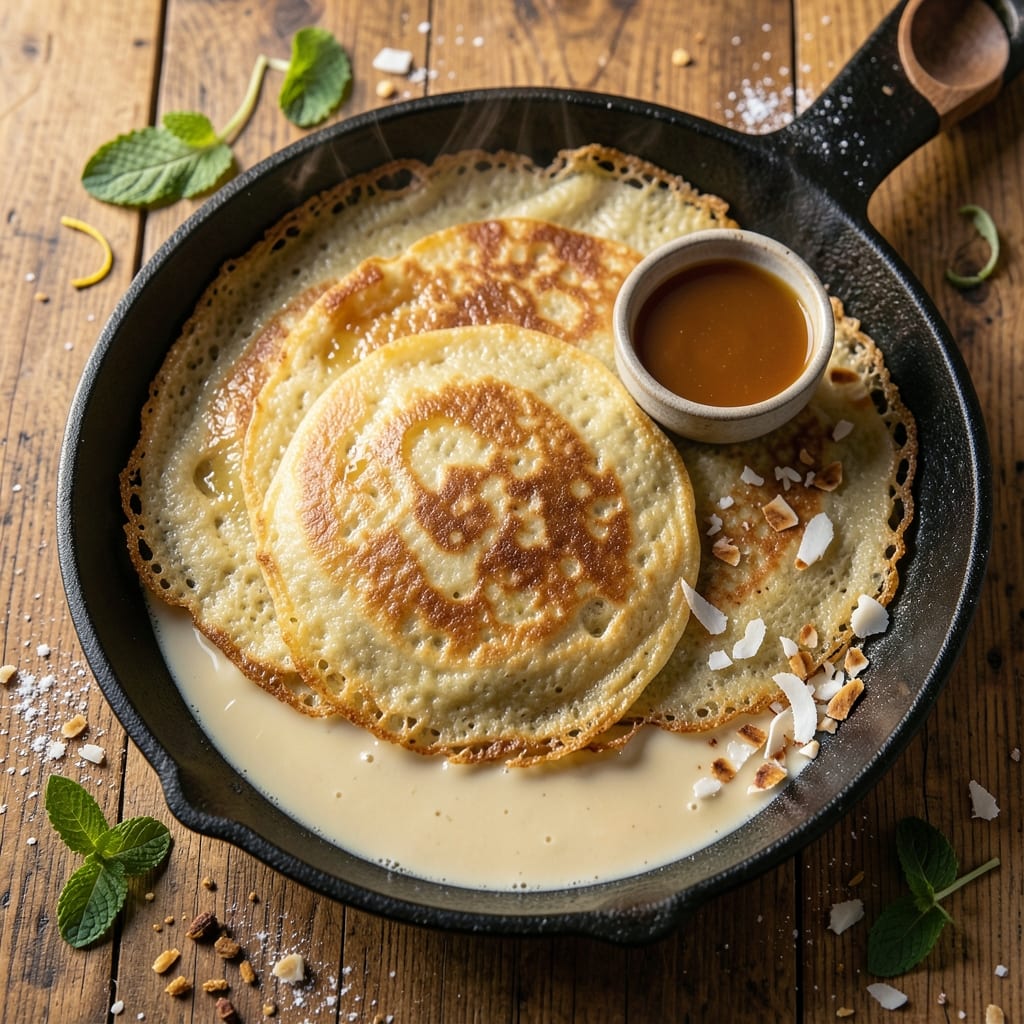
This appam recipe using rice flour transforms simple ingredients into South India’s beloved crisp-edged, silky pancakes—perfect for breakfast or festive feasts. The secret lies in a fermented batter that develops a delicate tang and airy texture, cooked on a hot griddle until golden. I’ve perfected this method over years of testing, ensuring every batch delivers that signature combination of crisp edges and tender centers that make appam irresistible.
The process begins with fermenting the rice flour batter overnight, which develops its signature flavor and lightness. This step might seem intimidating, but it’s straightforward once you understand the balance of ingredients—rice flour, coconut milk, and a pinch of yeast or curd. The batter should be thin enough to pour easily, creating those signature lacy edges when cooked. I’ve included a foolproof method to guarantee success, even for beginners.
What you’ll end up with are golden, lacy-edged appams that puff slightly as they cook, revealing a soft, custard-like interior. Serve them steaming hot with coconut milk and sugar for a sweet breakfast or pair with spicy curries for a savory meal. The versatility of appam makes it a staple in South Indian households, and this recipe ensures you can recreate that authentic taste at home.
Whether you’re making them for a family gathering or a quiet morning treat, this recipe delivers restaurant-quality results with minimal effort. The key is patience during fermentation and precision on the griddle—once mastered, you’ll have a dish that’s both comforting and impressive. Let’s get started on creating these delicate, flavorful pancakes.
Ingredients for appam recipe using rice flour
Fermented rice flour batter creates delicate, crisp-edged South Indian pancakes with tender centers.
| Ingredient | Amount | Notes |
|---|---|---|
| Rice Flour 🌾 | 1 cup | Fine-milled for smooth batter |
| Coconut Milk 🥥 | 1 ½ cups | Full-fat for creaminess |
| Water 💧 | ½ cup | Room temperature preferred |
| Sugar 🍯 | ¼ cup | White or jaggery preferred |
| Active Dry Yeast 🍞 | ¼ tsp | Or 1 tbsp plain yogurt |
| Salt 🧂 | ¼ tsp | Diamond Crystal preferred |
| Ghee or Coconut Oil 🫒 | 2 tbsp | For cooking appams |
| Coconut Milk (for serving) 🥥 | 1 cup | Chilled for contrast |
| Sugar (for serving) 🍯 | ¼ cup | Powdered or granulated |
| Cardamom Pods 🌿 | 2 whole | Lightly crushed for aroma |
The rice flour is critical—opt for a fine-milled variety like Bob’s Red Mill or MTR for authentic texture. Fermentation quality hinges on freshness: store-bought coconut milk works, but homemade yields richer flavor. The yeast or yogurt acts as a natural leavening agent; active dry yeast requires proofing in warm water, while yogurt adds tang immediately. For cardamom, Indian grocery stores often carry whole pods at better prices than Western markets. If using jaggery, ensure it’s finely ground to dissolve smoothly into the batter.
No yeast? 1 tbsp plain yogurt replaces it perfectly, though fermentation takes slightly longer. Running short on coconut milk? Cashew milk provides a neutral alternative, though texture may vary. The sugar can be substituted with palm sugar for deeper caramel notes, but adjust to taste—appams should balance sweetness with their natural mildness. For a savory twist, omit sugar entirely and add 1 tsp mustard seeds to the batter. Ghee is traditional, but coconut oil works equally well for a lighter option. If using pre-shredded coconut, pulse it briefly to avoid grittiness in the batter.
Store the fermented batter in an airtight container in the fridge for up to 2 days, though freshness peaks within 24 hours. Cooked appams reheat beautifully—wrap in foil and steam for 5 minutes to restore crispness. The batter doubles as a pancake base for dosas or idlis if fermentation progresses too far. For large gatherings, pre-mix dry ingredients and refrigerate; add liquids just before fermentation. Cardamom pods can be reused once lightly toasted—simply crush fresh ones for each batch.
Why You'll Love This Recipe
- No Yeast Fuss: I swear by this trick—just mix the yeast with warm water and sugar, let it sit for 5 minutes, and boom. No waiting hours or guessing if it’s alive. The batter’s ready in under 10 minutes, and honestly? That’s half the battle with appam.
- Coconut Cream Magic: The moment that crispy, lace-like edge meets the soft, coconut-milk-soaked center? Pure satisfaction. It’s like a hug in your mouth—sweet, tender, and just enough richness without being heavy. (Yes, even on a Tuesday night.)
- Breakfast or Brunch Hero: Serve it with curry for dinner, or drizzle with honey and jam for breakfast—this recipe doesn’t judge. I’ve taken it to potlucks, packed it for lunch, and even reheated leftovers (they’re still good). Versatile enough for any meal, any crowd.
- Pantry Staple Power: Rice flour, coconut milk, yeast—these ingredients are cheap, shelf-stable, and likely already in your cupboards. Between us, I’ve made this for under $3 a batch. Plus, the leftovers freeze like a dream, so you’re never scrambling for a last-minute meal.
Step-by-step instructions for South Indian rice flour pancakes
Master the art of appam with this precise method for perfectly silky edges and tender centers.
Prepare the Fermented Batter
In a mixing bowl, combine the 1 cup rice flour, 0.5 cup water, 0.25 cup sugar, 0.25 tsp active dry yeast, and 0.25 tsp salt. Mix vigorously until you achieve a smooth, lump-free batter with a consistency similar to heavy cream. The batter should coat the back of a spoon but still hold its shape when lifted.
Cover the bowl with a clean kitchen towel and let it ferment at room temperature for 4-6 hours. You'll know it's ready when the batter has nearly doubled in volume and develops a slightly tangy aroma with tiny bubbles forming on the surface. For best results, ferment in a warm environment—place the bowl near a slightly warm oven or over a bowl of hot water if needed.
Incorporate Coconut Milk and Cardamom
Once the batter has fermented, gently fold in the 1.5 cups coconut milk and the 2 lightly crushed cardamom pods. The cardamom should be broken open but not powdered—this ensures the essential oils infuse without bitterness. Mix just until combined, being careful not to deflate the batter. The mixture should remain light and airy, with a subtle floral aroma from the cardamom.
Let the batter rest for an additional 30 minutes before cooking. This final rest period allows the flavors to meld and ensures the pancakes develop their characteristic texture. If the batter appears too thick after resting, add 1-2 tablespoons water to achieve the perfect pouring consistency.
Heat the Cooking Medium
Place 2 tablespoons ghee or coconut oil in a non-stick appam pan or 6-inch skillet over medium heat. Allow the fat to heat until it shimmers but doesn't smoke—this creates the ideal temperature for achieving those signature crispy edges. The perfect heat is when you can hold your finger 1 inch above the pan for 3-4 seconds without discomfort.
Once the fat is ready, gently swirl the pan to coat the sides evenly. This prevents the appams from sticking and ensures even browning. Maintain this heat throughout the cooking process—fluctuations will result in unevenly cooked pancakes.
Cook the Appams to Perfection
Pour ¼ cup batter into the center of the hot pan, quickly swirling it to form a thin, even circle. The batter should spread immediately to about 5-6 inches in diameter. Cook for 2-3 minutes until the edges turn golden brown and the surface develops small bubbles. You'll notice the batter will puff slightly in the center—this is normal and indicates proper cooking.
Carefully flip the appam using a thin spatula and cook the other side for 1-2 minutes until lightly golden. The underside should be crispy but not burnt. Transfer to a wire rack to keep warm while you cook the remaining batter. Repeat with the remaining batter, making sure not to overcrowd the pan—this maintains even heat distribution.
Serve with Coconut Milk Sauce
In a small saucepan, heat the 1 cup chilled coconut milk over low heat until it just begins to simmer. Whisk in the 0.25 cup sugar until completely dissolved, then remove from heat. The sauce should be smooth and slightly thickened but still pourable.
Serve the warm appams immediately with the coconut milk sauce drizzled generously over each pancake. The contrast between the crispy edges, tender center, and cool coconut sauce creates the perfect balance of textures and temperatures. For an extra touch, sprinkle with a pinch of powdered sugar if desired, though the cardamom flavor should shine on its own.
Pro Tips For Making Appam Recipe Using Rice Flour
- STIR THE BATTER LIKE YOUR LIFE DEPENDS ON IT: The moment you mix coconut milk and rice flour, put that whisk to work—no lazy stirring. I learned this the hard way: skipping this step means lumps that turn into dense, chewy spots in your appam. Whisk until it’s smoother than your grandma’s silk sari, then let it rest for 5 minutes before adding yeast.
- USE LUKEWARM COCONUT MILK: Cold milk kills yeast faster than a bad review. Heat your coconut milk to about 105°F (40°C)—warm to the touch but not hot enough to make you wince. Test it by dropping a bit on your wrist; if it feels like a cozy bath, it’s perfect. Yeast hates extremes, and this keeps your batter fluffy, not flat.
- DON’T OVERMIX AFTER YEAST ACTIVATES: Once your batter starts bubbling like a science experiment, stop stirring. Overmixing after the yeast wakes up makes your appam dense and tough—like eating a hockey puck. Just give it a gentle fold, then let it rise. Patience here means light, airy appam that’ll make you the hero of brunch.
- PRESS THE CENTER HARDER THAN YOU THINK: When shaping your appam, press the center of the batter into the pan with your thumb—hard enough to leave a slight indentation. I used to go easy, and my appam would puff unevenly, looking like a lopsided mushroom. A firm press guarantees a crispy, golden center that’s the star of the dish. (Yes, even if your thumb protests.)
Serving suggestions for this dish
Sweet Breakfast Pairings
For a traditional South Indian breakfast, serve appams with a generous drizzle of chilled coconut milk sauce sweetened with powdered sugar and a pinch of crushed cardamom. I like to add a few drops of rose water (about ½ tsp) for an aromatic touch that elevates the dish. The contrast of warm, crispy appams with cool, creamy coconut sauce is pure comfort. 🥥
Savory Curry Companion
Transform appams into a hearty meal by pairing them with mild coconut milk-based curries like egg curry or vegetable stew. The crisp edges soak up the rich sauce beautifully. For extra flavor, sprinkle toasted coconut flakes and fresh cilantro on top. This combination is a staple in Sri Lankan homes and feels like a hug in every bite.
Fruit Toppings
Brighten up your appams with fresh fruit toppings for a refreshing twist. I love adding sliced mangoes in season or banana slices lightly sautéed in ghee until caramelized. A sprinkle of turmeric-infused sugar adds a vibrant color and subtle warmth that complements the cardamom flavor perfectly.
Spiced Tea or Coffee
Complete the experience with a steaming cup of South Indian filter coffee or masala chai. The bold flavors of the tea cut through the richness of the appams, creating a balanced meal. For a lighter option, try ginger tea with a slice of lemon—it’s refreshing and pairs wonderfully with the coconut milk sauce.
Garnish for Extra Flair
Elevate your presentation with simple yet elegant garnishes. A few toasted cashews or pistachios add crunch, while edible silver leaf (available at Indian grocery stores) adds a luxurious touch. Even a sprinkle of black pepper enhances the aroma and gives a subtle kick that surprises and delights. 💫
Nutrition facts
Frequently asked questions
Why does my appam batter not ferment properly?
The most common reasons are cold temperatures or expired yeast. Keep your batter in a warm spot (like near a turned-off oven) for 4-6 hours—it should double in size with bubbles. If using yeast, activate it first in warm water with sugar for 5 minutes until foamy. Too much sugar can also slow fermentation, so stick to 0.25 cup as specified.
Can I make appams without yeast?
Replace 0.25 tsp yeast with 1 tbsp plain yogurt or 1 tsp baking soda. For yogurt, mix it directly with the wet ingredients and ferment for 6-8 hours—it adds tanginess. Baking soda works faster (2-3 hours) but may make appams slightly denser. Both methods skip the yeast step entirely.
How do I get crispy edges like restaurant appams?
Heat control is key! Use a non-stick pan and maintain medium-high heat until the fat shimmers. Pour ¼ cup batter quickly and swirl immediately to spread thinly. Cook until edges are deep golden (about 2-3 minutes) before flipping. A well-heated pan prevents soggy centers and ensures that signature crispness.
Can I make appams ahead of time?
Yes, but they're best served fresh. Cooked appams keep at room temperature for 2 hours or refrigerated for 1 day in an airtight container. Reheat by steaming for 5 minutes to restore crispness. For longer storage, freeze cooked appams between parchment paper for up to 1 month. Thaw at room temperature before serving.
What can I substitute if I don't have coconut milk?
Use cashew milk (blend soaked cashews with water) or half-and-half for creaminess. For a lighter option, thin with warm water to maintain the 1.5 cups total liquid ratio. Avoid almond milk—it lacks the richness that makes appams tender. If using dairy, add ½ tsp vanilla extract to mimic coconut's aroma.