
Main Courses
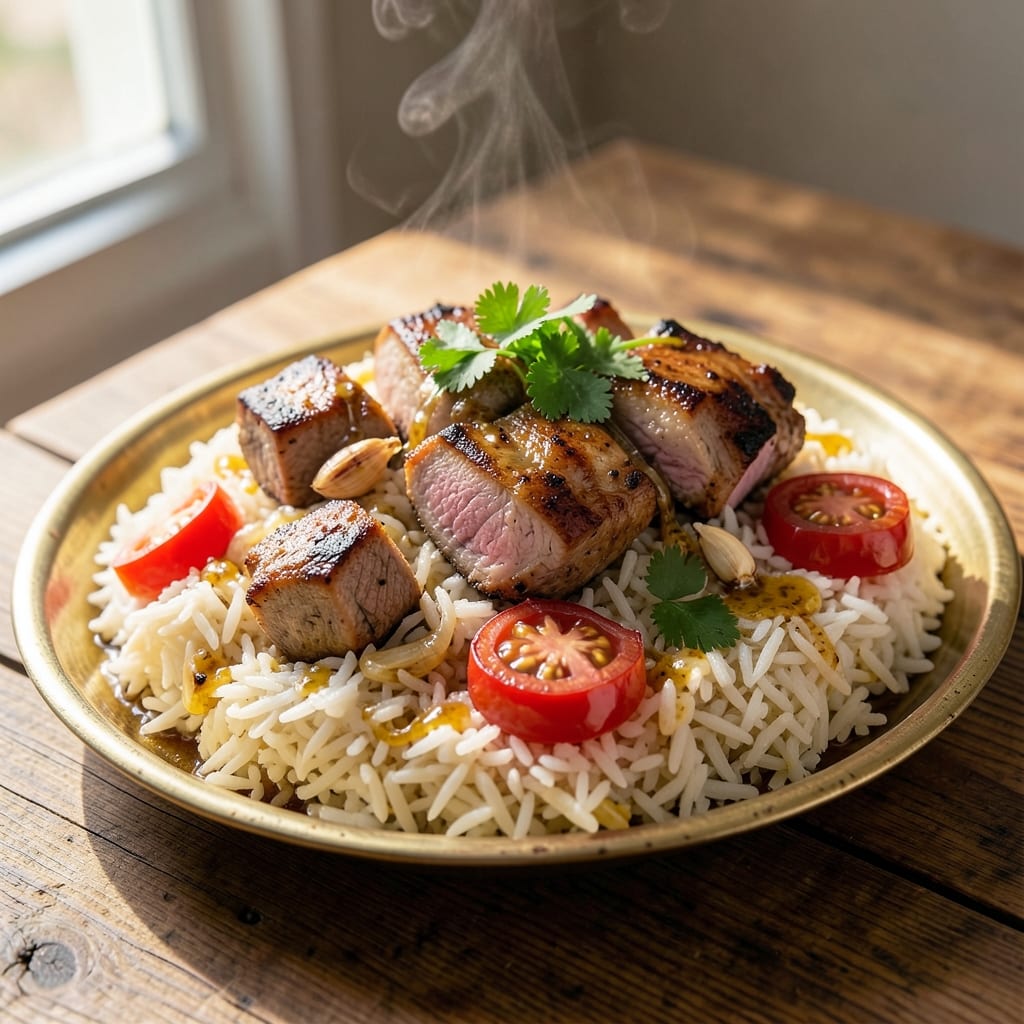
This Arabic kabsa rice recipe transforms a simple one-pot meal into a fragrant, spiced masterpiece that brings the heart of Saudi Arabia to your kitchen table. The secret lies in slow-cooked lamb infused with warm spices like cardamom and cinnamon, simmered until tender in a rich tomato base before being absorbed by perfectly fluffy basmati rice.
What makes this dish truly special is the balance of flavors—sweet tomatoes, aromatic spices, and tender meat all meld together in one harmonious bite. The one-pot method ensures minimal cleanup while delivering restaurant-quality results, making it ideal for both weeknight dinners and special gatherings.
By the time you serve this kabsa, your home will be filled with the intoxicating aroma of slow-cooked spices and tender meat, creating an experience that feels like a celebration. Each bite delivers layers of flavor, from the caramelized onions to the perfectly seasoned lamb, all resting on a bed of fragrant, separate rice grains.
The beauty of kabsa lies in its versatility—serve it with a side of fresh salad or warm flatbread to soak up every last drop of that flavorful sauce. This recipe captures the soul of Saudi cuisine in a way that's approachable yet deeply satisfying, proving that homemade can truly rival the best restaurant versions.
Ingredients for arabic kabsa rice
Sixteen ingredients for a dish packed with aromatic spices and tender lamb.
| Ingredient | Amount | Notes |
|---|---|---|
| Lamb Shoulder 🐑 | 3 lb | Bone-in for flavor, cut into 2-inch cubes |
| Basmati Rice 🍚 | 2 cups | Long-grain, uncooked, rinsed well |
| Canned Diced Tomatoes 🍅 | 2 cups | San Marzano preferred, undrained |
| Yellow Onions 🧅 | 1 whole | Medium, thinly sliced |
| Garlic Cloves 🧄 | 6 cloves | Peeled, minced finely |
| Ground Cumin 🌿 | 1 ½ tbsp | Freshly toasted for depth |
| Ground Coriander 🌿 | 1 tbsp | Freshly ground preferred |
| Ground Cardamom 🌿 | 1 tsp | Freshly crushed pods |
| Ground Cinnamon 🌿 | ½ tsp | Sweet, not cassia |
| Cloves 🌿 | 4 whole | Lightly crushed |
| Salt 🧂 | 1 ½ tsp | Diamond Crystal preferred |
| Black Peppercorns 🌶️ | ½ tsp | Freshly cracked |
| Vegetable Oil 🫒 | ½ cup | Light, for searing |
| Chicken or Vegetable Broth 💧 | 2 cups | Low-sodium preferred |
| Fresh Mint Leaves 🌿 | ¼ cup | Chopped, for garnish |
The lamb shoulder is the heart of this dish—bone-in cuts add depth of flavor that boneless simply can't match. Look for well-marbled pieces at Middle Eastern markets or your local butcher. If you can't find lamb, beef chuck works in a pinch, though the flavor will differ slightly. The basmati rice should be long-grain and aromatic—avoid jasmine or short-grain varieties. Rinse it thoroughly before adding to the pot to remove excess starch. For the tomatoes, San Marzano cans from Italian markets deliver the sweetest, most flavorful results, though any high-quality diced tomatoes will work.
No cardamom pods? Ground cardamom will suffice, though fresh pods have a brighter flavor. Running short on cumin? Smoked paprika at half the amount adds a similar warmth. The broth can be homemade or store-bought—just ensure it's low-sodium to balance the spices. For extra richness, add a splash of coconut milk at the end of cooking. The onions should be caramelized until deep golden—don't rush this step. Fresh mint is ideal for garnish, but dried mint at one-third the amount works if you're in a bind. The spices should be toasted lightly in the oil before adding the lamb to wake up their flavors.
This dish tastes even better the next day as the flavors meld together. Store leftovers in an airtight container in the fridge for up to 4 days. For longer storage, freeze portions in single-serving containers for up to 3 months. The rice will dry out if reheated directly, so sprinkle a few drops of water before microwaving. Serve with warm flatbread or a simple cucumber salad to complement the rich flavors. The aromatic spices linger in the pot—wash it immediately after cooking to prevent staining.
Why You'll Love This Recipe
- One-Pot Magic: I swear by this recipe when I’m too tired to juggle multiple pans. The lamb shoulder slow-cooks right in the pot with the rice, so you’re basically setting it and forgetting it—just stir once or twice. No extra dishes, no stress.
- Lamb So Good: That tender, fall-apart lamb shoulder? It’s the star. The onions and garlic caramelize into a rich base, and the tomatoes add just enough brightness to cut through the richness. Honestly, the first time I made it, my partner stole half before I even served it.
- Weeknight to Celebration: Between us, this is my go-to for lazy Mondays and when my in-laws visit. The spices keep it cozy but impressive—no one ever guesses it’s a 20-minute effort. Plus, it stretches easily for a crowd or packs perfectly for lunchboxes.
- Budget-Friendly Luxury: Lamb shoulder on sale? This is how you make it feel fancy without breaking the bank. A single cut feeds four, and leftovers reheat like a dream—better the next day, if you ask me. I’ve even frozen portions for those nights when I just can’t cook.
Step-by-step instructions for Arabic kabsa rice
Aromatic, spiced, and deeply flavorful—this one-pot lamb and rice dish delivers restaurant-quality results in your own kitchen.
Prepare the Lamb and Spice Base
Pat the 3 lb lamb shoulder dry with paper towels and cut it into 2-inch cubes. Heat 0.5 cup vegetable oil in a large, heavy-bottomed pot over medium-high heat until shimmering. Working in batches, add the lamb and brown on all sides for 3-4 minutes per batch—this creates a deep, caramelized crust that carries the flavor throughout the dish.
Once all the lamb is browned, remove it from the pot and set aside. In the same pot, add 1 whole yellow onion (thinly sliced) and 6 cloves garlic (minced). Sauté for 3-4 minutes until the onions turn translucent and the garlic releases its aroma. This step builds the aromatic foundation of your kabsa.
Toast the Spices and Combine Ingredients
Reduce the heat to medium-low and add 1.5 tbsp ground cumin, 1 tbsp ground coriander, 1 tsp ground cardamom, 0.5 tsp ground cinnamon, 4 whole cloves (lightly crushed), 1.5 tsp salt, and 0.5 tsp black peppercorns. Toast the spices for 1-2 minutes until fragrant—this step unlocks their full flavor potential. Be careful not to burn them; they cook quickly.
Return the browned lamb to the pot and stir to coat evenly in the spice mixture. Add 2 cups canned diced tomatoes (undrained) and 2 cups chicken or vegetable broth. Bring the mixture to a gentle simmer, then reduce heat to low and let it cook uncovered for 20 minutes, stirring occasionally. This allows the spices to meld and the lamb to begin tenderizing.
Layer and Cook the Rice
Rinse 2 cups basmati rice thoroughly under cold water until the water runs clear—this removes excess starch and prevents the rice from becoming gummy. Spread the rinsed rice evenly over the lamb mixture in the pot, pressing down gently to ensure even contact with the liquid. The rice should absorb the flavorful broth and spices as it cooks.
Cover the pot tightly with a lid and transfer it to a preheated 350°F oven. Bake for 45-50 minutes until the rice is tender and the liquid has been absorbed. You’ll know it’s done when the top of the rice is slightly crispy and the lamb is fork-tender. Avoid peeking at the rice during cooking—this disrupts the steam and can lead to uneven cooking.
Rest and Garnish for Maximum Flavor
Remove the pot from the oven and let the kabsa rest, covered, for 10 minutes. This resting period allows the juices to redistribute throughout the dish, ensuring every bite is moist and flavorful. Use a fork to gently fluff the rice, breaking up any large clumps while preserving the texture.
Transfer the kabsa to a serving platter and garnish with 0.25 cup chopped fresh mint leaves. The bright, herbal note of the mint cuts through the richness of the lamb and spices, adding a refreshing contrast. Serve immediately with warm pita bread or crusty naan to soak up the delicious sauce.
Pro Tips For Making Arabic Kabsa Rice
- SEAR LAMB IN BATCHES: I learned this the hard way—trying to brown lamb shoulder all at once in one pot just makes it steam instead of develop that deep, caramelized crust. Work in 2-3 batches over medium-high heat, giving each piece 3-4 minutes per side until golden. The extra time pays off when you taste that rich, toasted flavor later.
- SOAK RICE 30 MINUTES: Skipping this step turns your basmati into mushy mush, no matter how carefully you cook it. Use cold water (not warm) and let the rice sit covered for at least 30 minutes before cooking. This guarantees even grains and prevents that dreaded sticky bottom layer.
- CRUSH TOMATOES BY HAND: Canned diced tomatoes taste bland straight from the can, and blending them makes the sauce too smooth. Give them a rough mash with your fingers or the back of a spoon—this releases more flavor and creates little texture pockets that soak up the spiced lamb juices better.
- LOW AND SLOW FOR RICE: After the initial 10 minutes of boiling, drop the heat to the lowest setting possible and cover tightly. I know, I know—it feels like nothing’s happening, but this is where the magic occurs. Too much heat = uneven cooking; too little = undercooked rice. Trust the process for perfectly fluffy grains.
Dietary considerations for this arabic kabsa rice
Vegetarian Adaptation
Swap the lamb for 1 lb extra-firm tofu or chickpeas to create a hearty vegetarian version. Press the tofu to remove excess water, then cube it and pan-fry until golden. For chickpeas, use 2 cans (15 oz each), drained and rinsed. Both options absorb the spiced tomato sauce beautifully while keeping the dish rich and satisfying. 🌱
Gluten-Free Options
This recipe is naturally gluten-free, but always check labels on broths and spice blends for hidden gluten. Use certified gluten-free broth and ensure your basmati rice is processed in a gluten-free facility. For extra flavor, add ½ cup chopped almonds during the final 10 minutes of baking to create a crunchy topping. 💛
Low-Carb Modifications
Replace the rice with cauliflower rice to cut carbs while keeping the dish flavorful. Use 4 cups riced cauliflower instead of basmati, and cook it alongside the lamb for 30 minutes in the oven. For a keto-friendly twist, add ¼ cup shredded mozzarella on top before baking to create a cheesy finish. 🥬
Allergen-Friendly Adjustments
For nut allergies, omit any garnishes containing almonds or pine nuts. If you're sensitive to dairy, use vegetable oil instead of ghee and check that your broth is dairy-free. For egg allergies, this recipe is already safe—just ensure your mint leaves are washed thoroughly. Always verify spice blends for potential cross-contamination. 🌿
Dairy-Free Version
This dish is already dairy-free, but you can enhance its creaminess with ½ cup coconut milk stirred in during the final 10 minutes of cooking. For extra richness, add 1 tbsp tahini** to the sauce before serving. The coconut milk adds a subtle sweetness that balances the spices beautifully. 🥥
Nutrition facts
Frequently asked questions
Can I use chicken instead of lamb for kabsa?
Chicken works beautifully in kabsa, though the flavor will be milder. Use 3 lb boneless, skinless chicken thighs (they stay juicier than breasts) and reduce the cooking time to 30-35 minutes after adding the rice. For extra richness, marinate the chicken in 1 tbsp yogurt mixed with spices before cooking.
Why does my kabsa rice turn out mushy?
Overcooking or insufficient liquid absorption usually causes mushy rice. Always rinse your basmati rice thoroughly to remove starch, and use the one-pot method with proper liquid ratios (about 1.5 cups liquid per cup rice). If the rice seems dry during baking, add 2 tbsp broth and cover tightly for another 10 minutes. Never stir the rice while cooking—it releases starch and makes it gummy.
What's the best way to reheat leftover kabsa?
Reheat kabsa gently to preserve moisture. Place portions in a lightly oiled baking dish, cover with foil, and warm in a 350°F oven for 15-20 minutes. For microwave reheating, sprinkle 1 tsp water over each serving and cover with a damp paper towel to prevent drying. Avoid adding extra liquid—it makes the rice soggy. The flavors actually improve after 1-2 days of resting!
Which spices are most important for authentic kabsa flavor?
The spice trio of cumin, coriander, and cardamom forms the aromatic base, while cinnamon and cloves add warmth. Toasting whole spices in oil before adding them unlocks their full potential. For a shortcut, use 1 tsp kabsa spice blend (available at Middle Eastern markets) instead of individual spices. Never skip the garlic—it's essential for depth.
How can I make kabsa ahead of time for a gathering?
Kabsa tastes even better when made 1-2 days ahead! Cook the entire dish, then store in an airtight container in the fridge. Reheat portions in a covered pot over low heat with 2 tbsp broth until warmed through. For large gatherings, prepare the spiced lamb mixture (without rice) up to 2 days ahead, then cook the rice fresh before serving. This keeps the texture perfect.