
Soups & Stews
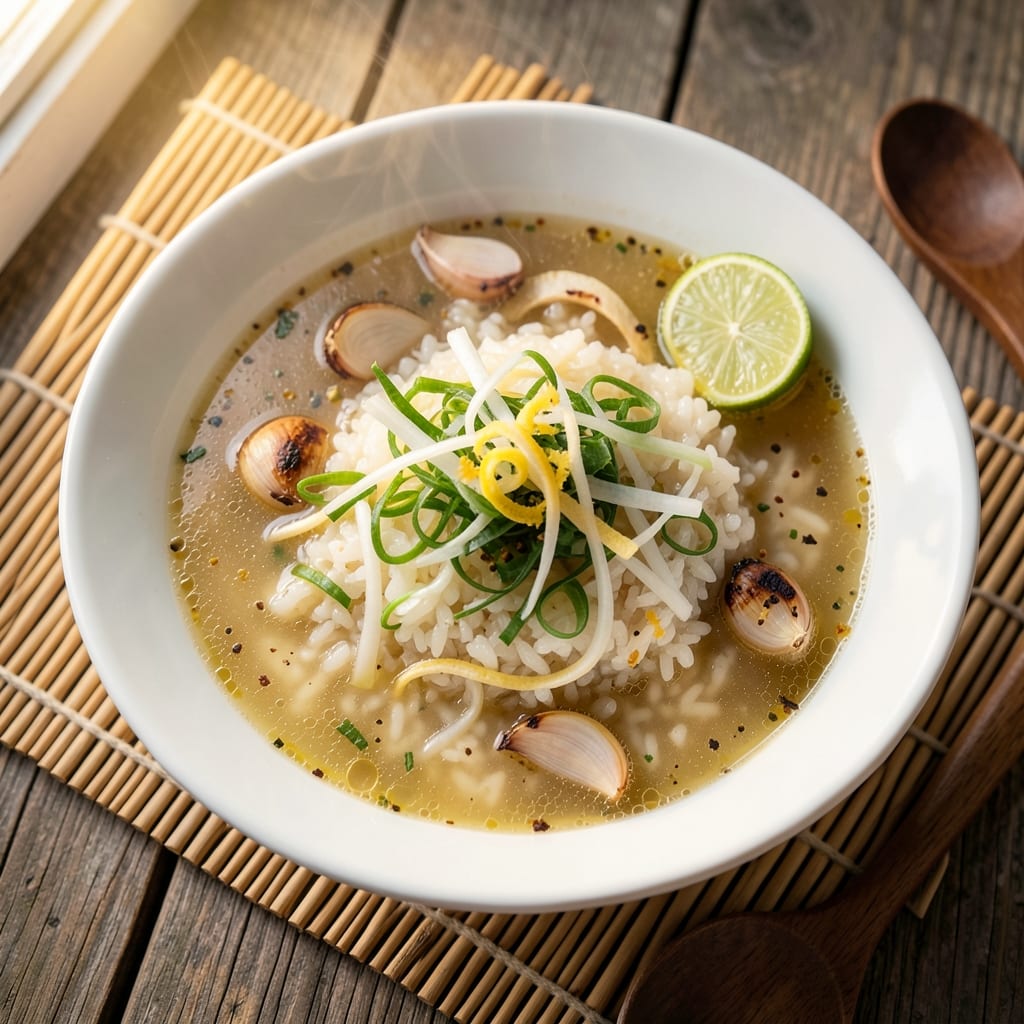
This Asian rice soup recipe transforms simple ingredients into a fragrant, comforting bowl of warmth that bridges tradition and ease. The secret lies in balancing ginger’s zing with lime’s brightness, simmered low and slow until the rice absorbs the broth’s essence—no fancy techniques, just layered flavor. What starts as a humble one-pot meal becomes a restaurant-worthy dish with just a few thoughtful additions.
The beauty of this recipe is its versatility: adapt it to Japanese okayu with miso depth, Korean bokkeumbap with fermented tang, or Thai jok with coconut undertones. Each variation keeps the core method intact—rice cooking in broth until tender, infused with aromatics—while letting you tailor the flavors to your taste. The result? A bowl that’s equal parts nourishing and indulgent, perfect for chilly evenings or quick weeknight meals.
Ingredients for asian rice soup
Fragrant aromatics meet simple pantry staples to create this adaptable Asian rice soup.
| Ingredient | Amount | Notes |
|---|---|---|
| Jasmine Rice 🍚 | 1 cup | Uncooked, long-grain preferred |
| Fresh Ginger 🧄 | 2 tbsp | Finely grated, aromatic |
| Lime Juice 🍋 | ¼ cup | Freshly squeezed, bright |
| Vegetable Broth 💧 | 4 cups | Low-sodium preferred |
| Green Onions 🧅 | ¼ cup | Sliced, white and green parts |
| Garlic Cloves 🧄 | 4 cloves | Minced, aromatic |
| Sesame Oil 🫒 | 1 tbsp | Toasted, for aroma |
| Soy Sauce 🍶 | 1 tbsp | Light or dark preferred |
| Vegetable Oil 🫒 | 1 tbsp | Neutral high smoke point |
| Fresh Cilantro 🌿 | ¼ cup | Chopped, for garnish |
| Red Chili Flakes 🌶️ | ½ tsp | Adjust to heat preference |
| Salt 🧂 | 1 tsp | Kosher or sea salt |
| White Pepper 🌶️ | ¼ tsp | Freshly ground preferred |
| Lime Zest 🍋 | 1 tbsp | Freshly grated, bright |
| Coconut Milk 🥥 | ½ cup | Full-fat for creaminess |
The ginger and lime are non-negotiable for that signature brightness. Look for fresh ginger with tight, smooth skin—no wrinkles or soft spots. Whole Foods or Asian markets carry the best quality, but even regular grocery stores stock it. For lime juice, use Mexican or Persian limes if available—they’re more aromatic than key limes. The coconut milk adds depth; full-fat canned versions (like Thai Kitchen brand) work perfectly, but avoid the ultra-light varieties. If you’re making this for a Japanese-inspired okayu, swap the soy sauce for a touch of white miso paste—just 1 teaspoon will transform the flavor profile.
No fresh ginger? Powdered ginger at half the amount works in a pinch, though it lacks the same complexity. Substituting lime juice? Lemon juice with extra zest mimics the brightness, but you’ll miss the floral notes. Vegetable broth can be homemade or store-bought—Pacific Foods or Imagine brands are consistently flavorful. The sesame oil is purely for aroma; if you’re sensitive to its taste, reduce to ½ teaspoon or use toasted sesame seeds instead. For a Korean bokkeumbap twist, add 1 tablespoon of gochujang paste to the broth, and use short-grain rice instead of jasmine. The chili flakes can be omitted entirely for a milder version, or swapped for Korean red pepper flakes (gochugaru) for a sweeter heat.
This soup tastes even better the next day as flavors meld. Store in an airtight container in the fridge for up to 4 days, or freeze portions for 3 months. The rice will soften further upon reheating, so add a splash of broth when warming. For meal prep, cook the broth and aromatics ahead, then finish with rice and garnishes just before serving. The lime zest and cilantro should be added last to preserve their brightness—store them separately in the fridge and mix in right before eating. Garnish with extra green onions and a drizzle of sesame oil for restaurant-quality presentation.
Why You'll Love This Recipe
- No-Fuss Pantry Staples: I swear by this recipe because it’s the kind of meal I can make when my fridge is empty—just rice, broth, and whatever’s lurking in the spice drawer. That bright ginger-lime punch turns even the simplest vegetable broth into something special, and honestly? It’s the kind of dish that makes me feel like I’ve cooked something impressive without trying.
- Bright & Balanced Bite: The lime juice is what makes this soup sing—it cuts through the richness of the broth and makes every spoonful feel fresh, like a little burst of sunshine. And don’t skip the green onions; their sharp, fresh finish is the secret weapon that keeps this from tasting flat or one-note.
- Lunchbox Hero: Between us, this is my go-to for meal prep because it reheats like a dream and stays flavorful for days. Pack it in a thermos, and it’s still delicious cold—perfect for work lunches or when I’m too tired to cook after a long day. (Yes, even on a Tuesday night.)
- Budget-Friendly Flex: I can make this for under $5 for four servings, and it stretches easily if I add in leftover veggies or protein. It’s the kind of recipe that doesn’t break the bank but still feels like a treat—especially when I’m serving it to guests who think I’m some kind of culinary genius. (Spoiler: I’m not.)
Step-by-step instructions for fragrant Asian rice soup
This one-pot method delivers aromatic, comforting rice soup with perfect texture and balanced flavors.
Toast the Aromatics and Prepare the Base
Heat the 1 tablespoon vegetable oil in a heavy-bottomed pot over medium heat. Add the 4 cloves garlic cloves and 2 tablespoons finely grated fresh ginger, cooking for 1-2 minutes until fragrant but not browned. This step develops the foundation of your soup's complex aroma.
Add the 0.5 teaspoon red chili flakes and 0.25 teaspoon white pepper, stirring for 30 seconds to toast the spices. Immediately pour in the 1 tablespoon sesame oil—this adds nutty depth that will infuse throughout the soup. The oil should shimmer but not smoke.
Cook the Rice and Build the Broth
Add the 1 cup jasmine rice and stir to coat the grains with the aromatic oil. Pour in the 4 cups vegetable broth and bring to a gentle boil. Reduce heat to low-medium and simmer uncovered for 12-15 minutes, stirring occasionally, until the rice is tender but still has a slight bite.
Here's the key: you want the rice to absorb most of the broth but remain distinct. If the soup looks too thin at 12 minutes, reduce heat slightly to prevent overcooking. The rice should be translucent at the edges but still hold its shape when pressed between fingers.
Add Citrus and Creaminess
Stir in the 1 tablespoon lime zest and 0.25 cup lime juice, mixing well. The citrus brightens the soup and balances the richness. Add the 1 tablespoon soy sauce and 1 teaspoon salt, tasting and adjusting seasoning—you want the broth to be well-seasoned but not salty.
Pour in the 0.5 cup coconut milk and stir gently to combine. The milk should blend smoothly without separating. If you notice any curdling, whisk vigorously for 30 seconds to emulsify. The soup should now have a velvety texture with a subtle tropical note.
Finish with Fresh Herbs and Garnishes
Remove the pot from heat and stir in the 0.25 cup sliced green onions and 0.25 cup chopped fresh cilantro. The herbs add freshness that cuts through the richness of the coconut milk. Let the soup sit off heat for 5 minutes to allow flavors to meld completely.
Taste and make final adjustments—perhaps a pinch more salt or a squeeze of extra lime juice. Ladle the soup into bowls, ensuring each serving gets a generous sprinkle of green onions and cilantro. The aroma alone should make your kitchen smell like a bustling Asian street market.
Pro Tips For Making Asian Rice Soup
- SOAK THE RICE FIRST: Jasmine rice absorbs broth faster when pre-soaked for 20 minutes—skip this, and you’ll end up with mushy grains instead of fluffy, individual kernels. I used to skip it until I realized how much easier it is to control the texture afterward.
- GRATE THE GINGER FINE: No food processor? Use a microplane or the smallest holes on a box grater—this ensures the ginger dissolves smoothly into the broth instead of sitting as chunks. I learned this the hard way when my soup tasted like gingery surprises.
- STIR THE BROTH VIGOROUSLY: Once the rice hits the simmering broth, give it a quick stir to separate the grains—this prevents clumping and guarantees each bite has that perfect al dente texture. Sounds obvious, but I’ve seen too many people forget this step.
- ADD LIME LAST MINUTE: Squeeze in the lime juice right before serving—this keeps the bright flavor from turning bitter and lets you adjust the acidity to taste. I used to add it early, and the soup always tasted flat by the end.
Wine and beer pairings for this asian rice soup
Light White Wine
For this bright, citrus-forward soup, I reach for a crisp Sauvignon Blanc from New Zealand—think Cloudy Bay or Oyster Bay. The wine’s zesty acidity and herbal notes mirror the lime and cilantro, while its mineral finish cuts through the coconut milk’s richness. Serve slightly chilled (45-50°F) to enhance the soup’s refreshing qualities. 🍷
Asian-Inspired Sake
A dry junmai sake like Dassai or Kubota adds an elegant touch, especially if you’re leaning toward a Japanese okayu style. The subtle umami and clean finish complement the ginger and soy sauce without overpowering. Warm it gently to 110°F in a small saucepan—just enough to release its aroma without cooking off the delicate flavors.
Light Lager Pairing
For beer lovers, a Japanese lager such as Asahi Super Dry or Sapporo works beautifully. The crisp, clean profile balances the soup’s bold flavors without competing. The slight carbonation also helps cleanse the palate between bites. If you prefer a local option, a Pilsner with a hint of grassiness (like Stella Artois) is a solid alternative. 🍺
Coconut-Infused Cocktail
For a festive twist, serve the soup alongside a Thai-inspired cocktail like a Tom Yum-inspired gin fizz. Mix 2 oz gin, 1 oz lime juice, ½ oz coconut water, and a dash of Thai basil syrup (simmer 1 cup basil with ½ cup sugar and 1 cup water, then strain). Top with soda water and garnish with lime. The tropical notes echo the soup’s coconut milk while adding a refreshing contrast.
Herbal Tea Balance
For a non-alcoholic option, a jasmine green tea or hojicha (roasted green tea) enhances the soup’s aromatic profile. The floral notes of jasmine tea complement the ginger and lime, while hojicha’s nutty warmth pairs beautifully with the coconut. Brew at 175°F for 2-3 minutes to avoid bitterness. ✨
Nutrition facts
Frequently asked questions
Can I use short-grain rice instead of jasmine?
Yes, but you’ll need to adjust the cooking time. Short-grain rice like Japanese or sushi rice absorbs liquid faster—simmer for 10-12 minutes instead of 12-15 minutes to avoid mushiness. The texture will be creamier, perfect for a Korean-inspired bokkeumbap twist. Just stir occasionally to prevent sticking.
How do I make this soup vegetarian?
Swap the vegetable broth for a rich mushroom or seaweed broth, and add 1 cup sliced shiitake mushrooms or 1 block firm tofu (pressed and cubed) during Step 2. For extra umami, stir in 1 teaspoon miso paste with the soy sauce. Garnish with crispy fried shallots or sesame seeds for texture.
Why did my rice turn mushy?
Overcooking is the most common cause—rice absorbs all the broth and breaks down when simmered too long. For perfect texture, remove the pot from heat 1-2 minutes before the rice looks done, then let it sit covered for 5 minutes. If using a heavy pot, reduce heat to low after 10 minutes to slow cooking. A splash of cold water can also revive slightly overcooked rice.
Can I add protein like chicken or tofu?
For chicken, shred 1 cup cooked rotisserie chicken and stir it in during the last 5 minutes of cooking. For tofu, press and cube 1 block firm tofu, pan-fry until golden, then add with the green onions. If using shrimp, cook them separately and add just before serving to keep them tender. The key is timing—proteins added too early can make the soup watery.
How can I make this soup spicier?
Double the red chili flakes to 1 teaspoon and add 1 sliced Thai chili with the aromatics in Step 1. For heat with depth, stir in 1 teaspoon gochujang paste (Korean chili paste) or ½ teaspoon sriracha when adding the soy sauce. Finish with extra chili oil or sliced bird’s eye chilies on top for a fiery kick.