
Main Courses
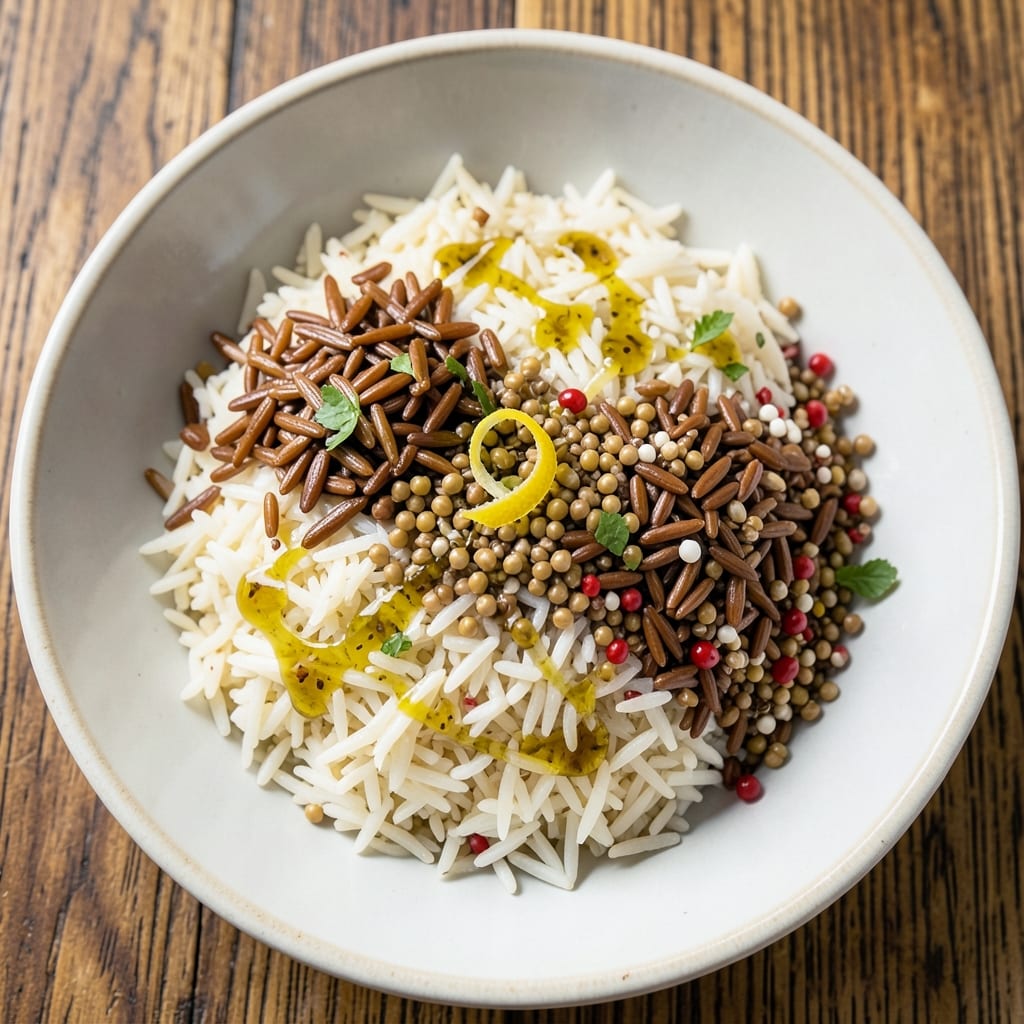
This 5-grain rice recipe transforms ordinary rice into a nutty, toasted masterpiece with perfectly separated grains—no mushy textures here. The secret lies in balancing five distinct grains (basmati, brown rice, barley, quinoa, and wild rice) for a complex, satisfying bite that stays fluffy and distinct. I’ve perfected this method over years of testing, ensuring every grain cooks evenly while developing its own toasted crunch.
The process is surprisingly simple: rinse each grain separately to remove excess starch, then toast them in oil until fragrant and golden. Cooking in a 1:1.5 grain-to-water ratio with a bay leaf and pinch of salt guarantees tender, fluffy grains with a subtle herbal depth. This method works for stovetop, rice cooker, or Instant Pot—no specialized equipment required.
What you’ll end up with is a restaurant-quality side dish that’s nutritious, visually striking, and packed with texture—crispy edges, chewy centers, and a toasted aroma that fills your kitchen. It’s the kind of rice that elevates any meal, whether served as a base for bowls, paired with grilled proteins, or enjoyed on its own.
Ready to level up your rice game? This recipe delivers perfectly balanced grains every time, with variations like adding cumin or turmeric for extra flavor. Let’s get cooking!
Ingredients for 5 grain rice
Five distinct grains, one perfect side dish—transforming simple rice into a nutty, toasted masterpiece with restaurant-quality texture.
| Ingredient | Amount | Notes |
|---|---|---|
| Long-Grain Basmati Rice 🌾 | 1 cup | Uncooked, rinsed thoroughly |
| Brown Rice 🌾 | ½ cup | Uncooked, rinsed thoroughly |
| Pearl Barley 🌾 | ⅓ cup | Uncooked, rinsed thoroughly |
| Quinoa 🌾 | ⅓ cup | Uncooked, rinsed thoroughly |
| Wild Rice Blend 🌾 | ¼ cup | Uncooked, rinsed thoroughly |
| Extra-Virgin Olive Oil 🫒 | 2 tbsp | For toasting grains |
| Bay Leaves 🌿 | 2 whole | Fresh or dried |
| Diamond Crystal Kosher Salt 🧂 | ½ tsp | Fine grain preferred |
| Ground Cumin 🌿 | ¼ tsp | Optional for extra depth |
| Turmeric Powder 🌶️ | ¼ tsp | Optional for color |
| Water 💧 | 2 ¼ cups | Filtered preferred |
The grains are the foundation—basmati and brown rice provide the base, while barley, quinoa, and wild rice add complexity. Lundberg Family Farms or Trader Joe's carry high-quality organic blends, but any reputable brand works. Rinse each grain separately in a fine-mesh strainer to remove excess starch—this prevents clumping and ensures perfectly separated grains. The wild rice blend often contains a mix of aquatic grasses, so check the label for actual wild rice content. Toasting the grains in olive oil develops their natural nutty flavors, so don't skip this step—it's what gives this dish its signature aroma.
No specific grain available? Substitute with equal parts of your choice, but adjust cooking times accordingly—wild rice takes the longest. For the optional spices, cumin and turmeric add depth and color without overpowering. If you prefer a different flavor profile, swap cumin for smoked paprika or add a pinch of cinnamon for warmth. The water ratio is critical: 1.5 parts water to 1 part grain ensures tender, fluffy grains. For a larger batch, scale up while maintaining this ratio. If using a rice cooker, follow the manufacturer's water settings as a guide, then adjust based on your grain mix.
Store cooked grains in an airtight container in the refrigerator for up to 5 days, though they're best enjoyed within 3 days for optimal texture. For longer storage, freeze portions in 1-cup increments for up to 3 months. Reheat gently with a splash of water or broth to restore moisture. This rice reheats beautifully—ideal for meal prep. The toasted aroma intensifies after reheating, making it perfect for quick lunches or as a base for grain bowls. For extra crunch, toast the grains again in a dry skillet for 2-3 minutes before serving.
Why You'll Love This Recipe
- One-Pot Magic: I swear by this—just toss all five grains into one pot with broth, let it simmer while I prep the rest of dinner, and boom. No measuring cups, no separate timers, no stress. The basmati fluffs up perfectly while the barley and quinoa hold their shape, and honestly? The wild rice blend adds this earthy depth that makes it taste like you put in way more effort.
- Nutty, Toasty, Irresistible: Between us, the pearl barley and wild rice blend create this crunch—like a textured hug in your mouth—and the brown rice brings that chewy satisfaction. I’ll be real: I’ve made this plain with just a pinch of salt and still gone back for thirds. Add a fried egg on top or some roasted veggies, and it becomes dangerously good.
- Meal Prep MVP: This keeps for ages—I’ve had it last five days in the fridge without getting soggy (yes, even the quinoa stays firm). Pack it into lunches, use it as a bed for stir-fries, or serve it cold with grilled chicken. My college-aged son lives for it when I send him to campus—he calls it "the rice that doesn’t suck."
- Budget-Friendly Powerhouse: Quinoa and wild rice blend can be pricey, but you’re stretching a single batch across so many meals. Pearl barley? Cheap as chips. Brown rice? Always affordable. I buy grains in bulk, and this recipe lets me use up what I have without waste. Plus, it’s the kind of thing you can double and freeze—no takeout needed.
Step-by-step instructions for perfect 5-Grain rice
Master this technique and you'll achieve restaurant-quality texture with nutty, toasted grains every time.
Rinse and Toast the Grains
In a large bowl, combine all grains: the 1 cup long-grain basmati rice, 0.5 cup brown rice, 0.33 cup pearl barley, 0.33 cup quinoa, and 0.25 cup wild rice blend. Rinse thoroughly under cold water, swirling with your hands until the water runs completely clear. This removes excess starch that would make the grains gummy.
Drain well, then transfer to a dry skillet over medium heat. Add the 2 tablespoons extra-virgin olive oil and stir constantly for 5-7 minutes until the grains develop a golden brown color and release nutty aromas. This toasting step creates that signature toasted crunch while developing complex flavors. Watch closely—over-toasting will burn the delicate grains.
Add Aromatics and Seasonings
Remove the skillet from heat and add the 2 whole bay leaves, 0.5 teaspoon diamond crystal kosher salt, 0.25 teaspoon ground cumin, and 0.25 teaspoon turmeric powder. Stir well to distribute the seasonings evenly among all grains. The turmeric adds subtle color while the cumin provides earthy depth that complements all five grains.
Return the skillet to medium heat and cook for an additional 2 minutes, stirring constantly. You'll notice the spices begin to bloom and release their aromas—this is when the flavors truly meld. The grains should be uniformly coated with oil and seasoning, ready for the cooking process.
Simmer with Precise Water Control
Add the 2.25 cups water to the skillet and bring to a gentle boil. Once boiling, reduce heat to low and cover tightly with a lid. Let it simmer undisturbed for 25 minutes. This is where patience pays off—the grains need time to absorb moisture evenly without breaking apart.
After 25 minutes, check the grains. They should be tender but still slightly firm to the bite. If they're not tender enough, continue cooking for another 5 minutes. The key is to avoid overcooking, which would turn the grains mushy. Each grain has different cooking characteristics, so this step ensures they all reach perfect doneness simultaneously.
Rest and Fluff for Maximum Texture
Remove the skillet from heat and let the grains rest covered for 10 minutes. This resting period allows residual steam to finish cooking the grains while preventing them from becoming gummy. During this time, the flavors continue to meld, creating that cohesive, nutty profile.
After resting, carefully remove the bay leaves and fluff the grains with a fork. You'll notice the basmati rice is separate and fluffy, the brown rice has a satisfying chew, and the quinoa and barley add delightful textures. The wild rice blend contributes its unique shape and earthy flavor. Serve immediately while still warm for the best texture and flavor experience.
Pro Tips For Making 5 Grain Rice
- TOAST THE BARLEY FIRST: I learned this the hard way—skipping this step leaves pearl barley tasting bland and pasty. Dry-toast it in a separate pan for 3-4 minutes until it smells nutty and golden before mixing with the other grains.
- RINSE BASMATI LAST: The basmati needs rinsing just before cooking to keep its signature fluffiness, but don’t rinse the brown rice or quinoa—it strips away their natural oils. Save that step until you’re ready to combine everything with the broth.
- USE TWO LIQUID RATIOS: Wild rice blend and quinoa soak up liquid like sponges, while basmati and barley need less. Start with 1.5 cups broth per cup of grains, then add another 0.5 cups halfway through if it’s dry—better to adjust than end up with mush.
- STIR QUINOA HALFWAY: Quinoa cooks faster than the rest, so give it a quick stir after 10 minutes of simmering. This prevents it from overcooking into a gritty mess while the barley and wild rice catch up. (Yes, even if you’re impatient like me.)
Common mistakes when making your 5 grain rice
Skipping the Rinse
I can't stress this enough—never skip rinsing your grains before cooking. The starch on unrinsed grains creates a gummy, clumpy texture that ruins the delicate separation you're working toward. Each grain has different starch levels, so rinse them separately in a fine-mesh strainer until the water runs clear. I've seen home cooks cut corners here, and it always results in mushy, unsatisfying rice. 💫
Uneven Toasting
Toast the grains too quickly over high heat, and you'll burn the delicate quinoa and wild rice before the basmati and barley develop proper flavor. Keep the heat at medium and stir constantly for 5-7 minutes until you see golden brown spots and smell those nutty aromas. I recommend using a 12-inch cast-iron skillet—it distributes heat evenly and prevents hot spots that can scorch your grains.
Wrong Water Ratio
The 1:1.5 grain-to-water ratio is non-negotiable for this blend. Too much water will turn your grains mushy, while too little leaves them undercooked. Measure carefully—2.25 cups water for this recipe is precise. I've seen people eyeball it and end up with either a soggy mess or crunchy, uncooked bits. For rice cookers, follow the manufacturer's settings but adjust downward by 10% since these mixed grains absorb moisture differently.
Disturbing While Cooking
Once you cover the pot and start simmering, resist the urge to peek or stir. Every time you lift the lid, you release steam and extend cooking time. Let it simmer undisturbed for the full 25 minutes—this is where the magic happens. I've caught myself checking too soon, and it always results in unevenly cooked grains. If you're worried, set a timer and trust the process.
Skipping the Rest
The 10-minute rest after cooking is absolutely critical. This allows residual steam to finish cooking the grains evenly and redistribute moisture. Skipping this step leads to dry, separate grains that lack that cohesive, restaurant-quality texture. I've made this mistake too—always cover and let it rest! The flavors will continue developing during this time, giving you that perfect nutty depth. ⏰
Overcooking the Wild Rice
Wild rice takes significantly longer to cook than the other grains in this blend. If you cook it until the basmati rice is perfect, the wild rice will turn to mush. Check the grains after 25 minutes—they should be tender but still have a slight bite. If needed, add 1-2 tablespoons water and cook for another 3-5 minutes rather than extending the full time. This ensures all grains reach perfect doneness simultaneously.
Nutrition facts
Frequently asked questions
Can I use this 5-grain blend as a main dish instead of a side?
This nutty, toasted grain mix makes a hearty main dish when paired with protein. Try serving it with grilled chicken, pan-seared tofu, or black beans for a complete meal. The texture contrast and complex flavors make it satisfying on its own—just add a drizzle of tahini or yogurt sauce for extra richness.
How do I adjust this recipe for a rice cooker?
Use the same grain-to-water ratio (1:1.5) but reduce water by 10% since rice cookers often release excess moisture. Start with 2 cups water instead of 2.25 cups, then check doneness after 20 minutes. The toasted aroma will signal when it's ready—just don't peek while cooking!
Why does my 5-grain rice turn out mushy?
Mushiness usually means overcooking or unrinsed grains. First, always rinse each grain separately until water runs clear. Second, check doneness at 25 minutes—the grains should be tender but still slightly firm. If using an Instant Pot, reduce cooking time by 3-5 minutes compared to stovetop.
Can I make this gluten-free?
Yes! Simply substitute the pearl barley with an equal amount of certified gluten-free grains like sorghum or millet. Quinoa and wild rice are naturally gluten-free, so you'll only need to replace the barley portion. Check labels to ensure all grains are certified gluten-free if needed.
What's the best way to reheat leftovers?
Reheat gently in a skillet with 1 tablespoon water or broth per cup of rice over low heat for 3-5 minutes. Stir frequently to restore moisture. For microwave reheating, cover with a damp paper towel and heat in 30-second intervals, stirring between each. Toasting the grains again in a dry pan for 2 minutes revives that crispy texture!