
Salads
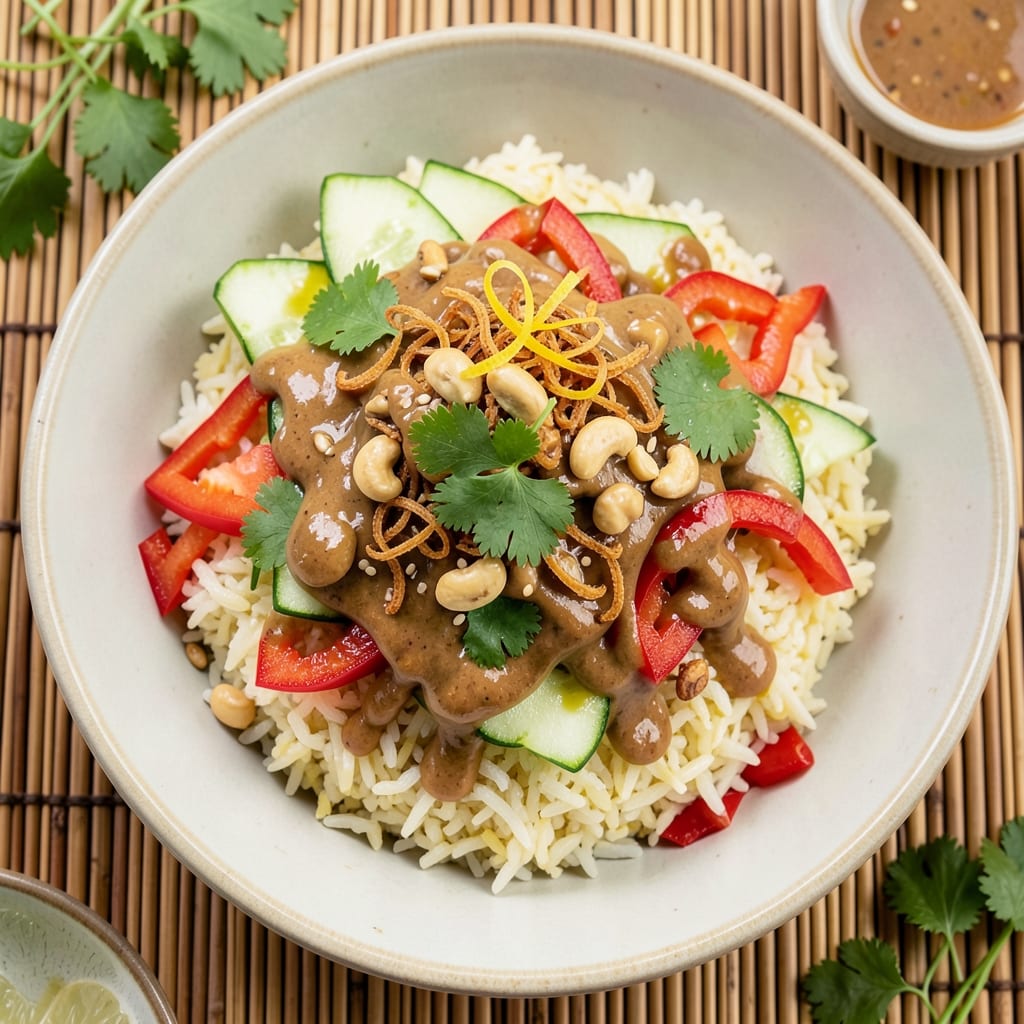
This Asian rice salad recipe transforms simple jasmine rice into a crispy, flavor-packed dish with a tangy peanut twist that balances sweet, spicy, and umami notes. The secret lies in perfectly cooled rice and a dressing that emulsifies into a velvety coating—no soggy textures here. I developed this after craving something lighter than takeout but still packed with restaurant-quality depth, and it’s become my go-to for meal prep or quick lunches.
The foundation starts with jasmine rice, cooled to room temperature so it stays separate and crispy when tossed with the dressing. Then comes the star: a peanut-lime dressing infused with chili, garlic, and fish sauce, which cuts through the richness of optional proteins like shrimp or tofu. The crispy noodle twist? Thinly sliced rice noodles pan-fried until golden—adding a satisfying crunch that elevates every bite.
What you’ll end up with is a salad that’s bold in flavor but light on the palate, with bright herbs, crunchy veggies, and a dressing that clings perfectly to each grain. The tangy peanut sauce ties everything together, creating a balance that’s addictive yet refreshing. This isn’t just a side dish—it’s a complete, satisfying meal that’s ready in under 30 minutes.
Swap in proteins like grilled chicken or chickpeas for vegetarian versions, or adjust the spice level to taste. The key is keeping the rice crispy and the dressing emulsified—once you master that, you’ll have a dish that’s as versatile as it is delicious. Let’s get started!
Ingredients for asian rice salad
Jasmine rice, crispy noodles, and a tangy peanut-lime dressing make this salad restaurant-quality at home.
| Ingredient | Amount | Notes |
|---|---|---|
| Jasmine Rice 🍚 | 1 ½ cups | Uncooked, rinsed thoroughly |
| Peanut Butter 🥜 | ½ cup | Creamy, unsweetened preferred |
| Lime Juice 🍋 | ¼ cup | Freshly squeezed, seeds removed |
| Fish Sauce 🍶 | 1 tbsp | Red Boat preferred for quality |
| Rice Vinegar 💧 | 1 tbsp | Seasoned preferred for depth |
| Sesame Oil 🫒 | 1 tbsp | Toasted sesame oil for aroma |
| Garlic Cloves 🧄 | 3 cloves | Fresh, minced for dressing |
| Red Chili Flakes 🌶️ | 1 tsp | Adjust for spice preference |
| Soy Sauce 🍶 | 1 tbsp | Low-sodium preferred |
| Rice Noodles 🍜 | 4 oz | Thin, dried variety |
| Cucumber 🥒 | 1 medium | English cucumber preferred |
| Carrot 🥕 | 1 medium | Julienned for texture |
| Green Onion 🧅 | 3 whole | White and green parts sliced |
| Fresh Mint Leaves 🌿 | ¼ cup | Chopped, stems removed |
| Sesame Seeds 🌰 | 1 tbsp | Toasted for garnish |
The jasmine rice is non-negotiable—its floral notes pair perfectly with the peanut dressing. Cook it slightly underdone (just tender) so it stays separate when cooled. For the rice noodles, Vietnamese or Thai brands from Asian markets are ideal—they’re thinner and crisp up better than the thicker ones at regular grocery stores. If you can’t find them, look for ‘vermicelli’ or ‘rice stick noodles’ in the international aisle. The cucumber and carrot should be fresh and crisp—skip the pre-shredded kind, which gets soggy fast. I always buy English cucumbers at Whole Foods for their mild flavor and fewer seeds.
No peanut butter on hand? Almond butter or tahini work in a pinch, though the flavor will shift slightly. Short on fish sauce? Soy sauce plus a dash of sugar mimics the umami. The sesame oil is where the magic happens—don’t use the cheap stuff from the back of the spice aisle. Kadoya or La Choy toasted sesame oil are worth the splurge. For extra crunch, fry the rice noodles in avocado oil>—it has a higher smoke point than olive oil. If you’re avoiding gluten, swap the soy sauce for tamari or coconut aminos.
This salad tastes even better the next day—keep the dressing separate until serving to prevent sogginess. Store components in airtight containers in the fridge for up to 4 days. The dressing stays fresh for 1 week> in a sealed jar. For meal prep, portion the noodles and veggies separately, then assemble with the rice and dressing just before eating. The crispy texture is the star—reheat noodles in a dry pan for 30 seconds**> to restore crunch.
Why You'll Love This Recipe
- No-Cook Crunch: I swear by this when I’m too tired to boil rice—just toss cold jasmine rice with a sticky peanut-lime dressing and crushed peanuts. The texture stays perfect, and honestly? No one will guess it’s "no effort."
- Umami-Packed Punch: That fish sauce and rice vinegar combo? It’s the secret weapon—salty, tangy, and just a little funky. The peanut butter smooths it out while keeping it bright, like a flavor party in your mouth.
- Lunchbox Hero: Between us, this is my go-to for packed lunches or potlucks—keeps well for days, travels without a mess, and my kids actually eat it. (Yes, even the veggie-haters.)
- Pantry Magic: I make a big batch on Sundays when I have extra rice and random pantry bits. The lime and peanut butter use up what’s already there, and leftovers? Still taste fresh three days later. Budget win.
Step-by-step instructions for Asian rice salad with crispy noodle twist
Here's how to transform simple ingredients into a vibrant, textured salad with perfect balance.
Cook and Prepare the Jasmine Rice
Rinse the 1.5 cups jasmine rice thoroughly under cold water until the water runs clear—this removes excess starch that would make your rice gummy. Cook according to package instructions using a 1:1.5 rice-to-water ratio and bring to a boil over medium-high heat. Once boiling, reduce to low heat, cover, and simmer for 15 minutes. Let it sit covered for 10 minutes off heat before fluffing with a fork.
For best texture, I like to spread the cooked rice on a baking sheet and let it cool completely before mixing with other ingredients. This prevents the rice from becoming mushy when combined with the dressing. The rice should be at room temperature when you're ready to assemble the salad.
Create the Tangy Peanut Dressing
In a small bowl, whisk together the 0.5 cup peanut butter, 0.25 cup lime juice, 1 tbsp fish sauce, 1 tbsp rice vinegar, 1 tbsp soy sauce, 1 tsp red chili flakes, and 1 tbsp sesame oil. The mixture will be thick—this is normal. Gradually add 2-3 tablespoons of warm water while whisking until you reach a smooth, pourable consistency.
Taste and adjust seasoning—you might want to add a touch more lime for brightness or fish sauce for umami depth. Here's the thing: the peanut butter should be fully emulsified, creating a glossy, velvety dressing. If it separates, whisk in another teaspoon of warm water. This dressing is the heart of your salad, so take your time getting it just right.
Prepare the Crispy Rice Noodles
Cook the 4 oz rice noodles according to package instructions—usually 5-7 minutes in boiling water until just tender. Drain well and immediately toss with 1 tbsp sesame oil while still hot. Spread the noodles in a single layer on a parchment-lined baking sheet and bake at 375°F for 10-12 minutes, stirring once halfway, until golden and crispy.
Watch closely during the last few minutes—they crisp up quickly. You want them to have a satisfying crunch without burning. Let them cool completely before adding to the salad. This crispy element is what transforms your rice salad into something extraordinary, adding both texture and visual appeal.
Assemble the Vegetable Components
Peel and julienne the 1 medium carrot into thin matchsticks. Cut the 1 medium cucumber in half lengthwise, then slice into half-moons. Thinly slice the 3 whole green onions, separating the white and green parts. Chop the 0.25 cup fresh mint leaves, removing any tough stems. Toss all vegetables together in a large bowl.
Here's where the freshness comes alive: the crisp carrot and cucumber provide crunch, while the mint adds a bright, herbal note that cuts through the richness of the peanut dressing. Don't skip the green onion—its sharpness balances the sweetness of the vegetables perfectly. Keep these components separate from the dressing until you're ready to combine everything.
Combine and Garnish for Perfect Balance
In a large serving bowl, gently combine the cooled jasmine rice, crispy rice noodles, and vegetable mixture. Drizzle half of the peanut dressing over the top and toss gently but thoroughly. The remaining dressing should be served on the side for individual taste adjustments—some might prefer more, others less.
Sprinkle with the 1 tbsp toasted sesame seeds just before serving. These add a nutty crunch and beautiful visual contrast. Taste and adjust seasoning one final time—perhaps a squeeze of lime or dash of fish sauce. Serve immediately while the noodles are still crisp and the vegetables retain their crunch.
Pro Tips For Making Asian Rice Salad
- Cook Rice Al Dente: Jasmine rice turns mushy fast—stop cooking it 5 minutes before it looks done, then spread it on a tray to cool. This keeps each grain separate and prevents a gluey mess when mixing in the dressing later.
- Toast Peanut Butter Dry: Skip the oil—spread peanut butter on a dry pan over medium heat for 2-3 minutes until it smells nutty. This deepens the flavor way more than just mixing it raw into the dressing.
- Balance Fish Sauce Gradually: Start with half the recipe’s fish sauce, taste, then add more. It’s salty, umami, and sneaky—too much ruins the dish, but too little makes the peanut-lime dressing taste flat.
- Chill Before Dressing: Let the rice cool completely before tossing with the peanut sauce. Warm rice soaks up the dressing like a sponge, leaving you with soggy rice instead of a crisp, flavorful salad.
Flavor customization for these flavors
Sweet Heat Level
Adjust the spice to your liking by tweaking the red chili flakes. For a mild version, reduce to ½ tsp—this still adds warmth without heat. If you love spice, bump it up to 1.5 tsp or add ½ tsp sriracha to the dressing. I sometimes swap chili flakes for fresh Thai chilies (minced) for a fruity, fiery kick. Balance is key: if it’s too spicy, a splash of lime juice or rice vinegar cools it down beautifully. 🌶️
Protein Swaps
This salad is naturally vegetarian, but proteins add heartiness. For chicken, use ½ lb grilled chicken breast (sliced thin) or rotisserie chicken (shredded). Swap in 1 cup cooked shrimp (tossed with 1 tsp soy sauce and ½ tsp garlic powder) for a seafood twist. For plant-based, try 1 cup baked tofu (pressed, cubed, and pan-fried) or ½ cup chickpeas (roasted with 1 tsp smoked paprika). Always cook proteins separately and add them warm to maintain texture. 🍗
Dressing Variations
Peanut butter isn’t the only option—experiment with these flavor swaps. For almond butter, use the same amount but add ½ tsp honey to balance bitterness. Tahini works too: mix ¼ cup tahini with 1 tbsp lemon juice and 1 tbsp water first to thin it. For a sesame-ginger twist, replace peanut butter with ¼ cup tahini and add 1 tbsp grated ginger and 1 tsp honey. Each variation changes the salad’s depth—taste as you go! 🥜
Herb and Veggie Upgrades
Fresh herbs elevate this salad. Swap mint for cilantro (add 1 tbsp lime zest to balance) or Thai basil for a licorice note. For veggies, add ½ cup shredded purple cabbage (for crunch) or ¼ cup bean sprouts (for freshness). Roasted shredded daikon radish adds a sweet, earthy contrast. Keep portions balanced—too many herbs can overpower the peanut dressing. I love adding ¼ cup thinly sliced bell peppers (red or yellow) for natural sweetness. 🥬
Sweet-Savory Balance
If your salad tastes too tangy, add 1 tsp honey or maple syrup to the dressing. For richness, stir in 1 tbsp tahini or ½ tsp miso paste. Need more umami? Add 1 tsp soy sauce or a dash of fish sauce. The peanut dressing should harmonize all flavors—adjust one element at a time. I once added ½ tsp grated apple to the dressing for a subtle sweetness that tied everything together. Trust your taste buds! 🍯
Nutrition facts
Frequently asked questions
Can I use any type of rice for this Asian-inspired salad?
Jasmine rice is ideal because of its fragrant, slightly sticky texture that holds up well to the dressing. For a lighter option, try brown jasmine rice or short-grain sushi rice. Avoid long-grain white rice—it stays too separate and can become dry when cooled. If you're short on time, pre-cooked microwave rice works in a pinch, but it won't have the same texture.
How do I keep the rice from getting soggy when mixing with the dressing?
Always cool the rice completely before combining it with the dressing. Spread freshly cooked rice on a baking sheet and let it sit uncovered for 20-30 minutes until fully room temperature. The key is to keep the dressing separate until serving—toss it in just before eating. For extra insurance, store components in separate containers in the fridge. The crispy noodles also help absorb excess moisture.
Can I make this salad ahead of time?
This salad actually tastes better the next day. Store the cooked rice, vegetables, and crispy noodles separately in airtight containers for up to 4 days. Keep the dressing in a separate jar—it stays fresh for 1 week. When ready to serve, toss everything together and add the dressing just before eating. To restore crispness to noodles, reheat them in a dry pan for 30 seconds before mixing.
What's the best way to crisp up the rice noodles?
After cooking, drain the noodles well and immediately toss with 1 tbsp sesame oil while still hot. Spread them in a single layer on a parchment-lined baking sheet and bake at 375°F for 10-12 minutes, stirring once halfway. For a quicker method, pan-fry the drained noodles in ½ inch of oil over medium-high heat for 3-4 minutes until golden. The key is to work quickly—they crisp up fast!
Is there a way to make this salad gluten-free?
Yes! Use tamari or coconut aminos instead of soy sauce in both the dressing and for any protein marinades. Check your peanut butter label for gluten-free certification, and ensure your rice noodles are certified gluten-free (look for brands made from rice flour only). All other ingredients in this recipe are naturally gluten-free. For extra safety, prepare the salad on a clean surface and with clean utensils to avoid cross-contamination.