
Main Courses
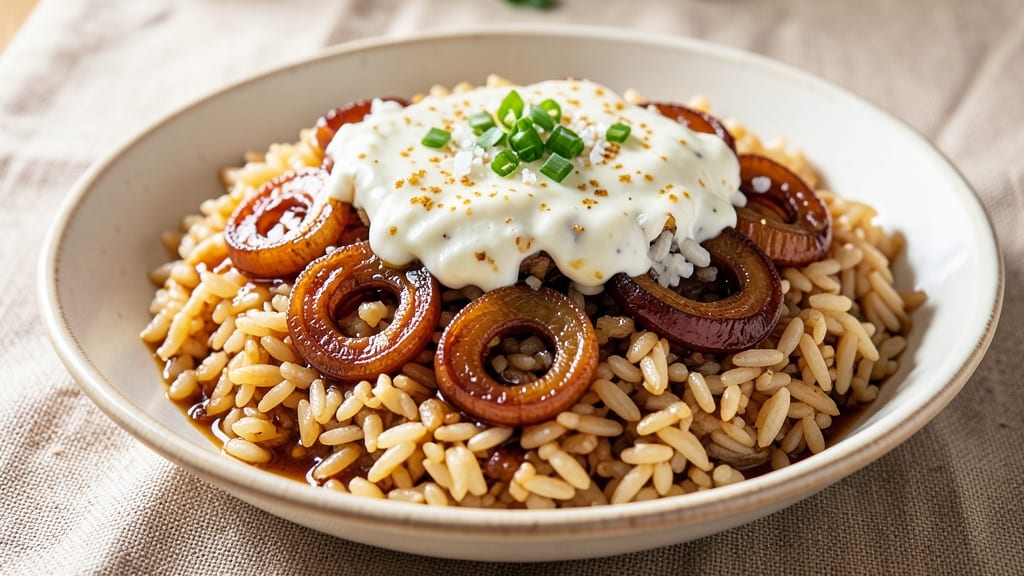
This brown onion rice recipe transforms simple ingredients into a fragrant, caramelized masterpiece that elevates any meal. The key lies in slow-cooking onions until deep brown and sweet, then toasting rice in their rich oils before simmering in broth—creating layers of umami that build with every bite.
What starts as a basic rice dish becomes something deeply comforting and restaurant-worthy.
Perfect for weeknight dinners or meal prep, this method delivers fluffy, aromatic rice with minimal effort. The caramelized onions add natural sweetness that balances perfectly with savory proteins like chicken or mushrooms. Whether you're making Japanese-style nikudame or Korean paechu bokkeumbap, this technique ensures rich flavor in every grain.
Ready in just 30 minutes, it's the kind of dish that makes cooking feel like a celebration.
Ingredients for brown onion rice
Transform ordinary rice into restaurant-worthy perfection with these carefully balanced ingredients.
| Ingredient | Amount | Notes |
|---|---|---|
| Long-Grain White Rice 🍚 | 1 ½ cups | Uncooked, jasmine or basmati preferred |
| Yellow Onions 🧅 | 2 whole | Yellow or sweet onions, sliced into 1/4-inch wedges |
| Unsalted Butter 🧈 | 3 tbsp | European-style preferred for higher fat content |
| Chicken Broth 💧 | 2 cups | Low-sodium, homemade or quality store-bought |
| Dry White Wine 🍷 | ½ cup | Sauvignon Blanc or Pinot Grigio, optional |
| Diamond Crystal Kosher Salt 🧂 | 1 ½ tsp | Adjust to taste, measure carefully |
| Freshly Ground Black Pepper 🌶️ | ½ tsp | Freshly cracked for optimal flavor |
| Fresh Thyme Leaves 🌿 | 1 tbsp | Or 1 tsp dried thyme if fresh unavailable |
| Extra-Virgin Olive Oil 🫒 | 1 tbsp | For finishing, fruity variety preferred |
| Garlic Cloves 🧄 | 2 cloves | Minced, for finishing |
| Fresh Parsley 🌿 | 2 tbsp | Chopped, for garnish |
The onions are the heart of this dish—yellow or sweet onions develop the deepest caramelization. Look for onions with vibrant, firm flesh and avoid any with sprouting or soft spots. Costco or Trader Joe's often carry large yellow onions at better prices than standard grocery stores. For even sweeter results, peel and slice them uniformly before cooking, as consistent thickness ensures even browning. The butter adds richness, so European-style brands like Plugrá or Kerrygold melt more smoothly and provide better flavor than American varieties.
No white wine? Substitute with extra chicken broth—the dish won't miss it, but the acidity helps balance the sweetness. Fresh thyme is ideal, but dried works at one-third the amount if you're in a pinch. For the rice, jasmine or basmati stay separate best during cooking, while long-grain white rice works if that's what you have. Pre-sliced onions from the store? Toss them—they release too much moisture and won't caramelize properly. The garlic and parsley can be swapped for green onions if you prefer a milder finish, but fresh herbs elevate the dish significantly.
Store cooked rice in an airtight container for up to 5 days in the fridge, though it reheats best when fresh. The caramelized onions keep well too—freeze extras in a sealed bag for up to 3 months. For meal prep, portion into single servings before storing to maintain texture. This dish reheats beautifully—cover with a damp paper towel and warm in the microwave for 2 minutes on medium-high. The flavors actually deepen overnight, making it perfect for leftovers.
Why You'll Love This Recipe
- One-Pot Magic: I swear by this recipe when I’m too tired to wash a second pan. Just brown the onions in butter, add rice and broth, and let it simmer—no stirring required after the first 5 minutes. That deep, caramelized onion flavor coats every grain without the fuss.
- Wine-Infused Depth: Honestly, the white wine isn’t just for show—it adds a bright, savory lift that cuts through the richness of the butter. The broth reduces into a glossy, umami-packed sauce that clings to the rice like it’s been slow-cooked for hours. (Yes, even on a Tuesday night.)
- Meal Prep MVP: This rice keeps perfectly for days in the fridge, and reheats like it was just made. I double the batch on Sundays—half goes in lunches, the other half pairs with whatever protein I’m craving that week. No sad, dry reheated rice here.
- Budget-Friendly Luxe: Between us, this tastes like a restaurant side dish but costs pennies. The onions caramelize into sweet, jammy bits, the butter makes it feel indulgent, and the wine adds sophistication without breaking the bank. My wallet and taste buds both win.
Step-by-step instructions for brown onion rice
Transform simple ingredients into rich, caramelized rice with deep sweetness and savory depth.
Develop the Onion Caramelization
Heat a heavy-bottomed skillet over medium-low heat and add the 2 whole yellow onions, sliced into ¼-inch wedges. Cook undisturbed for 15 minutes until the onions soften and begin releasing their juices. This slow cook ensures gentle caramelization without burning.
After 15 minutes, stir the onions and reduce heat to low. Continue cooking for another 20-25 minutes, stirring occasionally, until the onions turn deep golden brown with sweet, jammy edges. You're aiming for a balance between tender and slightly crispy—this forms the aromatic base of your dish. If the onions stick, add a teaspoon of chicken broth to deglaze and prevent burning.
Build the Flavor Foundation
Increase heat to medium and add the 3 tablespoons unsalted butter. Let it melt completely, then stir in the 1 tablespoon fresh thyme leaves and ½ teaspoon freshly ground black pepper. Cook for 1 minute until the thyme releases its aromatic oils and the butter foams slightly.
Add the 1.5 cups long-grain white rice and stir to coat the grains evenly in the caramelized onions and butter. Cook for 2 minutes, stirring constantly, until the rice becomes translucent at the edges. This step ensures each grain absorbs the rich onion flavor before absorbing liquid. If the mixture appears dry, add ¼ cup chicken broth to maintain moisture.
Deglaze and Simmer
Pour in the ½ cup dry white wine (if using) and scrape up any browned bits from the bottom of the pan with a wooden spoon. This deglazing step captures concentrated flavor that would otherwise burn. Let the wine simmer for 2-3 minutes until mostly evaporated, then add the 2 cups chicken broth and 1½ teaspoons diamond crystal kosher salt.
Bring the mixture to a gentle boil, then reduce heat to low and cover the skillet with a tight-fitting lid. Simmer for 15 minutes, maintaining a steady temperature. Avoid peeking or stirring—this disrupts the cooking process and can lead to uneven texture. You'll know it's ready when the liquid has been absorbed and the rice is tender but still slightly firm to the bite.
Finish with Aromatics
Remove the skillet from heat and let it sit covered for 5 minutes. This resting period allows residual steam to cook the rice evenly. Stir in the 1 tablespoon extra-virgin olive oil, 2 minced garlic cloves, and 2 tablespoons chopped fresh parsley. The olive oil adds a fruity brightness that cuts through the richness, while the garlic and parsley introduce fresh, bright notes.
For best results, serve immediately while the rice is still warm. The caramelized onions should be deeply sweet with a touch of crispness, and each grain should be tender with a slight bite. If storing, keep covered at room temperature for up to 2 hours or refrigerate for up to 3 days, though reheating may slightly alter the texture.
Pro Tips For Making Brown Onion Rice
- Sear Onions Low and Slow: I used to blast those onions on high and end up with bitter, blackened bits—waste. Instead, cook them on medium-low with a splash of wine first. The alcohol burns off gently, and you’ll get deep caramelization without the char. Stir every 3-4 minutes, and don’t rush it.
- Rinse Rice Until Clear: Skipping this step means gummy rice. Rinse your long-grain white rice under cold water until the water runs nearly clear—about 3-4 times. It removes excess starch, which keeps the grains separate and fluffy. (Yes, even if you’re impatient, this matters.)
- Deglaze with Wine First: After browning the onions, pour in that dry white wine before adding broth. The wine will sizzle and lift all the fond off the pan, giving your rice a richer base flavor. If you add broth first, you’re missing out on half the taste.
- Use Cold Broth for Control: I learned this the hard way—hot broth can shock the rice and turn it mushy. Measure your chicken broth cold, then heat it alongside the rice. This lets you adjust heat precisely and avoids sudden temperature spikes. Your rice will stay firm and absorb flavors evenly.
Pro cooking tips for perfect results
Heat Control Secrets
Start with medium-low heat when cooking the onions—this is the single most important step for perfect caramelization. Too high heat burns the onions before they soften, while too low heat won't develop the deep sweetness. I use a heavy-bottomed Dutch oven (like Le Creuset) to distribute heat evenly. 🌡️
After the initial 15 minutes, reduce to low heat and let the onions cook undisturbed. Stirring too soon releases moisture and prevents proper browning. The goal is deep golden brown with jammy edges—this takes patience but creates the richest flavor base.
Butter Timing Tricks
Add the 3 tablespoons unsalted butter only after the onions are deeply caramelized. This ensures the butter melts into the onions' natural sugars, creating a silky, flavorful coating for the rice. I prefer European-style butter (like Plugrá) because it has a higher fat content that enhances the dish's richness.
Let the butter foam slightly before adding rice—this indicates it's reached its ideal melting point. If you rush this step, the butter will burn and create bitterness. A quick 1-minute cook with thyme and pepper is all you need before introducing the rice.
Rice Texture Mastery
The 2-minute toast of rice in the caramelized butter is where flavor absorption happens. Stir constantly to prevent sticking, and watch for translucent edges—this signals the rice is ready to absorb the broth. If your rice looks dry at this stage, add ¼ cup broth immediately to maintain moisture.
During the 15-minute simmer, resist the urge to peek or stir. Every time you lift the lid, you release steam and disrupt the cooking process. The rice should finish tender but with a slight bite—this is the perfect texture for brown onion rice.
Deglazing Like a Pro
Use dry white wine (like Sauvignon Blanc) to deglaze the pan—it adds acidity that brightens the dish. If you're skipping wine, use extra chicken broth instead. The key is to scrape up every browned bit from the bottom of the pan—this captures umami-rich fond that would otherwise burn.
Let the wine reduce by half before adding the broth. This concentrates the flavors and prevents the rice from becoming watery. The 1½ teaspoons salt should be added to the broth, not the rice directly—this ensures even distribution.
Resting for Perfection
The 5-minute rest after cooking is crucial—it allows residual steam to finish cooking the rice evenly. During this time, the flavors meld together, creating a cohesive, aromatic dish. Skipping this step can leave your rice dry or unevenly cooked.
Finish with olive oil, garlic, and parsley for a bright contrast to the rich caramelized onions. The olive oil adds fruity brightness, while the garlic and parsley introduce fresh, herbaceous notes that cut through the sweetness. Stir gently to incorporate without breaking the rice grains.
Nutrition facts
Frequently asked questions
Can I use brown onions instead of yellow onions?
Yes! Brown onions work perfectly—they'll caramelize slightly faster due to their natural sugars. Just monitor them closely after the first 15 minutes to prevent burning. For even deeper flavor, try sweet onions (like Vidalia) which develop a sweeter, jammy texture when cooked low and slow.
What's the best rice for this recipe?
Jasmine or basmati rice are ideal—they stay separate and absorb flavors beautifully. For a stickier texture, use long-grain white rice. Avoid instant rice or pre-cooked varieties, as they won't develop the same aromatic depth. The key is uncooked grains that toast properly in the caramelized onions.
Can I make this recipe without wine?
Skip the wine and use an extra ¼ cup chicken broth instead. The acidity from broth helps balance the sweet onions, though wine adds a lovely brightness. For a non-alcoholic alternative, try apple cider vinegar (1 teaspoon) mixed with broth for similar acidity.
Why did my rice turn out mushy?
Mushy rice usually happens from overcooking or too much liquid. Always use a heavy-bottomed pan and maintain low heat after adding broth. The rice should finish with just a slight bite—not completely soft. If using a different stove, reduce heat by 10% to prevent boiling.
How can I add protein to this dish?
Brown onion rice pairs beautifully with chicken thighs (poached in the broth) or shrimp (sautéed separately). For vegetarian options, stir in mushrooms or chickpeas during the final 5 minutes of simmering. Keep proteins separate until the very end to prevent overcooking.