
Side Dishes
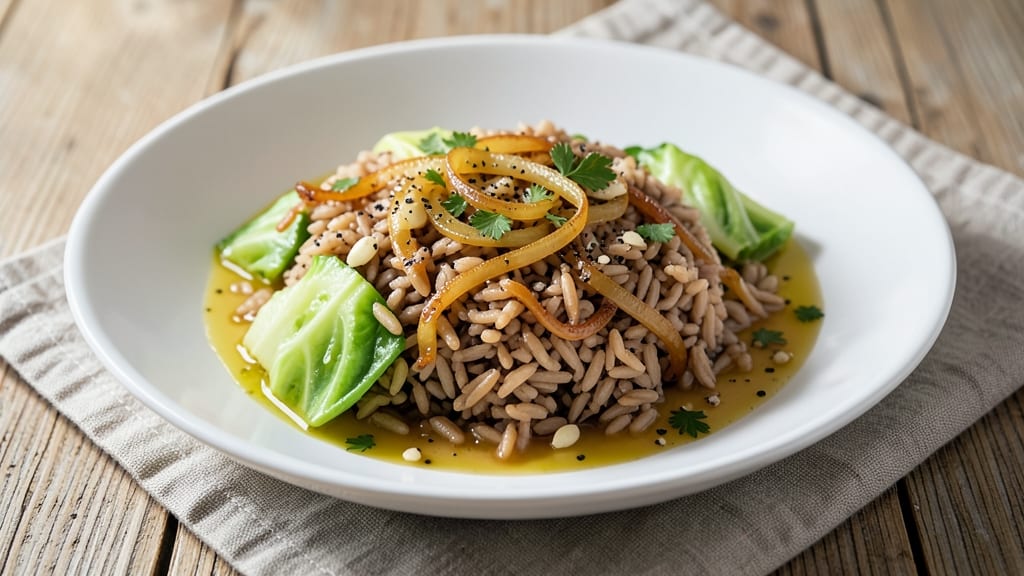
This one-pot brown rice and cabbage recipe transforms simple ingredients into a hearty, flavorful side dish that pairs perfectly with grilled meats or stands alone as a vegetarian meal.
The secret lies in sautéing cabbage until it develops a satisfying crunch, then combining it with aromatic brown rice for a dish that’s both nutritious and deeply satisfying.
With just 30 minutes of active time and minimal cleanup, this recipe delivers a savory, garlicky crunch that elevates everyday meals. The cabbage softens into tender, caramelized bites while absorbing the rice’s rich flavors, creating a texture contrast that makes every bite exciting.
Serve it alongside your favorite main dish or enjoy it as a light, filling meal on its own.
Ingredients for brown rice and cabbage
Simple ingredients that deliver big flavor in one aromatic pot.
| Ingredient | Amount | Notes |
|---|---|---|
| Long-Grain Brown Rice 🌾 | 1 cup | Uncooked, rinsed well |
| Green Cabbage 🥬 | 4 cups | Shredded, outer leaves removed |
| Garlic Cloves 🧄 | 4 cloves | Minced, fresh preferred |
| Yellow Onion 🧅 | 1 whole | Diced, medium size |
| Vegetable Broth 💧 | 2 cups | Low-sodium preferred |
| Extra-Virgin Olive Oil 🫒 | 2 tbsp | For sautéing, fruity |
| Salt 🧂 | 1 tsp | Kosher or sea salt |
| Ground Black Pepper 🌶️ | ½ tsp | Freshly ground preferred |
| Dried Thyme 🌿 | ½ tsp | Or 1 tbsp fresh thyme |
| Lemon Juice 🍋 | 1 tbsp | Freshly squeezed |
| Fresh Parsley 🌿 | ¼ cup | Chopped, for garnish |
The brown rice is the base—short-grain varieties like Calrose stay fluffy and hold up best. Bob's Red Mill or Lundberg are reliable brands, but any store-bought bag works. For the cabbage, green or purple varieties add the best crunch, but red cabbage works too if you want a sweeter twist. Fresh thyme is ideal, but dried at one-fifth the amount (so 1/10 tsp) gets you close. The garlic should smell pungent when minced—no weak cloves here.
No vegetable broth? Water plus 1 tsp soy sauce mimics the depth. Short on cabbage? Substitute Brussels sprouts or broccoli florets—just halve the cooking time. The olive oil matters here—avoid light or refined oils that lack flavor. For extra umami, add 1 tsp miso paste with the broth. Fresh parsley is optional but brightens the dish; dried at one-third the amount works if you're in a pinch.
Rice keeps well in the fridge for 5 days—reheat with a splash of water. Cabbage loses crispness after 3 days, so make it fresh if possible. For meal prep, store components separately and assemble when ready to eat. Freezes beautifully for up to 3 months—just thaw overnight before reheating. Garnish with extra parsley right before serving to keep it vibrant.
Why You'll Love This Recipe
- One-Pot Magic: I swear by this—just toss everything in a single pot, let it simmer, and walk away. No dirty dishes piling up, no last-minute scrubbing. The brown rice soaks up the broth while the cabbage softens just enough to stay crisp in all the right spots.
- Garlic Bomb: Between us, that minced garlic sizzling in the onion is the moment this dish becomes irresistible. It’s not overpowering—just enough to make your kitchen smell like a cozy dinner invitation every time you stir.
- Lunchbox Hero: Between my work lunches and my kid’s school snacks, this keeps perfectly for days. Cold or reheated, it’s the same satisfying bite—nutty rice, tender cabbage, and that savory broth punch. Pack it in containers, and you’ve got a meal that actually excites them to eat.
- Pantry Staple: Honestly, if you’ve got rice, cabbage, and a few aromatics, you’ve got this. No fancy ingredients, no last-minute grocery runs—just reliable, budget-friendly comfort that somehow feels special. My wallet and I both approve.
Step-by-step instructions for brown rice and cabbage one-pot
This simple method delivers perfectly tender rice and cabbage with bold garlic flavor—all in a single pot.
Sauté Aromatics Until Fragrant
Heat the 2 tablespoons extra-virgin olive oil in a large pot or deep skillet over medium heat. Add the diced yellow onion and cook for 3-4 minutes until softened and translucent, stirring occasionally. This step builds the flavor foundation.
Add the 4 cloves minced garlic and cook for another 30 seconds until you can smell the aromatic oils releasing. Be careful not to let the garlic brown—it should be golden but not dark. This quick cooking preserves the garlic's sweetness rather than letting it turn bitter.
Toast the Brown Rice
Add the 1 cup long-grain brown rice to the pot and stir to coat it evenly in the oil. Toast the rice for 2-3 minutes until it turns a light golden color. This step is crucial—it enhances the nutty flavor of the rice and prevents it from becoming mushy later.
I like to press the rice gently with a wooden spoon during toasting to ensure even browning. You'll see the grains start to separate slightly—that's your signal they're ready for the next step.
Add Cabbage and Seasonings
Stir in the 4 cups shredded green cabbage, making sure it's evenly distributed throughout the rice. Add the 1 teaspoon salt, ½ teaspoon ground black pepper, and ½ teaspoon dried thyme, mixing well to coat everything in the seasonings.
Pour in the 2 cups vegetable broth, bringing the mixture to a gentle simmer. The liquid should just come up to the base of the cabbage—if it looks too shallow, add a splash of water. Cover the pot with a tight-fitting lid and reduce heat to low.
Simmer Until Rice is Tender
Let the mixture simmer for 40-45 minutes without lifting the lid. The brown rice needs this longer cooking time to absorb the liquid and develop its characteristic chewy texture. You'll know it's done when the rice is tender but still has a slight bite, and the cabbage has softened but still holds its shape.
About 10 minutes before the rice is done, stir in the 1 tablespoon lemon juice. This brightens the flavors and balances the earthiness of the cabbage. The lemon also helps prevent the rice from becoming too heavy.
Rest and Garnish
Once the rice is tender, remove the pot from heat and let it sit covered for 5 minutes. This resting period allows the flavors to meld and the rice to finish absorbing any remaining liquid. Fluff the rice gently with a fork before serving.
Garnish each serving with ¼ cup chopped fresh parsley just before eating. The parsley adds a fresh contrast to the savory, garlicky rice and cabbage. Serve immediately while still warm for the best texture and flavor.
Pro Tips For Making Brown Rice And Cabbage
- PARBOIL THE RICE FIRST: I learned this the hard way—skipping the parboil means your brown rice stays chewy and undercooked by the time the cabbage is done. Rinse 1 cup of rice, then boil it in 2 cups water for 5 minutes before draining. This jumpstarts the cooking process and guarantees fluffy, fully cooked grains by the end.
- CHOP CABBAGE SMALL AND UNIFORM: Big chunks of cabbage turn into mushy, sad piles while the edges stay tough. Cut the wedges into 1-inch pieces, then slice those into thin, even strips—like matchsticks. They’ll cook faster and soak up the broth instead of sitting there like soggy bricks.
- SWEAT THE AROMATICS LOW AND SLOW: After burning three batches of garlic and onions, I finally realized: high heat = bitter, burnt flavor. Cook the sliced onion and minced garlic in a dry pan over medium-low for 8–10 minutes, stirring often, until the onion is translucent and garlic smells sweet. Patience here makes the whole dish taste better.
- USE THE RICE WATER FOR BROTH: Don’t pour that starchy rice water down the drain—it’s liquid gold for this dish. After draining the parboiled rice, add the water to your vegetable broth (about ½ cup) for extra depth. It thickens the sauce slightly and adds a subtle nuttiness that balances the cabbage’s sharpness.
Essential equipment for brown rice and cabbage
Large Pot or Skillet
Start with a large, heavy-bottomed pot or deep skillet—5-6 quarts is ideal. I use my All-Clad stainless steel Dutch oven for even heat distribution, but a Calphalon nonstick skillet works perfectly too.
The key is choosing a pot with a tight-fitting lid to trap steam and cook the rice evenly. Avoid thin aluminum pots—they heat unevenly and can scorch your cabbage. 🔥
Rice Cooker Option
For foolproof results, use a multi-function rice cooker like the Cuisinart MultiCooker or Zojirushi NS-ZMC10U. These models handle brown rice perfectly and let you add the cabbage during the cooking cycle.
Just follow the manufacturer's instructions for "one-pot" settings. The built-in timer ensures no overcooking, and cleanup is a breeze since everything stays in one container.
Sharp Knives and Cutting Board
Shredding 4 cups of cabbage efficiently requires a sharp chef's knife and a cutting board. I recommend an 8-inch Wüsthof Ikon for clean cuts. For speed, use a mandoline with the thickest slice setting—just be careful with your fingers!
A microplane also works for garlic, but I prefer mincing with a sharp knife for better control over the texture. 🌶️
Measuring Tools
Precision matters with this recipe, so invest in a stainless steel measuring cup and spoon set. I use my OXO Good Grips set—they’re durable and accurate. For the ½ teaspoon dried thyme, a spoon with leveling edges ensures consistency.
A digital kitchen scale is optional but helpful if you’re new to brown rice—weighing the 1 cup uncooked rice (about 185 grams) gives you a more reliable yield than volume measurements.
Wooden Spoon and Tongs
A heat-resistant wooden spoon (like OXO Good Grips) is perfect for stirring and toasting the rice without scratching your pot. For fluffing the final dish, I reach for long-handled tongs—they let you gently separate the grains without crushing them.
Avoid metal utensils when the pot is hot, as they can cause hot spots and uneven cooking. 💡
Lid with Vent or Splatter Guard
If your pot doesn’t have a vented lid, use a silicone splatter guard or a towel-lined lid to prevent condensation from dripping back into the rice. I keep a stainless steel splatter screen on hand for this exact purpose.
The lid should fit snugly to lock in steam, but not so tightly that it traps too much moisture—aim for a finger-width gap around the edges when closed. This balance keeps the rice tender without making it soggy.
Nutrition facts
Frequently asked questions
Can I substitute white rice for brown rice in this recipe?
While you can use white rice, the texture and flavor will differ significantly. Brown rice stays chewy and nutty, while white rice becomes softer and absorbs more liquid, potentially making the dish mushy. If you must substitute, use 1 ¼ cups white rice and reduce the broth to 1 ½ cups—it cooks faster (25-30 minutes) but loses the hearty texture.
How do I prevent the cabbage from turning bitter or slimy?
Bitterness or sliminess happens when cabbage overcooks. Keep the heat at low after adding broth and avoid peeking under the lid. For extra crunch, stir in 1 tablespoon apple cider vinegar with the lemon juice at the 10-minute mark—it balances flavors and preserves texture. Also, shred cabbage just before cooking to prevent oxidation.
Can I make this recipe without a pot lid?
Yes, but your rice may cook unevenly and dry out. Use a silicone lid cover or heavy-duty aluminum foil pressed tightly over the pot. If uncovered, check the rice every 10 minutes and add 2-3 tablespoons water as needed. The cabbage will take longer to soften—aim for 50-55 minutes total.
What's the best way to reheat leftovers?
Reheat gently in a pot with 2 tablespoons water per serving over low heat for 5-7 minutes, covered. Microwaving works too—use a microwave-safe dish with a damp paper towel over the top for 2 minutes, then stir and add 10 seconds more if needed. Avoid reheating cabbage more than once—it loses crispness quickly.
Can I add protein to this dish?
Stir in 1 cup cooked chickpeas or ½ cup crumbled tofu when adding the cabbage. For meat lovers, brown ½ pound ground turkey with the garlic, then proceed as directed. Add protein 5 minutes before the rice is done to prevent overcooking. For extra flavor, toss in 1 teaspoon smoked paprika with the meat.