
Main Courses
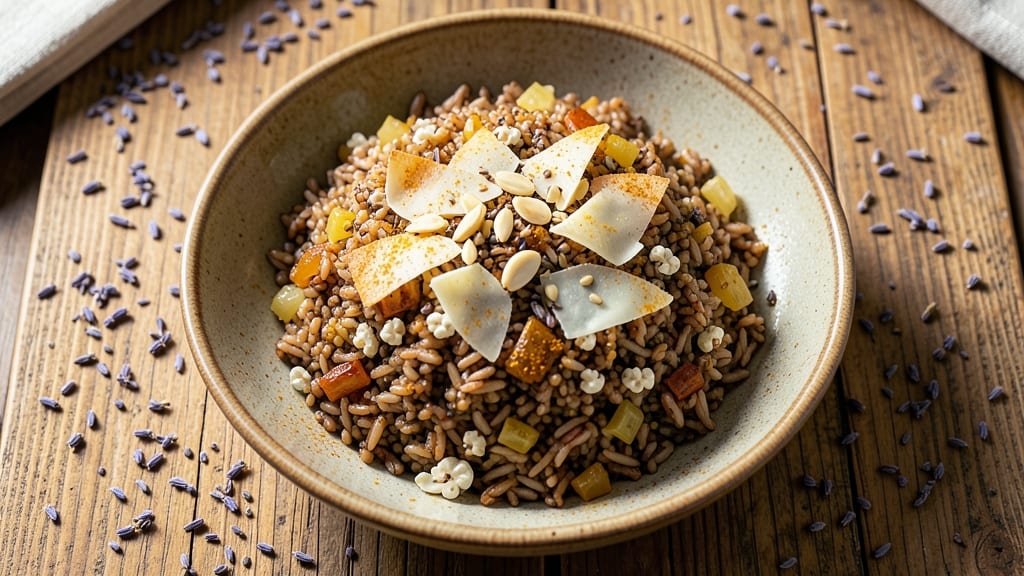
This brown rice and quinoa pilaf recipe delivers a perfect balance of nutty grains, aromatic herbs, and toasted almond crunch that transforms simple ingredients into a restaurant-worthy dish.
The secret lies in cooking the grains separately for ideal texture—fluffy quinoa and tender brown rice—then combining them with sautéed onions, garlic, and warm spices like cumin and turmeric for depth.
What sets this apart is the final touch of toasted almonds, which adds both texture and a subtle sweetness that rounds out the earthy flavors.
The result is a golden grain medley with each bite offering contrast—chewy quinoa, fluffy rice, and crispy almonds—all tied together by a bright lemon-herb dressing that keeps the dish vibrant.
This pilaf works as a satisfying vegetarian main course, a hearty side for grilled proteins, or even a make-ahead meal prep favorite. Ready in about 45 minutes, it’s a versatile dish that proves wholesome grains can be anything but boring.
Ingredients for brown rice and quinoa pilaf
These wholesome grains and aromatic spices transform into a restaurant-worthy golden grain medley.
| Ingredient | Amount | Notes |
|---|---|---|
| Long-Grain Brown Rice 🌾 | 1 cup | Uncooked, rinsed thoroughly |
| Quinoa 🌾 | ¾ cup | Rinsed to remove bitterness |
| Yellow Onions 🧅 | 1 whole | Diced, medium size preferred |
| Garlic Cloves 🧄 | 4 cloves | Minced, fresh preferred |
| Ground Cumin 🌿 | 1 tsp | Toasted for deeper aroma |
| Turmeric Powder 🌶️ | ½ tsp | For vibrant golden color |
| Ground Coriander 🌿 | ½ tsp | Adds citrusy brightness |
| Salt 🧂 | 1 tsp | Diamond Crystal preferred |
| Black Pepper 🌶️ | ½ tsp | Freshly ground for best flavor |
| Fresh Lemon Juice 🍋 | 2 tbsp | From organic lemons |
| Extra-Virgin Olive Oil 🫒 | ½ cup | For sautéing and finishing |
| Fresh Parsley 🌿 | ¼ cup | Chopped, flat-leaf preferred |
| Toasted Sliced Almonds 🥜 | ½ cup | Lightly browned for crunch |
| Vegetable Broth 💧 | 2 cups | Low-sodium preferred |
| Fresh Thyme Leaves 🌿 | 1 tbsp | Chopped, stems removed |
The quality of your grains sets the foundation. Bob's Red Mill brown rice and quinoa are my go-to for consistent texture, but any organic brands work—just check for whole-grain labeling. The almonds deserve special attention: Planters or Blue Diamond sliced almonds toast beautifully in a dry pan for about 5 minutes until fragrant. Fresh herbs like parsley and thyme should be vibrant green with no wilting, and the lemon juice should come from recently squeezed lemons for peak brightness. For the spices, Penzeys offers toasted cumin that elevates the dish, though your local grocery store's ground spices will suffice if used within 6 months of opening.
No quinoa? Swap in farro or barley—both hold texture well—but adjust cooking times as they require longer soaking. Short on almonds? Pistachios or cashews add a different but equally delightful crunch, though toast them separately to maintain individual texture. The vegetable broth can be homemade or a quality low-sodium store-bought version like Pacific Foods. For the lemon juice, if you're out, bottled lemon juice works in a pinch, though it lacks the freshness of squeezed. The spices are flexible: Smoked paprika at half the amount adds depth if you're missing cumin, and dried thyme can replace fresh at one-third the quantity, though fresh is always preferred for that bright herbal note.
Store cooked grains in airtight containers for up to 5 days in the refrigerator, though they reheat best when kept separate until serving. The toasted almonds stay crisp for 1 week if stored in a sealed container away from light. For meal prep, I recommend cooking the grains and assembling the pilaf just before serving to maintain optimal texture. The lemon-herb dressing can be made 1 day ahead and stored separately. Freezing isn't recommended for this dish, as the almonds lose their crunch and the grains can become gummy when thawed.
Why You'll Love This Recipe
- One-Pot Magic: I swear by this trick—just toss everything into one pot. The brown rice and quinoa cook together, soaking up the onions, garlic, and cumin like a sponge. No fussing with separate pans, no sticky rice mess.
- Earthy, Toasty Depth: That ground cumin? It’s the star. Sautéed onions and garlic caramelize just enough to give this pilaf a warm, nutty backbone that sticks with you. Honestly, it’s the kind of flavor that makes you pause mid-bite.
- Meal Prep MVP: Between us, this is my lunchbox lifesaver. Cook a big batch on Sunday, and you’ve got protein-packed sides for salads, bowls, or even stuffed peppers all week. No reheating disasters—just grab and go.
- Budget-Friendly Powerhouse: Brown rice and quinoa stretch forever, and onions/garlic/cumin cost pennies. I’ve fed four people for under $5 with this—plus, it’s one of those dishes that tastes even better the next day. Leftovers? More like future meals.
Step-by-step instructions for brown rice and quinoa pilaf
This method delivers perfectly balanced texture and vibrant flavor in every bite.
Prepare the Grains for Even Cooking
Rinse the 1 cup long-grain brown rice thoroughly under cold water until the water runs clear. This removes excess starch that can make the grains gummy. Transfer to a bowl and set aside. Rinse the 0.75 cup quinoa in the same manner, shaking it vigorously in a fine-mesh strainer to remove bitterness from the saponins.
In a large skillet, heat the 0.5 cup extra-virgin olive oil over medium heat. Add the diced 1 whole yellow onions and cook for 5-6 minutes until softened but not browned. Add the minced 4 cloves garlic cloves and cook for 30 seconds until fragrant. This aromatic base forms the flavor foundation for the pilaf.
Toast the Spices and Combine Ingredients
In a small dry skillet, toast the 1 tsp ground cumin for 30 seconds until lightly fragrant. Immediately transfer to a bowl and let cool. In the same skillet, combine the toasted cumin with 0.5 tsp turmeric powder, 0.5 tsp ground coriander, 1 tsp salt, and 0.5 tsp black pepper. Stir constantly for 1 minute to bloom the spices and deepen their flavors.
Add the rinsed brown rice and quinoa to the skillet with onions and garlic. Stir to coat the grains evenly with the oil and spices. Cook for 2 minutes until the grains begin to turn translucent at the edges. This step ensures each grain absorbs the flavorful oil before liquid is added.
Simmer with Broth for Perfect Texture
Pour in the 2 cups vegetable broth, stirring gently to combine. Bring to a simmer over medium heat, then reduce to low. Cover with a tight-fitting lid and cook for 35-40 minutes. The brown rice requires more time than quinoa, so check at the 30-minute mark. You'll know it's ready when the grains are tender but still have a slight bite - a fork should slide in easily but not feel mushy.
During the last 5 minutes of cooking, stir in the 1 tbsp fresh thyme leaves and 2 tbsp fresh lemon juice. This brightens the dish and prevents the grains from becoming too heavy. The lemon juice also helps balance the earthy flavors of the grains.
Finish with Crunch and Fresh Herbs
Remove from heat and let sit covered for 5 minutes. Fluff the grains gently with a fork, then stir in the 0.25 cup chopped fresh parsley and 0.5 cup toasted sliced almonds. The almonds add a delightful crunch that contrasts beautifully with the tender grains. The parsley provides a fresh finish that cuts through the richness.
For optimal texture, serve immediately while the grains are still warm. The pilaf should be moist but not saucy, with each grain distinct and flavorful. The toasted almonds should maintain their crunch, and the lemon-infused broth should be noticeable in every bite.
Pro Tips For Making Brown Rice And Quinoa Pilaf
- Toast the Grains First: Brown rice and quinoa taste deeper when you dry-toast them in oil for 2-3 minutes before adding liquid. I used to skip this, but now it’s non-negotiable—it prevents mushiness and builds flavor. Just keep the heat medium; high heat burns before the grains get golden.
- Rinse Quinoa Twice: Quinoa’s natural bitterness fades when you rinse it under cold water before cooking—twice, not once. I learned this after tasting a batch that tasted like dirt. Drain well in a fine-mesh strainer, or it’ll stay soggy.
- Sauté Onions Until Soft: Cook the onions until they’re translucent and just starting to caramelize—about 8-10 minutes—before adding garlic. Rushed batches turn out bland because the onions never release their sweetness. Low and slow here makes all the difference.
- Use Two Pans: Brown rice and quinoa cook at different rates—start them separately in two pots. Quinoa’s done in 12-15 minutes; brown rice needs 40-45. Mixing them in one pot guarantees one will be mushy while the other’s underdone. (Yes, it’s extra dishes, but it’s worth it.)
Regional styles of brown rice and quinoa pilaf
Middle Eastern Couscous Twist
Inspired by Moroccan flavors, swap the quinoa for 1 cup whole-wheat couscous and toast 1 tsp cumin seeds in a dry pan until fragrant.
Cook the couscous with 1.5 cups vegetable broth and 1 tbsp lemon juice off the heat, then fold in 0.5 cup chopped cilantro and 0.25 cup raisins for sweetness. Top with 2 tbsp chopped mint and serve with grilled lamb or falafel. 🌿
Japanese-Inspired Sesame Pilaf
For an Asian-inspired version, replace the almonds with 0.5 cup toasted sesame seeds and add 1 tbsp soy sauce and 1 tsp grated fresh ginger to the broth. Stir in 1 tbsp toasted sesame oil at the end and garnish with 2 tbsp sliced scallions.
This works beautifully as a side for teriyaki chicken or sushi rolls. 🥢
Mediterranean Herb Pilaf
Inspired by Greek flavors, add 1 tbsp dried oregano and 1 tsp smoked paprika to the spice mix. Finish with 0.25 cup crumbled feta cheese and 0.25 cup chopped kalamata olives for briny contrast.
Serve with grilled vegetables or as a base for a hearty salad. The feta adds a tangy richness that balances the earthy grains. 🧀
Mexican-Inspired Spicy Pilaf
For a Southwestern flair, add 1 tsp chili powder and 0.5 tsp cayenne pepper to the spice mix. Stir in 0.5 cup black beans during the last 10 minutes of cooking and top with 0.25 cup avocado cubes and 2 tbsp chopped cilantro.
A squeeze of lime juice before serving adds a zesty finish. This version pairs perfectly with grilled shrimp tacos. 🌶️
Indian-Inspired Turmeric Pilaf
Boost the turmeric to 1 tsp and add 0.5 tsp garam masala at the end of cooking. Swap the almonds for 0.5 cup toasted cashews and garnish with 2 tbsp chopped cilantro and 1 tbsp toasted cumin seeds.
Serve with a side of raita (yogurt sauce) and grilled chicken tikka. The garam masala adds a warm, aromatic depth that elevates the dish. 🌟
Nutrition facts
Frequently asked questions
Why cook brown rice and quinoa separately in this recipe?
Quinoa cooks in about 15 minutes while brown rice needs 35-40 minutes. Cooking them together means the quinoa will turn mushy before the rice is done. This method ensures perfect texture—fluffy quinoa and tender brown rice—with each grain distinct in every bite.
Can I make this pilaf without toasted almonds?
Swap almonds for 0.5 cup toasted pecans, 0.5 cup pumpkin seeds, or even 2 tbsp sunflower seeds for a different crunch. For a savory twist, try 0.5 cup crispy fried onions. The key is adding something crunchy to balance the tender grains.
How do I prevent my pilaf from getting soggy?
Keep grains separate until ready to serve, and store them in airtight containers in the fridge. When reheating, use low heat and add just 1-2 tbsp water to revive moisture. The toasted almonds should always be added fresh—they lose crunch when reheated. For meal prep, assemble the pilaf just before serving.
What's the best way to add protein to this vegetarian pilaf?
Try 0.5 cup chickpeas (cooked and lightly mashed), 0.5 cup crumbled tofu (pan-seared with smoked paprika), or 0.5 cup lentils (cooked with cumin). For extra richness, add 0.25 cup crumbled feta or 0.5 cup marinated white beans. Stir protein in during the last 10 minutes of cooking.
Can I make this pilaf in an Instant Pot?
Yes! Sauté onions and garlic as directed, then add all ingredients except almonds and parsley. Seal the lid and cook on high pressure for 10 minutes, then quick-release. Let sit for 5 minutes before fluffing and adding the finishing touches. The Instant Pot version cooks about 20 minutes faster than stovetop.