
Sauces & Condiments
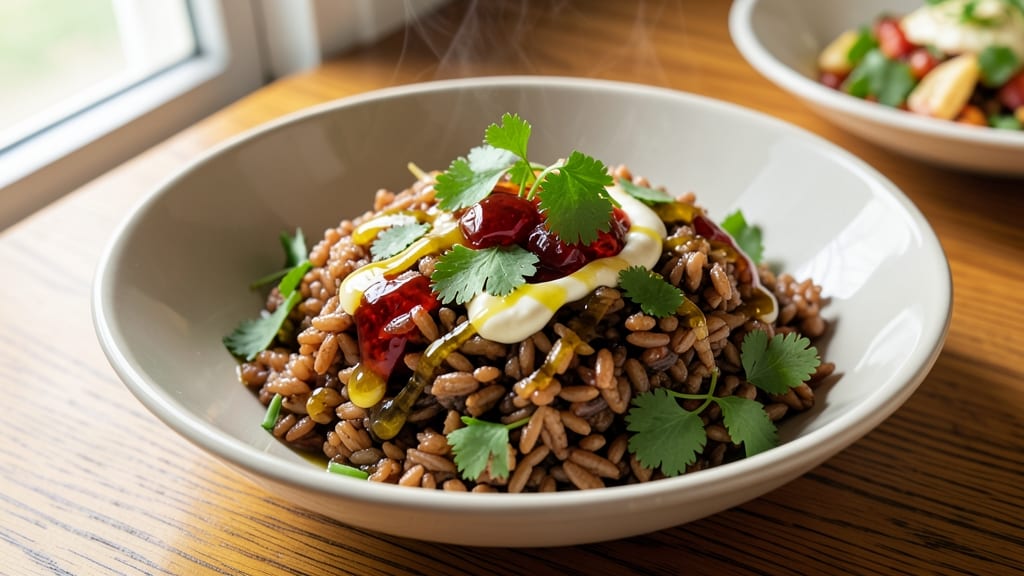
This brown rice dressing recipe transforms simple ingredients into a nutty, velvety base that elevates every salad and grain bowl. The secret lies in blending cooked brown rice with tangy vinegar, rich olive oil, and fresh herbs—creating a dressing that’s creamy without dairy and packed with earthy depth.
It’s the kind of versatile sauce that turns ordinary meals into restaurant-worthy dishes with just a few minutes of prep.
What makes this dressing special is its texture and adaptability. Unlike traditional creamy dressings, this one relies on cooked brown rice for body, while lemon juice and Dijon mustard add brightness and tang. The result is a smooth, spreadable sauce that clings beautifully to greens, grains, or proteins.
Best of all, it keeps well in the fridge for up to a week, making it perfect for meal prep.
Ingredients for brown rice dressing
Nine simple ingredients create this velvety, restaurant-quality brown rice dressing that transforms salads and bowls.
| Ingredient | Amount | Notes |
|---|---|---|
| Cooked Brown Rice 🍚 | 1 ½ cups | Day-old rice preferred for texture |
| Extra-Virgin Olive Oil 🫒 | ½ cup | High-quality, fruity variety |
| Apple Cider Vinegar 🍏 | ¼ cup | For tangy brightness |
| Fresh Lemon Juice 🍋 | 2 tbsp | Freshly squeezed |
| Dijon Mustard 🌶️ | 1 tbsp | For depth of flavor |
| Fresh Parsley 🌿 | ¼ cup | Finely chopped, stems removed |
| Fresh Cilantro 🌿 | ¼ cup | Optional, for freshness |
| Garlic Cloves 🧄 | 2 cloves | Minced for aromatic depth |
| Salt 🧂 | ½ tsp | Diamond Crystal preferred |
| Black Pepper 🌶️ | ¼ tsp | Freshly ground |
The brown rice is the foundation—day-old rice works best for a smoother texture, but freshly cooked rice in a pinch will do. For the olive oil, look for extra-virgin with fruity notes; Trader Joe's or Whole Foods carry excellent options. The apple cider vinegar adds depth, so don’t substitute with white vinegar—it lacks the complexity. Fresh herbs are key, but if you’re short on time, dried parsley at one-third the amount works in a bind. The garlic should be minced finely for a silky finish.
No Dijon mustard? Yellow mustard at half the amount will work, though the flavor won’t be as refined. Short on fresh herbs? Dried basil or oregano can substitute, but reduce to one-fourth the amount to avoid bitterness. The lemon juice can be swapped for white wine vinegar, though the dressing will taste slightly different. For a nutty boost, add 1 tablespoon of tahini—it blends right in. If you prefer a sweeter dressing, a teaspoon of maple syrup balances the tang beautifully.
This dressing thickens as it sits, so stir before each use for a smooth consistency. Store in an airtight jar in the fridge for up to 1 week, or freeze in ice cube trays for single-serving portions. It reheats well—just give it a quick whisk to restore its creamy texture. Double the batch if you’re meal prepping; it’s perfect for drizzling over grains, roasted veggies, or salads all week.
Why You'll Love This Recipe
- No-Chop Needed: I swear by this—just toss cooked brown rice into your food processor with olive oil, vinegar, and lemon juice. The mustard blends right in without any fuss, and honestly? You’ll forget how little effort went into something this good.
- Tangy Crunch Surprise: That lemon juice and apple cider vinegar combo? It’s the secret weapon—bright, sharp, and just sweet enough to make your greens or grain bowls taste like a restaurant dish. The Dijon mustard adds this little kick that keeps your taste buds guessing.
- Weeknight Meal Prep Hero: I make a big batch on Sundays and use it all week—tossed with roasted veggies, as a salad topper, or even slathered on sandwiches. It’s my go-to when I’m too tired to cook but still want something that feels intentional.
- Pantry Staple Magic: Between us, this dressing is ridiculously budget-friendly. Brown rice is cheap, olive oil lasts forever, and vinegar? You already have it. Plus, it keeps in the fridge for days, so you’re never scrambling for something fresh last-minute.
Step-by-step instructions for brown rice dressing
This nutty, creamy dressing comes together in minutes with simple techniques for perfect texture.
Prep Ingredients for Maximum Flavor
Start by finely chopping the 0.25 cup fresh parsley and 0.25 cup fresh cilantro separately, removing any stems. I like to use a sharp chef's knife for this—it gives you more control than a food processor. The parsley should be in small, even pieces while the cilantro can stay slightly larger for texture contrast.
Next, mince the 2 cloves garlic as finely as possible. This ensures the garlic flavor distributes evenly throughout the dressing without any noticeable chunks. Use the flat side of your knife to press down on the garlic cloves before mincing—this makes them easier to chop. Keep all prepped ingredients within reach for the next step.
Combine Wet Ingredients for Smooth Emulsion
In a large mixing bowl, combine the 0.5 cup extra-virgin olive oil, 0.25 cup apple cider vinegar, 2 tablespoons fresh lemon juice, and 1 tablespoon Dijon mustard. Whisk these ingredients together vigorously for about 1-2 minutes until fully emulsified. You'll notice the mixture thickens slightly and becomes uniform in color.
This emulsification step is crucial for creating that creamy texture promised in the title. The acidity from the vinegar and lemon juice helps break down the oil molecules, creating a stable emulsion. If you see any separation at this stage, simply whisk a bit more vigorously—it should come back together.
Incorporate Seasonings and Herbs
Add the minced 2 cloves garlic, 0.5 teaspoon salt, and 0.25 teaspoon black pepper to the wet mixture. Stir well to distribute these seasonings evenly. Then, gently fold in the chopped 0.25 cup parsley and 0.25 cup cilantro using a spatula, being careful not to overmix and break down the herbs.
At this point, taste the mixture and adjust the seasoning if needed. You might want to add a bit more salt or lemon juice to balance the flavors. The dressing should have a tangy brightness from the vinegar and lemon, with a subtle nutty depth from the olive oil and Dijon mustard.
Add Cooked Brown Rice for Nutty Texture
Gently fold in the 1.5 cups cooked brown rice using your spatula. I prefer using day-old rice for this dressing because it's firmer and holds its shape better than freshly cooked rice. The rice should be at room temperature to prevent the dressing from becoming watery.
Mix carefully to combine the rice with the dressing, ensuring each grain is coated. The rice will absorb some of the liquid, so you may need to add 1-2 tablespoons of water if the dressing becomes too thick. The final texture should be creamy but still coat the back of a spoon. Let the dressing sit for 5-10 minutes before using to allow the flavors to meld.
Adjust Consistency and Serve
After letting the dressing rest, give it one final taste and adjust the seasoning if necessary. If it's too thick, thin it with 1 tablespoon of water at a time until you reach your desired consistency. For a lighter dressing, you can add an extra 1-2 tablespoons of lemon juice or apple cider vinegar.
The dressing should be creamy yet pourable, with a nutty undertone from the brown rice and a bright tang from the vinegar and lemon. This versatile dressing works beautifully on salads, grain bowls, or even as a dip for crudités. Store any leftovers in an airtight container in the refrigerator for up to 5 days, giving it a quick stir before using to restore its creamy texture.
Pro Tips For Making Brown Rice Dressing
- CHILL THE RICE FIRST: Cold rice blends smoother and absorbs flavors better—skip the warm rice, or you’ll end up with a gluey, uneven dressing. Spread cooked brown rice on a tray and refrigerate for 30 minutes before blending, even if you’re in a hurry.
- USE A FOOD PROCESSOR, NOT A BLENDER: A blender struggles with brown rice’s texture, leaving chunks. A food processor’s sharp blade breaks it down evenly while keeping the dressing thick and creamy. Pulse, then let it run—force isn’t the answer.
- MEASURE VINEGAR AND OIL BY VOLUME, NOT DROPS: Eyeballing acid (vinegar, lemon) and fat (olive oil) ruins balance. Use a measuring spoon or scale—start with 2 tablespoons each, then adjust. Too much vinegar? The dressing tastes harsh. Too little? It’s bland.
- SALT THE MIXTURE AFTER EMULSIFYING: Add salt after combining all ingredients, or it’ll break the emulsion and make the dressing separate. Taste first, then sprinkle in ½ teaspoon at a time—this keeps the texture silky, not curdled.
Regional styles of this recipe
Japanese-Inspired Tsukemono Style
Transform this dressing into a tsukemono-inspired sauce by swapping apple cider vinegar for 2 tablespoons of rice vinegar and adding 1 teaspoon of grated fresh ginger. Include 1 tablespoon of soy sauce and ½ teaspoon of sesame oil for umami depth.
The brown rice adds a subtle sweetness that pairs beautifully with sushi bowls or cold noodles. 🍱
Mediterranean Herb Variation
For a Mediterranean twist, replace cilantro with 0.25 cup fresh dill and add 1 teaspoon of dried oregano. Use lemon zest instead of extra lemon juice and swap Dijon mustard for 1 tablespoon of tahini.
This version shines on Greek salads or as a dip for pita chips. The nutty tahini enhances the brown rice's earthiness. 🌿
Thai-Inspired Chili-Lime Dressing
Add 1 tablespoon of fish sauce (or soy sauce for vegan) and 1 teaspoon of chili flakes for a Thai-inspired kick. Replace apple cider vinegar with 2 tablespoons of lime juice and add 1 tablespoon of honey to balance the heat.
This dressing works perfectly with summer rolls, grilled shrimp, or fresh spring rolls. The brown rice adds a satisfying chewiness. 🌶️
Southwest-Inspired Smoky Dressing
For a Southwest flair, add 1 teaspoon of smoked paprika and ½ teaspoon of ground cumin. Swap apple cider vinegar for 2 tablespoons of lime juice and include 1 minced jalapeño (seeds removed for mild heat).
This version pairs beautifully with black bean bowls, roasted corn, or grilled chicken. The smoky spices complement the nutty rice perfectly. 🔥
Italian-Inspired Basil Pesto Twist
Swap parsley for 0.25 cup fresh basil and add 1 tablespoon of pine nuts (toasted) for a pesto-inspired dressing. Use white wine vinegar instead of apple cider vinegar and add ½ teaspoon of red pepper flakes for a subtle kick.
This version works wonderfully on caprese salads or as a pasta sauce. The basil brightens the nutty rice base. 🍅
Asian-Inspired Sesame-Ginger Dressing
For an Asian-inspired version, replace apple cider vinegar with 2 tablespoons of rice vinegar and add 1 tablespoon of toasted sesame seeds and 1 teaspoon of grated ginger.
Include 1 tablespoon of hoisin sauce for depth. This dressing elevates stir-fries, dumplings, or steamed veggies. The sesame seeds add a satisfying crunch and nutty contrast. 🥢
Nutrition facts
Frequently asked questions
Can I use white rice instead of brown rice in this dressing?
While you can substitute white rice, the texture and flavor will differ significantly. Brown rice provides a nutty depth and chewy texture that white rice lacks. If you must use white rice, try adding 1 tablespoon of tahini or 1 teaspoon of almond butter to mimic the nutty profile. The dressing will be lighter but still delicious!
How do I make this dressing vegan?
This recipe is already vegan-friendly! Simply ensure your olive oil is plant-based (most are) and use vegan-friendly Dijon mustard. For extra richness, add 1 tablespoon of nutritional yeast or ½ teaspoon of smoked paprika to enhance the umami flavor. The brown rice base makes it naturally plant-based and satisfying.
Why does my dressing separate after mixing?
Separation happens when oil and vinegar aren't properly emulsified. Whisk the wet ingredients (oil, vinegar, lemon juice, mustard) vigorously for 2-3 minutes to create a stable emulsion. If it separates later, stir vigorously before using. Adding 1 teaspoon of cornstarch to the rice before blending can also help stabilize the texture.
Can I make this dressing ahead of time?
This dressing actually improves with time as flavors meld. Store it in an airtight container in the fridge for up to 5 days. Give it a good stir before using—it may thicken slightly, so add 1-2 tablespoons of water if needed. For longer storage, freeze in ice cube trays and thaw overnight in the fridge.
What are the best dishes to pair with this dressing?
This versatile dressing works beautifully on salads, grain bowls, roasted vegetables, and even as a dip for crudités or pita chips. Try it with Mediterranean dishes like tabbouleh, or use it as a base for cold noodle salads. The nutty flavor also complements grilled proteins like chicken or fish perfectly!