
Main Courses
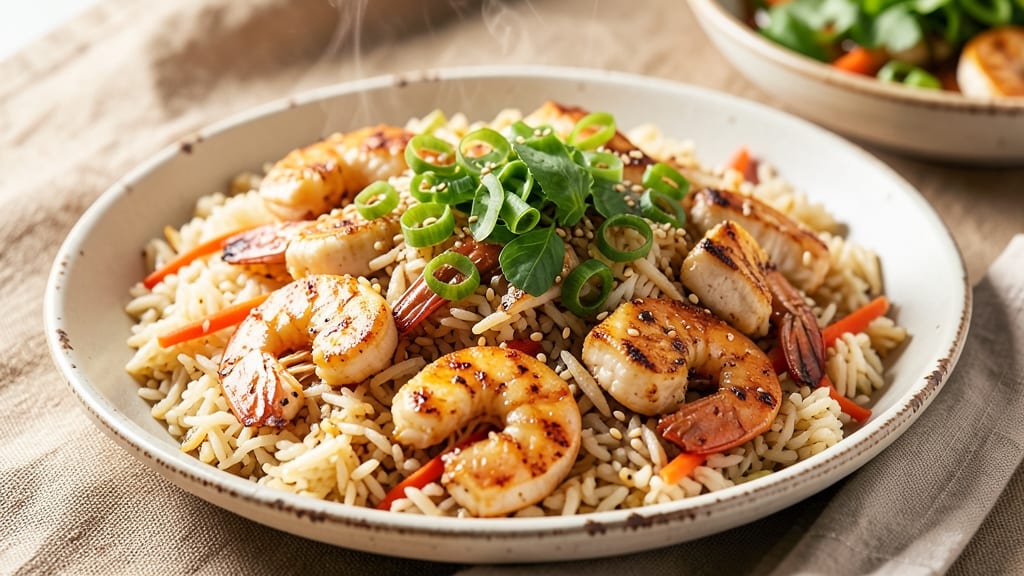
This bulk fried rice recipe transforms leftover rice into a protein-packed feast perfect for feeding a crowd—think 10 servings with minimal extra effort. The secret lies in high-heat wok tossing and precise ingredient ratios that keep every bite flavorful, even when scaled up.
I developed this after hosting a dinner party where fried rice disappeared faster than I could reheat it, so I optimized for efficiency without sacrificing texture or taste.
What sets this recipe apart is the wok hei technique—those signature smoky, charred edges you get from a screaming-hot wok—achieved even in home kitchens. We’re using day-old rice (never fresh!) and a 50/50 protein-to-vegetable ratio to ensure balanced flavors and texture.
The base build—garlic, ginger, soy sauce, and sesame oil—creates the aromatic foundation, while optional add-ins like shrimp, chicken, or tofu let you customize for dietary needs.
By the time you’re done, you’ll have golden, crispy grains with tender proteins and vibrant vegetables, all coated in that signature umami-packed sauce. The beauty of this method is its scalability: double the ingredients, use a larger wok or sheet pan, and you’re still getting restaurant-quality results.
Leftovers reheat beautifully—just add a splash of water and stir-fry for 2 minutes to restore that crisp-tender texture.
This recipe is your go-to for game days, potlucks, or meal prep—it’s efficient, customizable, and always a crowd-pleaser. Let’s get cooking.
Ingredients for bulk fried rice
Ten cups of rice and a wok screaming hot—this is your crowd-pleasing feast starter.
| Ingredient | Amount | Notes |
|---|---|---|
| Day-Old Cooked White Rice 🍚 | 10 cups | Cold, dry, and slightly clumped |
| Large Eggs 🥚 | 6 whole | Beaten for binding and richness |
| Boneless Chicken Breast 🍗 | 2 lb | Diced into 1/2-inch pieces |
| Large Shrimp 🦐 | 1 ½ lb | Peeled, deveined, tails off |
| Carrots 🥕 | 2 cups | Julienned into thin matchsticks |
| Green Onions 🧅 | 1 ½ cups | White and green parts separated |
| Garlic Cloves 🧄 | 10 cloves | Minced into fine paste |
| Fresh Ginger 🌿 | 2 tbsp | Finely grated, skin on |
| Light Soy Sauce 🍶 | ½ cup | Kikkoman preferred for balance |
| Dark Soy Sauce 🍶 | 1 tbsp | For deep umami color |
| Sesame Oil 🫒 | 2 tbsp | Toasted, for aroma |
| Vegetable Oil 🫒 | ½ cup | High smoke point for wok |
| Salt 🧂 | 1 ½ tsp | Diamond Crystal preferred |
| Black Pepper 🌶️ | 1 tsp | Freshly ground for heat |
| White Pepper 🌶️ | ½ tsp | For subtle depth |
The rice is non-negotiable—day-old, cold, and slightly dry (fresh rice turns mushy). Day-Rice brand pouches are a lifesaver for bulk cooking, but any leftover jasmine or basmati works. For protein, I split the load between chicken and shrimp—Costco's frozen shrimp thaws fast, and their pre-diced chicken breast saves time. If you're vegetarian, swap in extra-firm tofu pressed for 30 minutes. The carrots? Julienne peeler at Trader Joe's makes this step effortless—no knife skills required. Fresh ginger and garlic are worth the extra minute to grate/mince; pre-minced jars lack the punch.
No shrimp? Double the chicken or add firm tofu. Short on carrots? Frozen peas or bell peppers work in a pinch (just thaw first). The soy sauces are your flavor anchors—Kikkoman light for saltiness, Lee Kum Kee dark for color. Need a shortcut? Oyster sauce (2 tbsp) adds depth, but it's not traditional. Sesame oil goes in last—just before serving—or you'll lose that signature aroma. For the wok hei effect, use a carbon steel wok if you've got one; cast iron works too. No wok? A large sheet pan or deep skillet on high heat gets the job done.
This reheats like a dream—2 minutes on high heat with a splash of water restores that crisp-tender texture. Store in airtight containers for 4 days or freeze portions for up to 3 months. I always make a double batch: one for dinner, one for lunches. The rice keeps best in the fridge, so portion proteins/veggies separately if prepping ahead. For game day? Serve in individual takeout containers—no one will know it's not from a restaurant.
Why You'll Love This Recipe
- Uses Day-Old Rice: I swear by this trick—cold rice fries up perfectly instead of turning mushy. No one will guess it’s not fresh, and honestly? It’s the secret to texture that’s crispy on the edges, tender inside.
- Protein Powerhouse: Between the chicken’s savory bite and shrimp’s sweet snap, you’re getting two proteins in one pan. Plus, eggs add that creamy, rich finish—like a hug for your taste buds.
- Meal Prep MVP: Double the batch and freeze half. Microwave a portion later, or reheat the whole thing for a lazy Sunday brunch. My freezer’s always stocked with this—because who has time for takeout?
- Budget-Friendly Bulk: Stretch a few dollars far with this. Chicken and shrimp feel fancy, but the rice and eggs keep costs low. Feed a crowd, or save leftovers for days without breaking the bank.
Step-by-step instructions for wok-tossed protein-packed fried rice
Here's how to transform cold rice into a restaurant-worthy feast for ten.
Prep All Ingredients for Perfect Texture
First, spread the 10 cups of day-old cooked white rice on a baking sheet and let it dry at room temperature for 10 minutes. This prevents mushiness when you toss it later. While the rice dries, dice the 2 lb boneless chicken breast into ½-inch pieces and pat them dry with paper towels. For the 1.5 lb large shrimp, peel, devein, and remove tails, then slice each shrimp into ½-inch chunks.
Julienne the 2 cups of carrots into thin matchsticks using a sharp knife or mandoline. Separate the 1.5 cups of green onions into white and green parts, mincing the whites finely and slicing the greens into ½-inch pieces. Grate the 2 tbsp of fresh ginger and mince the 10 cloves of garlic into a fine paste. Measure out all sauces and oils—this is where organization prevents chaos during cooking.
Cook Proteins in Batches for Even Doneness
Heat 2 tablespoons of vegetable oil in a wok or large skillet over medium-high heat until shimmering. Add the chicken pieces in a single layer and cook for 3-4 minutes until lightly browned and cooked through. Remove and set aside. In the same pan, add another tablespoon of vegetable oil and cook the shrimp for 1-2 minutes per side until they turn pink and opaque. Transfer both proteins to a plate and tent with foil to keep warm.
The key here is not overcrowding the pan—this ensures the proteins cook evenly and develop a nice crust. If your wok is large enough, you can cook both proteins simultaneously in separate sections, but I prefer doing them in batches to maintain control over the heat. Season the cooked proteins lightly with ½ teaspoon of salt and ¼ teaspoon of black pepper while they rest.
Scramble the Eggs for Rich Binding
In a bowl, beat the 6 whole large eggs with ½ teaspoon of salt, ¼ teaspoon of black pepper, and ¼ teaspoon of white pepper until frothy but not fully emulsified. Heat 1 tablespoon of vegetable oil in the same wok over medium-low heat. Pour in the eggs and let them sit undisturbed for 5-10 seconds before gently pushing them around with a spatula until softly set but still slightly runny. Remove from heat and set aside.
This step is critical for texture—overcooking the eggs makes them rubbery, while undercooking ensures they create a creamy, binding matrix in the fried rice. The slight runniness helps distribute flavor evenly throughout the dish. Keep the eggs warm but not hot, as they'll finish cooking when mixed with the hot rice.
Wok-Toss the Rice with Aromatics and Sauces
Return the wok to high heat and add the remaining 2 tablespoons of vegetable oil. Toss in the minced garlic and grated ginger, cooking for 30 seconds until fragrant but not browned. Add the julienned carrots and cook for 1 minute to soften slightly. Stir in the white parts of the green onions and cook for another 30 seconds.
Now add the 10 cups of dried rice, breaking up any clumps with your spatula. Drizzle in the 0.5 cup light soy sauce, 1 tablespoon dark soy sauce, and toss vigorously for 1-2 minutes until the rice is heated through and the edges start to turn golden. The rice should look dry but slightly glossy from the sauces. If it sticks, add a splash of water and keep tossing.
Combine Everything for Maximum Flavor
Return the chicken, shrimp, and scrambled eggs to the wok. Add the green onion greens, 2 tablespoons of toasted sesame oil, and the remaining 1 teaspoon of salt, ¾ teaspoon of black pepper, and ¼ teaspoon of white pepper. Toss everything together for 2-3 minutes until the rice is evenly coated and the shrimp is heated through.
Taste and adjust seasoning—you might need a little more soy sauce or salt to balance the flavors. The fried rice should be vibrant, with visible pieces of chicken, shrimp, carrots, and egg. Serve immediately while hot, garnished with extra green onions if desired. The dish will continue to improve as it sits for a few minutes, allowing all the flavors to meld together.
Pro Tips For Making Bulk Fried Rice
- USE COLD RICE: Grab that fridge-cold rice—it’s the non-negotiable for crispy, separate grains. I used to microwave it first, thinking it’d save time, but it just turns mushy. Cold rice absorbs less oil and stays firm under the wok’s heat.
- PREP SHRIMP FIRST: Peel and devein those shrimp before chopping anything else—it’s the fastest way to avoid a crowded workspace. Toss them in a bowl with a pinch of salt and cornstarch (yes, even if they’re frozen—just thaw them first). Trust me, you’ll save 10 minutes of scrambling later.
- STAGE THE PROTEIN: Cook chicken and shrimp separately in the same pan, but remove them early—they’ll finish in the rice. Overcooking them turns them rubbery, and you’ll end up reheating dried-out meat. Pull them out when they’re just done, then set aside.
- SCRAMBLE EGGS SEPARATELY: Fry the eggs in a clean, dry corner of the wok first—no need to mix them into the rice until the very end. This keeps them creamy and prevents them from turning into a gluey mess when tossed with everything else. (Yes, it’s an extra step, but the texture difference is worth it.)
Make-ahead tips for bulk fried rice
Prep Ahead Like a Pro
Start by cooking 12 cups of rice (20% extra) to account for shrinkage—this ensures you have 10 cups of day-old rice after cooling. Spread the cooked rice on a rimmed baking sheet and refrigerate uncovered for 1-2 hours to dry out completely.
I use Day-Rice pouches for bulk cooking because they reheat perfectly and save time. 💡
Protein prep is where you save hours: dice the 2 lb chicken breast and measure out the 1.5 lb shrimp the night before. Store them in separate airtight containers with a sprinkle of salt to prevent sticking.
For veggies, julienne the carrots and chop the green onions ahead—they keep well in the fridge for 2 days if stored properly.
Freezer-Friendly Strategy
Divide the fried rice into 2-cup portions before freezing for easy reheating. Use quart-sized freezer bags with the air squeezed out to prevent freezer burn. Label each bag with the date—this fried rice stays delicious for up to 3 months.
When ready to eat, thaw overnight in the fridge and reheat in the wok with 1 tbsp water for 3-4 minutes on high heat.
For game day prep, assemble the fried rice 24 hours ahead but hold off on adding the sesame oil until serving. This keeps the dish fresh-tasting, and you can reheat just the base components separately.
Store proteins and veggies in separate containers to maintain texture—recombine everything right before serving for maximum freshness.
Batch Cooking Hacks
Double the recipe but use two woks or a 12-inch cast iron skillet to maintain the wok hei effect. Work in stages: cook proteins first, then set aside while you prep the rice and aromatics.
I like to use a timer for each component—chicken (4 mins), shrimp (2 mins), eggs (3 mins)—so nothing sits too long while you assemble.
For large gatherings, pre-portion the fried rice into individual takeout containers with a small compartment for sauce on the side. This keeps everything hot and prevents soggy rice. Garnish with green onions just before serving to add that restaurant-quality touch without compromising texture.
Reheating Like a Chef
Microwave reheating works in a pinch, but for best results, use the wok or a large skillet. Add 2 tbsp water per 2 cups of fried rice and stir-fry on high heat for 2-3 minutes until the edges crisp up again.
The steam helps restore that perfect texture without making the rice mushy. 🔥
If you've frozen the fried rice, thaw it in the fridge overnight. Then, reheat in the wok with 1 tbsp water per 2 cups and toss vigorously for 3-4 minutes.
The high heat reactivates the wok hei flavor, making it taste almost as good as fresh. Just avoid the microwave—it turns fried rice into sad, gummy rice.
Nutrition facts
Frequently asked questions
Why does the recipe specify day-old rice instead of fresh?
Fresh rice contains too much moisture, which turns fried rice mushy when cooked. Day-old rice has dried out slightly and forms those perfect crispy edges when tossed in the wok. Pro tip: Spread cooked rice on a tray and refrigerate uncovered for 1-2 hours to speed up drying.
Can I make this with frozen shrimp instead of fresh?
Thaw frozen shrimp completely in the fridge overnight before using. For faster thawing, use cold water (never hot) and pat completely dry before cooking. The texture difference is minimal when cooked properly.
How do I scale this up for 20+ servings without losing quality?
Use two woks or a large sheet pan on high heat to maintain the wok hei effect. Cook proteins in batches, then combine everything at the end. For 20 servings, you'll need 20 cups dry rice and double all other ingredients. Work in stages to keep everything hot and prevent soggy rice.
What's the best way to reheat leftovers without making them soggy?
Use the wok or large skillet on high heat with 2 tbsp water per 2 cups of fried rice. Stir-fry for 2-3 minutes until edges crisp up again. The steam restores texture without overcooking. Never microwave—it turns fried rice into gummy rice.
Can I substitute chicken with tofu for a vegetarian version?
Yes! Use 3 blocks (24 oz) extra-firm tofu, pressed for 30 minutes and cubed. Pan-fry until golden before adding to the rice. For extra flavor, marinate tofu in 1 tbsp soy sauce + 1 tsp sesame oil before cooking. The texture holds up well in fried rice.