
Side Dishes
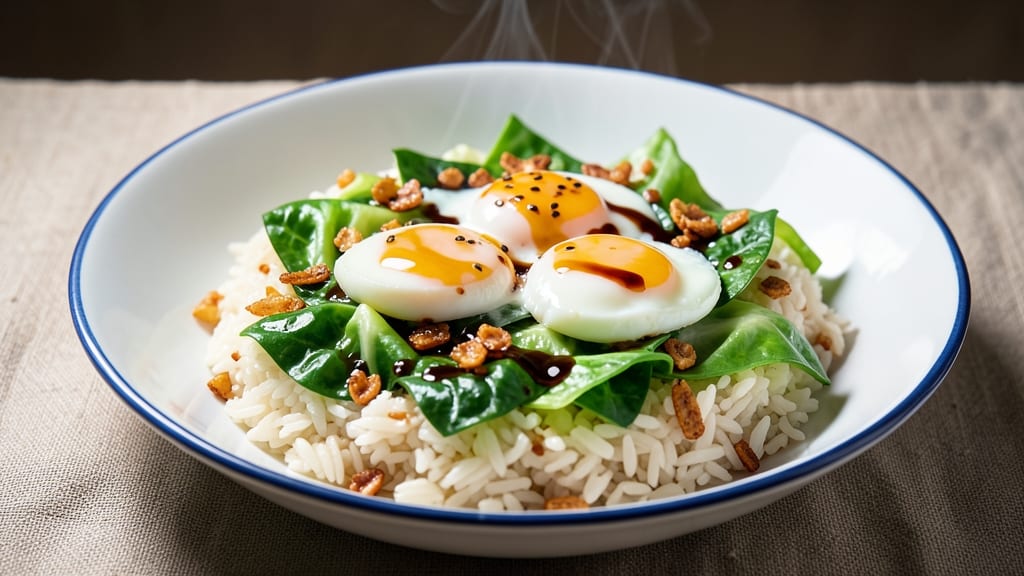
This cabbage egg rice recipe transforms simple ingredients into a hearty, fragrant dish that balances tender cabbage, soft eggs, and perfectly steamed rice. The key lies in sautéing cabbage until just tender—keeping it crisp enough to hold its shape while absorbing bold flavors like garlic and ginger.
A touch of soy sauce and sesame oil elevates the dish, while softly scrambled eggs add richness without overpowering the cabbage's natural crunch.
What makes this recipe stand out is its versatility—it serves as a complete meal or pairs beautifully with grilled meats or miso soup. The eggs, cooked to a delicate texture, melt into the cabbage, creating a harmonious bite that’s both comforting and satisfying.
Ready in under 30 minutes, this dish delivers restaurant-quality results with minimal effort, proving that homemade can be both simple and impressive.
Ingredients for cabbage egg rice
Fresh cabbage, tender eggs, and aromatic rice—simple ingredients for a restaurant-worthy vegetarian dish.
| Ingredient | Amount | Notes |
|---|---|---|
| Green Cabbage 🥬 | 6 cups | Shredded, outer leaves removed |
| Large Eggs 🥚 | 6 whole | Room temperature for even cooking |
| Long-Grain White Rice 🍚 | 1 ½ cups | Uncooked, jasmine preferred |
| Vegetable Oil 🫒 | 3 tbsp | High smoke point for stir-frying |
| Garlic Cloves 🧄 | 4 cloves | Minced, fresh preferred |
| Fresh Ginger 🌿 | 1 tbsp | Grated, peeled, for aromatic base |
| Low-Sodium Soy Sauce 🍶 | 2 tbsp | For umami depth without excess salt |
| Toasted Sesame Oil 🫒 | 1 tbsp | For nutty aroma, add at the end |
| Green Onions 🧅 | ¼ cup | Sliced, white and green parts separated |
| Salt 🧂 | ½ tsp | Kosher or sea salt, adjust to taste |
| Black Pepper 🌶️ | ¼ tsp | Freshly ground for best flavor |
| Water 💧 | 2 cups | For rice cooking, filtered preferred |
The cabbage is your canvas here—green or Savoy work best, but avoid wilted outer leaves. Trader Joe's or local Asian markets often carry pre-shredded bags, but whole heads last longer and stay crisper. For the eggs, room temperature is key—they’ll scramble more evenly into silky strands. If you’re using jasmine rice, rinse it until the water runs clear to remove excess starch, which prevents mushy results. Day-O brand is my go-to for consistent texture, but any long-grain variety works.
No sesame oil? Toasted peanut oil adds a similar nutty depth, though it’s less aromatic. Fresh ginger can be swapped for 1 tsp ground ginger, but the texture won’t be as vibrant. For the garlic, pre-minced jars are convenient, but fresh minced has more punch. The soy sauce can be reduced if you’re watching sodium—coconut aminos mimic the flavor with less salt. If your green onions are tough, reserve the whites for cooking and garnish with just the tender greens.
Rice keeps best in an airtight container in the fridge for 4-5 days, though it reheats better if you spread it thin on a tray first. The cabbage-egg mixture holds for 3 days refrigerated, but the eggs may dry out—cover tightly with plastic wrap pressed directly on the surface. For meal prep, cook the rice and stir-fry separately, then combine when ready to eat to keep the cabbage crisp. Freeze portions of the egg-cabbage mix for up to 3 months—it reheats beautifully with a splash of water.
Why You'll Love This Recipe
- One-Pot Magic: I swear by this—just toss everything in one pan, stir, and walk away. The cabbage wilts while the rice cooks, and those eggs? They nestle right into the mix like they belong there.
- Garlic-Crispy Crunch: That first bite of fried garlic hitting your tongue, then the tender cabbage, and the eggs—still runny in the center? Honestly, it’s the kind of flavor that makes you pause mid-bite and think, "Why don’t I make this more often?"
- Lunchbox Hero: Between us, this is my go-to for packed lunches. Cold or reheated, it’s still solid—just add a splash of soy sauce if you’re feeling fancy. My kids grab it without complaining (a miracle in itself).
- Pantry Staple: You’ve got rice, eggs, and a cabbage? You’ve got a meal. No fancy ingredients, no last-minute grocery runs. And leftovers? They reheat like a dream, so you’re basically feeding your future self too.
Step-by-step instructions for cabbage egg rice stir-fry
Master this balanced dish with tender eggs, fragrant rice, and crisp-tender cabbage in perfect harmony.
Cook the Jasmine Rice to Fluffy Perfection
Rinse the 1.5 cups long-grain white rice thoroughly under cold water until the water runs clear. This removes excess starch that can make the rice gummy. Drain well and transfer to a pot with the 2 cups water. Bring to a boil over medium-high heat, then reduce to a simmer, cover tightly, and cook for 15 minutes.
Resist the urge to peek or stir—this disrupts the steam circulation needed for even cooking. After 15 minutes, turn off the heat and let the rice steam undisturbed for another 10 minutes. The residual heat will finish cooking it perfectly. Fluff gently with a fork before serving, but don't press down—this creates a dense, compact rice that won't pair well with the stir-fry.
Prepare the Egg Mixture for Silky Texture
Crack the 6 whole large eggs into a bowl and whisk vigorously until the yolks and whites are fully combined. Add the 0.5 teaspoon salt and 0.25 teaspoon black pepper, whisking again until evenly distributed. The eggs should be smooth with no streaks of white remaining.
I like to add a splash of water—about 1 tablespoon—to the egg mixture at this stage. This creates a lighter, more delicate texture in the final eggs. Cover the bowl and set aside while you prepare the stir-fry base. The eggs should be at room temperature for even cooking, so if they're straight from the fridge, let them sit for 10 minutes before proceeding.
Build the Aromatic Stir-Fry Base
Heat 2 tablespoons vegetable oil in a large wok or skillet over medium-high heat until shimmering. Add the 4 minced garlic cloves and 1 tablespoon grated fresh ginger, stirring constantly for 30 seconds until fragrant but not browned. Add the 6 cups shredded green cabbage and stir-fry for 4-5 minutes until the edges just begin to soften.
Season with the 2 tablespoons low-sodium soy sauce, tossing well to coat the cabbage evenly. The cabbage should be tender-crisp at this stage—bright green with just a slight give when pressed between fingers. If it's browning too quickly, reduce the heat slightly and continue cooking. This foundational step develops the umami depth that carries through the entire dish.
Cook the Eggs to Soft, Silky Perfection
Increase the heat to high and add the remaining 1 tablespoon vegetable oil. Pour the egg mixture into the wok, tilting the pan slightly to create a thin, even layer. Let the eggs cook undisturbed for 20-30 seconds until the edges begin to set but the center remains slightly runny. This creates those signature silky, custard-like eggs.
Gently fold the eggs with a spatula, working quickly but carefully to create soft, delicate ribbons. Remove from heat immediately once the eggs are just set—overcooking turns them rubbery. Transfer the eggs to a plate and set aside, covering lightly to keep warm. The eggs should be tender enough to cut with a fork but still hold their shape slightly when folded.
Combine and Finish with Fragrant Sesame Oil
Return the cabbage mixture to the wok and stir in the 0.25 cup sliced green onions, reserving the white parts for garnish. Add the cooked eggs and toss gently to combine, distributing them evenly throughout the cabbage. The eggs should melt slightly into the cabbage, creating pockets of creamy texture.
Drizzle with the 1 tablespoon toasted sesame oil and toss once more to distribute evenly. The sesame oil adds a nutty aroma that complements the savory cabbage and eggs perfectly. Taste and adjust seasoning if needed—you may need a touch more soy sauce for balance, especially if your cabbage was particularly mild. Serve immediately over the fluffy jasmine rice, garnished with the reserved green onion whites for color and freshness.
Pro Tips For Making Cabbage Egg Rice
- PRE-CHOP CABBAGE SMALL: Tiny, even slices (about ½-inch thick) cook faster and softer than big wedges—no more waiting for the core to stubbornly resist. I used to eyeball it, but measuring with a ruler guarantees consistency, especially if you’re serving a crowd.
- FRIZZ EGGS ON MEDIUM: High heat burns eggs before they crisp; medium heat lets them brown without turning rubbery. Flip them once—no need to rush—when the edges pull away cleanly. (Yes, even if you’re impatient like me.)
- SALT RICE BEFORE WASHING: Toss the raw rice with a pinch of salt and cold water before draining—it seasons the grains from the start. Skipping this means your rice will taste bland no matter how much soy sauce you add later.
- GARLIC IN STAGES: Sauté half the minced garlic with the cabbage first, then add the rest when the eggs go in. This prevents the garlic from burning into bitterness while the cabbage softens. (Pro move: Use fresh, not jarred.)
Make-ahead tips for this recipe
Prep Ahead Strategy
Cook the rice first and store it in an airtight container in the fridge for up to 3 days. The grains stay fluffy when reheated gently with a splash of water—just 15 seconds in the microwave on high.
I like to portion the rice into single-serving containers for grab-and-go meals. 💡
Egg-Cabbage Mix
Shred the cabbage and mix it with 1 tbsp soy sauce and ½ tsp sesame oil in a bowl. Store this mixture separately in an airtight container for 3 days.
The cabbage stays crisp if you pat it dry before storing—this prevents sogginess. Keep the eggs raw until ready to cook for the freshest texture.
Freezer-Friendly
For longer storage, freeze the egg-cabbage mixture in single-serving portions on a tray before transferring to a freezer bag. Thaw overnight in the fridge, then reheat in a skillet with 1 tsp oil over medium heat for 3-4 minutes.
Add the eggs fresh when reheating to maintain their silky texture. ❄️
Reheating Tips
When reheating, use a non-stick skillet to avoid sticking—add 1 tbsp water or broth to the pan to steam the cabbage and prevent drying. Cover the pan for 2 minutes on medium heat, then uncover to crisp the edges. The eggs should be cooked fresh each time for best results.
Meal Prep Timeline
Here’s my 3-day prep plan: Day 1, cook rice and store. Day 2, prep cabbage mix and freeze half. Day 3, cook eggs fresh and assemble. This keeps everything fresh while minimizing daily effort.
I set a timer for 10 minutes on Day 3 to quickly stir-fry the eggs and combine everything—no stress! 💪
Nutrition facts
Frequently asked questions
Can I substitute Savoy cabbage for green cabbage in this recipe?
Savoy cabbage works beautifully—its delicate, frilly leaves add a lovely texture and hold up well to stir-frying. Use the same quantity, but note that Savoy cabbage has more water content, so you may need to cook it for 1-2 minutes less to maintain crispness. The flavor profile is similar, though slightly milder.
How do I make the eggs extra creamy in this dish?
For silky eggs, whisk them vigorously with a splash of water (1 tablespoon) and cook them on high heat until just set—about 20-30 seconds. Remove from heat immediately and fold gently with a spatula. Avoid overmixing, as this can make them tough. Room-temperature eggs also cook more evenly.
What's the best way to reheat leftovers without drying out the cabbage?
Use a non-stick skillet on medium heat and add 1 tablespoon water or broth to steam the cabbage. Cover for 2 minutes, then uncover to crisp the edges. The eggs should be cooked fresh each time for best texture, but if reheating, keep heat low to avoid rubberiness.
Can I add protein to this vegetarian dish?
Yes! Tofu, shrimp, or diced chicken work well. For tofu, press and cube 8 oz firm tofu, pan-fry until golden, then add with the cabbage. For shrimp, cook separately and stir in at the end. Adjust soy sauce to balance the added protein—start with 1 extra tablespoon if using meat.
Why does my cabbage turn mushy when stir-frying?
Overcooking is the most common cause. Cabbage should be tender-crisp (4-5 minutes max) and bright green. Use high heat and stir frequently to prevent browning. Also, pat the cabbage dry before cooking—excess moisture steams it instead of sautéing.