
Sauces & Condiments
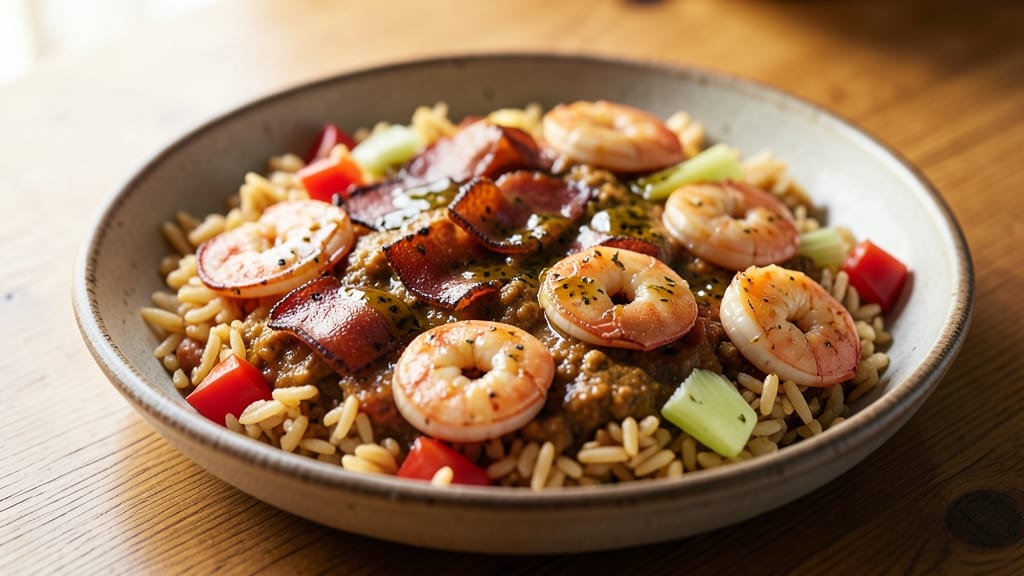
This Carolina Gold rice jambalaya recipe delivers the soulful flavors of Louisiana in one smoky, savory dish—where perfectly cooked rice absorbs a rich broth brimming with andouille sausage, spicy shrimp, and the holy trinity of onions, bell peppers, and celery.
The secret lies in layering flavors: first searing the sausage until crispy, then building depth with slow-simmered spices and the nutty texture of Carolina Gold rice. Every bite balances heat, smokiness, and tender protein, making this a weeknight masterpiece that feels like a Cajun feast.
What sets this jambalaya apart is the authentic technique—starting with a proper roux (never rushed) to create a velvety base, then letting the rice cook undisturbed until the grains are fluffy and distinct.
The result is a dish that’s hearty enough for a crowd but simple enough for a weeknight, with optional adjustments like swapping shrimp for chicken or adding okra for texture. This isn’t just a recipe; it’s a flavor journey that transforms simple ingredients into something unforgettable.
Ingredients for carolina gold rice jambalaya
Sixteen ingredients transform into a smoky, savory jambalaya that captures Louisiana's heart in every bite.
| Ingredient | Amount | Notes |
|---|---|---|
| Carolina Gold Long-Grain White Rice 🍚 | 2 cups | Uncooked, long-grain variety |
| Andouille Sausage 🌭 | 1 ½ lb | Smoked, sliced into 1/2-inch rounds |
| Large Shrimp 🦐 | 1 ½ lb | Peeled, deveined, tail-on |
| Yellow Onion 🧅 | 1 whole | Diced, medium size |
| Green Bell Pepper 🍅 | 1 whole | Diced, medium size |
| Celery Stalks 🥬 | 3 whole | Diced, medium stalks |
| Garlic Cloves 🧄 | 4 cloves | Minced, fresh |
| All-Purpose Flour 🌾 | ½ cup | For roux, white variety |
| Vegetable Oil 🫒 | ¼ cup | For roux, neutral flavor |
| Chicken Broth 💧 | 2 cups | Low-sodium, homemade preferred |
| Cajun Seasoning 🌶️ | 2 tbsp | Homemade or store-bought blend |
| Dried Thyme 🌿 | 1 tsp | Or 1 tbsp fresh thyme |
| Bay Leaves 🍃 | 2 whole | Fresh or dried |
| Salt 🧂 | 1 ½ tsp | Kosher or sea salt |
| Black Pepper 🌶️ | ½ tsp | Freshly ground |
| Hot Sauce 🔥 | 1 tbsp | Optional, for finishing |
| Fresh Parsley 🌿 | ¼ cup | Chopped, for garnish |
Carolina Gold rice is the star here—its long grains stay distinct and nutty, absorbing flavor without getting mushy. Buy it in bulk from Southern specialty stores or your local grocery's rice aisle, but avoid instant or pre-seasoned varieties. The andouille sausage should be smoky and firm, not greasy—Johnsonville or Thrivent are reliable brands, but check the label for 100% pork and no fillers. Fresh shrimp is non-negotiable for texture; frozen works in a pinch if thawed properly. For the holy trinity (onion, bell pepper, celery), organic produce from Trader Joe's gives the best flavor, but any fresh, crisp vegetables will do. The garlic? Freshly minced makes all the difference—never pre-minced from jars.
No Cajun seasoning? Mix 1 tbsp paprika, 1 tsp each of dried oregano, thyme, and garlic powder, plus 1/2 tsp cayenne. Short on shrimp? Chicken thighs or turkey sausage hold up beautifully—just increase cooking time. The roux is where magic happens: white as bleached flour for a dark roux (traditional) or peanut butter color for a medium roux (faster, still flavorful). If you burn it, start over—there's no coming back. For the broth, homemade chicken stock adds depth, but low-sodium store-bought in a pinch works fine. The bay leaves add subtle earthiness, so don't skip them unless you're serving kids who hate surprises.
This jambalaya tastes even better the next day as flavors meld—portion into airtight containers for easy reheating. Keeps 4-5 days in the fridge or 3 months frozen. For leftovers, sprinkle with hot sauce and fresh parsley to revive flavors. The rice will dry out if stored too long, so reheat with a splash of broth or water. Double the batch—it disappears fast at gatherings. If making ahead, cook the sausage and holy trinity first, then refrigerate separately. Assemble and cook fresh for the best texture, but the flavors hold up beautifully when reheated properly.
Why You'll Love This Recipe
- One-Pot Magic: The andouille and shrimp practically cook themselves while the Carolina Gold rice soaks up all the smoky, spiced goodness—no straining, no extra bowls. I swear, my skillet looks like a warzone, but it’s the easiest way to get that perfect fluffy, flavorful texture.
- Smoky Shrimp Fixation: That first bite of charred shrimp against the bright, slightly chewy Carolina Gold rice? It’s like a hug for my taste buds. The andouille’s deep, garlicky heat and the bell pepper’s sweet crunch make every forkful feel like a little celebration.
- Lunchbox Hero: Between us, this is my go-to for meal prep—packs beautifully, reheats like a dream, and even tastes better the next day. Throw it in a container with a side salad, and you’ve got a lunch that’ll make coworkers ask for your secret.
- Budget-Friendly Feast: A single bag of Carolina Gold rice and a pack of andouille stretch this recipe to feed four for under $15. Add shrimp for special occasions, or swap in chicken for weeknights—it’s the kind of dish that makes grocery money go further without sacrificing flavor.
Step-by-step instructions for Carolina Gold rice jambalaya
This one-pot masterpiece delivers bold Cajun flavors with perfectly balanced textures.
Build the Roux Foundation
Heat the 0.25 cup vegetable oil in a large, heavy-bottomed pot over medium heat. Add the 0.5 cup all-purpose flour and whisk constantly for 3-4 minutes until the mixture turns a rich, deep golden brown—this is your roux. The color should be between peanut butter and milk chocolate, not lighter or darker.
Watch closely as it cooks—if it burns, you'll taste bitterness. This roux forms the flavor base for your jambalaya, so don't rush it. Once properly colored, immediately add the 2 tbsp Cajun seasoning, 1 tsp dried thyme, 1.5 tsp salt, and 0.5 tsp black pepper. Stir for another 30 seconds to fully incorporate the spices into the roux.
Sauté the Holy Trinity
Add the 1 whole yellow onion, 1 whole green bell pepper, and 3 whole celery stalks (all diced) to the pot. Cook over medium heat, stirring occasionally, for 6-8 minutes until the vegetables soften and the flavors meld together. You'll notice the mixture becomes more aromatic and slightly caramelized at the edges.
When the vegetables are tender, add the 4 cloves minced garlic and cook for an additional 30 seconds until fragrant. This step develops the foundational flavors that will carry through your entire dish. If you smell the garlic burning, reduce the heat slightly—it should sizzle gently, not smoke.
Brown the Andouille and Shrimp
Push the vegetable mixture to one side of the pot and add the 1.5 lb andouille sausage in a single layer. Cook undisturbed for 3-4 minutes until the sausage develops a deep brown crust. This creates incredible flavor through the Maillard reaction. Once browned, stir and cook for another 2 minutes to distribute the sausage throughout the vegetables.
Add the 1.5 lb large shrimp to the pot and cook for 2-3 minutes until they turn pink and opaque. The shrimp should cook quickly—don't overcook them or they'll become rubbery. Remove the shrimp with a slotted spoon and set aside temporarily. You'll add them back later to finish cooking.
Develop the Flavorful Broth
Pour in the 2 cups chicken broth and bring the mixture to a gentle simmer. Add the 2 whole bay leaves and stir well to combine. The broth should coat the back of a spoon but not boil vigorously—this helps prevent the roux from breaking and keeps the flavors balanced.
Stir in the 2 cups Carolina Gold long-grain white rice, spreading it evenly throughout the liquid. The rice should be fully submerged but not packed down. Let the mixture simmer uncovered for 5 minutes, allowing the rice to absorb some of the liquid and begin to soften.
Simmer to Perfect Texture
Return the shrimp to the pot and stir gently to distribute them throughout the rice. Cover the pot tightly with a lid and reduce heat to low. Simmer for 15-18 minutes, checking occasionally to ensure no liquid is evaporating too quickly. The rice should absorb the liquid and develop a firm, slightly sticky texture.
After 15 minutes, taste the jambalaya. If the rice needs more liquid, add 2-3 tablespoons of water at a time until it reaches your desired consistency—it should be moist but not soupy. Stir in the 1 tbsp hot sauce and adjust seasoning if needed. Let it sit covered for another 5 minutes off the heat to allow the flavors to meld completely.
Finish and Garnish
Remove the 2 whole bay leaves and fluff the jambalaya gently with a fork. The rice should be tender with a slight bite at the center, and the shrimp should be fully cooked. For the final touch, stir in the 0.25 cup chopped fresh parsley and serve immediately, garnished with additional parsley if desired.
This jambalaya delivers a perfect balance of smoky andouille, sweet shrimp, and aromatic vegetables in every bite. The Carolina Gold rice absorbs all the rich flavors while maintaining its distinct texture. Serve with crusty bread to soak up every last drop of that flavorful broth.
Pro Tips For Making Carolina Gold Rice Jambalaya
- CRACK THE SAUSAGE FIRST: Cut the andouille into ¼-inch slices before cooking—thinner pieces render faster and blend into the rice instead of sitting as chewy chunks. I used to eyeball it, but measuring with a knife against a ruler (yes, really) guarantees even cooking every time.
- TOAST THE PEPPERS: Char the green bell pepper over direct heat for 3-4 minutes per side—blackened skin adds smoky depth that raw peppers can’t match. Toss them in ice water afterward to stop cooking, then pat dry; the shock keeps them crisp when they hit the pot.
- SALT THE SHRIMP EARLY: Toss the shrimp with a pinch of salt and a splash of lemon juice 15 minutes before cooking—this jumpstarts the curing process and keeps them from curling into tight, rubbery spirals. Trust me, your future self will curse the dish if you skip this.
- STIR THE RICE ONCE: After adding the Carolina Gold rice to the pot, give it one quick stir with a wooden spoon—just enough to break up clumps, then leave it alone. Overmixing releases starch too early, turning your jambalaya into glue. Let the rice expand naturally.
Essential equipment for perfect results
Heavy-Bottomed Pot
Your jambalaya needs a large, heavy-bottomed pot (I use a 12-quart Dutch oven) to distribute heat evenly and prevent burning. A Lodge cast iron Dutch oven is my go-to because it retains heat beautifully and develops a natural nonstick surface over time.
If you don’t have cast iron, a stainless steel pot with a thick base works just as well. Avoid thin aluminum or nonstick pans—they can’t handle the prolonged simmering without scorching your roux or burning the bottom. 🔥
Wooden Spoon
A long-handled wooden spoon (I prefer Oxo Good Grips) is essential for stirring the roux without scratching your pot. Wood distributes heat better than metal and won’t react with acidic ingredients.
Keep it handy for the entire cooking process—it’s perfect for scraping up browned bits from the bottom. Pro tip: Soak it in hot, soapy water after use to remove stubborn residue. 🌾
Slotted Spoon
For removing the shrimp without breaking them, a slotted spoon with a long handle (like OXO’s Good Grips) is a game-changer. It lets you lift shrimp out of the pot while keeping them immersed in the broth until the very end.
This prevents overcooking and maintains their delicate texture. I also use it to stir the rice gently after it’s been simmering, ensuring even distribution without mashing the grains. 🦐
Fine-Mesh Strainer
A fine-mesh strainer (I use a stainless steel one from OXO) comes in handy if you want to strain the broth before adding it to the rice. This removes any stray bits of roux or spices that could make the final dish gritty.
It’s also useful for rinsing the shrimp if you’re using frozen ones—just thaw them in cold water first, then drain and pat dry before cooking. 💧
Instant-Read Thermometer
While not mandatory, an instant-read thermometer (like the ThermoWorks ThermoPop) ensures your shrimp reaches 145°F and your andouille sausage hits 160°F for perfect doneness. It’s especially helpful if you’re new to jambalaya—overcooked shrimp turn rubbery, and undercooked sausage can be unsafe.
I check temps just before serving to guarantee everything is safe and delicious. 🌡️
Lid with Handle
A tight-fitting lid with a handle (preferably stainless steel) is critical for the final simmering stage. It traps steam to cook the rice evenly and prevents evaporation. If your lid doesn’t fit snugly, cover the pot with aluminum foil instead—just poke a few small holes to let steam escape.
Avoid glass lids, as they can shatter from sudden heat changes. 🛡️
Nutrition facts
Frequently asked questions
Can I substitute Carolina Gold rice with another type?
Carolina Gold rice is ideal because its long grains stay distinct and nutty, but you can use long-grain white rice or jasmine rice in a pinch. Avoid instant rice or short-grain varieties like sushi rice—they’ll make the jambalaya too sticky. If substituting, reduce liquid by 2 tablespoons since Carolina Gold absorbs slightly more moisture.
How do I adjust the heat level for picky eaters?
Start by reducing the Cajun seasoning to 1 tablespoon and omitting the hot sauce entirely. For extra mildness, swap cayenne with paprika in your seasoning blend. If you love heat, add ½ teaspoon red pepper flakes to the roux or serve extra hot sauce on the side.
Why did my jambalaya turn out too dry?
This usually happens from overcooking or insufficient liquid. Always stir in 2-3 tablespoons of water or broth if the rice looks dry after 15 minutes. For next time, check the rice 5 minutes early—it should finish cooking off the heat. A tight-fitting lid helps retain moisture during simmering.
Can I make this jambalaya in a slow cooker?
Brown the sausage and shrimp first in a skillet, then transfer everything to your slow cooker. Use 1.5 cups broth instead of 2, and cook on low for 3-4 hours or high for 2 hours. The rice may need 10-15 minutes on the stovetop after to finish cooking.
What’s the best way to reheat leftovers?
Sprinkle 1-2 tablespoons of water or broth over the jambalaya and cover with a damp paper towel. Reheat in the microwave for 2-3 minutes or on the stovetop over low heat for 5-7 minutes. Stir gently to redistribute moisture—never microwave uncovered.