
Main Courses
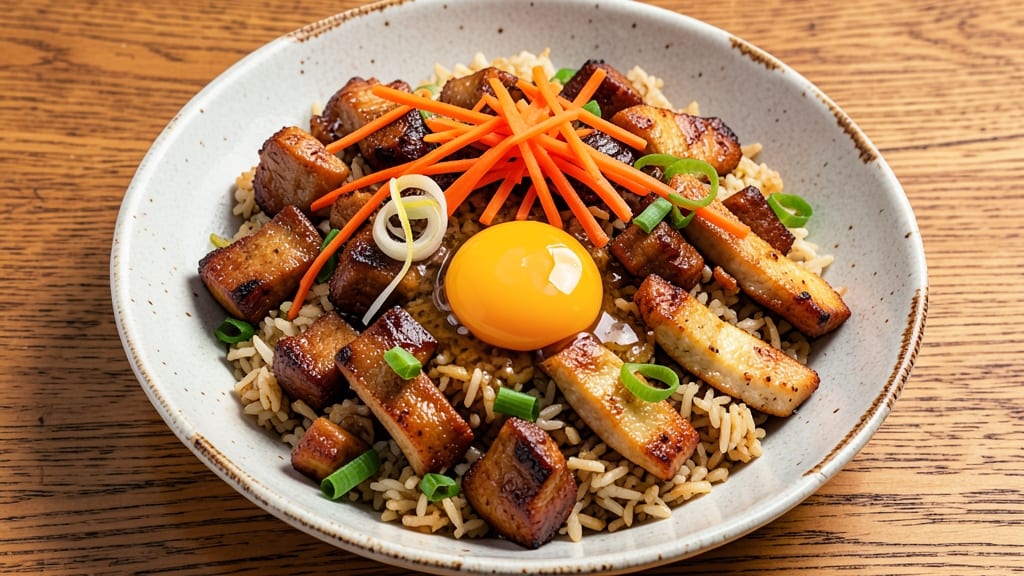
This chicken and pork fried rice recipe delivers restaurant-quality flavor with a perfect balance of tender protein and aromatic seasonings. The key lies in properly prepping the rice and using high heat to achieve that signature wok-tossed texture while keeping ingredients distinct yet harmonious.
I've perfected this technique over countless weeknight dinners, ensuring every bite delivers both protein satisfaction and satisfying chew.
What sets this dish apart is the combination of juicy chicken and pork—separately marinated for maximum flavor—tossed with day-old rice and a blend of vegetables that stay crisp through the cooking process.
The sauce comes together quickly with simple pantry staples, creating a glossy finish that coats every ingredient without overpowering. This is comfort food at its finest, ready in under 30 minutes with minimal prep.
Ingredients for chicken and pork fried rice
Restaurant-quality fried rice starts with these carefully selected ingredients for maximum flavor and texture.
| Ingredient | Amount | Notes |
|---|---|---|
| Day-Old Cooked White Rice 🍚 | 4 cups | Cold and slightly dry preferred |
| Boneless Chicken Breast 🍗 | 1 lb | Thinly sliced, marinated |
| Ground Pork 🐖 | ¾ lb | Lean, finely chopped |
| Eggs 🥚 | 2 whole | Beaten for sauce base |
| Green Onions 🧅 | ½ cup | Thinly sliced, white and green parts |
| Carrots 🥕 | 1 medium | Julienned, thin strips |
| Frozen Peas 🌽 | ½ cup | Thawed, no need to drain |
| Soy Sauce 🍶 | ⅓ cup | Light or regular, not low-sodium |
| Oyster Sauce 🍶 | 2 tbsp | High-quality for depth of flavor |
| Sesame Oil 🫒 | 1 tbsp | Toasted, for aroma |
| Vegetable Oil 🫒 | ½ cup | High smoke point for wok |
| Garlic Cloves 🧄 | 4 cloves | Minced, fresh preferred |
| Fresh Ginger 🌿 | 1 tbsp | Finely grated, peel removed |
| Salt 🧂 | 1 tsp | Diamond Crystal preferred |
| Black Pepper 🌶️ | ½ tsp | Freshly ground |
The proteins are the foundation—chicken breast should be thinly sliced against the grain for tenderness, while ground pork adds juicy richness. I prefer Trader Joe's chicken breast for its consistent quality, but any boneless, skinless cut works. For the pork, ask your butcher for finely ground if your grocery store's pre-packaged version is too coarse. The day-old rice is non-negotiable; freshly cooked rice turns mushy when tossed. Spread cooked rice on a tray to cool quickly and dry slightly before using. Jasmine rice is ideal, but long-grain white works in a pinch.
No soy sauce? Coconut aminos provides a similar umami punch, though the flavor profile differs slightly. Substituting oyster sauce with hoisin sauce at half the amount works, but you'll lose some depth. For the vegetables, frozen peas are perfect—they stay crisp during cooking and save prep time. Fresh peas? Thaw them first and pat dry to prevent excess moisture. The garlic and ginger should be minced finely—this is where the aromatic foundation builds. If you're short on time, pre-minced garlic from a jar works, but fresh is always better. Sesame oil is used sparingly here; it's for aroma, not cooking.
Store prepped proteins and vegetables separately in airtight containers for up to 2 days before cooking. The sauce components (soy, oyster, sesame oil) can be mixed ahead and kept for 1 week in the fridge. Once cooked, fried rice reheats beautifully—microwave with a splash of water or stir-fry again over high heat. For leftovers, freeze in single portions; they reheat perfectly for quick lunches. The dish tastes even better the next day as flavors meld further.
Why You'll Love This Recipe
- No Rice Waste Ever: I swear by this trick—using day-old rice means no soggy, gluey mess. The grains stay firm, so every bite has that perfect texture, and honestly? It’s the only way I’d ever make fried rice now.
- Two Proteins, Double Fun: That combo of tender chicken breast and juicy ground pork gives it serious depth. The chicken stays moist while the pork adds a savory punch—plus, I can swap in whatever’s cheapest at the store and still end up with something crave-worthy.
- Lunchbox Legend: Between us, this is my go-to for meal prep. Toss it in containers, and it reheats like a dream—no mushy rice, no sad eggs. My kids actually finish their lunches, which is basically a miracle in this house.
- Budget Booster: Eggs, chicken, pork—these are all affordable staples that stretch into one big, satisfying meal. I’ll be real: it’s my secret weapon for feeding the family without breaking the bank, and the green onions add that fresh pop for almost nothing.
Step-by-step instructions for chicken and pork fried rice
Master this wok-tossed classic with precise technique and bold flavors.
Prepare the Protein Components
Begin by slicing the 1 lb boneless chicken breast into thin, even strips about ¼-inch thick. This ensures quick cooking and even doneness. In a separate bowl, combine the 0.75 lb ground pork with 1 tbsp fresh ginger, 0.5 tsp black pepper, and 1 tsp salt. Mix gently with your hands to distribute the seasoning evenly—this prevents dry, flavorless pork during cooking.
Heat 0.25 cup vegetable oil in a large wok or skillet over medium-high heat until shimmering. Add the chicken and cook for 3-4 minutes until just cooked through—it should remain slightly pink in the center. Remove and set aside. In the same wok, add another 0.25 cup vegetable oil and cook the pork mixture for 4-5 minutes until fully browned and any pink remains disappear. The pork should be crispy at the edges while staying tender inside. Combine the cooked chicken and pork in a bowl and set aside.
Create the Egg and Aromatic Base
In a small bowl, beat the 2 whole eggs lightly with a fork until just combined—no need to overmix. Return the wok to medium-high heat and add the remaining 0.25 cup vegetable oil. Pour in the eggs and let them sit undisturbed for 10-15 seconds before gently scrambling with a spatula. Cook until the eggs are just set—soft curds should remain, not fully firm. Remove and set aside with the protein.
In the same wok, add 0.25 cup vegetable oil and heat until shimmering. Add the 4 minced garlic cloves and 1 medium julienned carrot, cooking for 1-2 minutes until the garlic turns golden and the carrots soften slightly. This step builds the aromatic foundation—don't rush it. Add the 0.5 cup thawed frozen peas and cook for another 30 seconds until heated through.
Combine and Season the Fried Rice
Add the 4 cups day-old cooked white rice to the wok, breaking up any clumps with your spatula. Stir-fry for 2-3 minutes until the rice is evenly coated and begins to sizzle. This reactivates the starches, creating that signature crispy texture. Pour in the 0.33 cup soy sauce and 2 tbsp oyster sauce, stirring constantly to distribute evenly. The rice should absorb the sauces quickly—taste and adjust seasoning if needed.
Return the cooked protein and egg mixture to the wok, tossing everything together for 1-2 minutes until fully heated through. The final dish should have a golden, slightly crispy texture with vibrant colors from the vegetables. Remove from heat and let rest for 1 minute—this allows the flavors to meld before serving.
Finish with Fresh Herbs and Serve
Transfer the fried rice to a serving platter and immediately sprinkle with the 0.5 cup thinly sliced green onions. The freshness of the green onions brightens the dish and adds a pop of color. Drizzle lightly with 1 tbsp sesame oil just before serving—this enhances the aroma and adds a nutty depth to each bite.
Serve immediately while hot, with additional green onions on the side if desired. The fried rice should be crispy around the edges, tender in the center, and bursting with savory, umami-rich flavors from the soy and oyster sauces. Each forkful should deliver a perfect balance of protein, vegetables, and aromatic seasonings.
Pro Tips For Making Chicken And Pork Fried Rice
- PREP THE CHICKEN RIGHT: Cut that boneless breast into ¼-inch slices—thinner than you think. Thick chunks stay chewy, and nobody wants rubbery chicken in fried rice. I used to slice mine too thick, and it was a disaster every time.
- DON’T SKIP THE PORK REST: After cooking the ground pork, let it sit for 2 minutes off heat. It’ll finish cooking while you scramble the eggs, and the juices won’t turn your rice soggy. I learned this the hard way—overmixed pork makes mushy fried rice.
- USE DRY RICE, NOT WET: Spread that day-old rice on a tray and let it air-dry for 10 minutes before stirring it into the wok. Damp rice clumps and steams instead of frying—crispy grains are the whole point. (Yes, even if you’re impatient like me.)
- SCRAMBLE EGGS SEPARATELY: Push the eggs to one side of the pan and let them set for 10 seconds before folding. This gives you soft, custardy curds instead of scrambled bits—way more flavorful in fried rice. I was skeptical until I tried it.
Storing and reheating your leftovers
Refrigerator Storage
Let your fried rice cool to room temperature for 30 minutes before storing—this prevents condensation that can make it soggy. Transfer to an airtight container (I use Glasslock 32-ounce containers) and refrigerate for up to 4 days.
The flavors actually deepen overnight as the sauces meld with the rice. For best texture, store in a single layer rather than stacking portions. ❄️
Freezer Prep Tips
Portion fried rice into single-serving containers before freezing—this makes reheating effortless. Press plastic wrap directly on the surface to minimize air exposure, then seal with a lid.
Label with the date and store for up to 3 months. The proteins and vegetables retain their texture remarkably well when frozen properly. 🥶
Stovetop Reheating
My preferred method is reheating in a wok or large skillet over medium-high heat with 1 tbsp vegetable oil. Break up any clumps and stir-fry for 5-6 minutes until heated through and slightly crispy again.
Add 1 tbsp water or chicken broth if the rice seems dry. This method restores that wok-tossed texture perfectly. 🔥
Microwave Safety
For quick reheating, transfer to a microwave-safe dish and cover loosely with a damp paper towel. Heat on 70% power for 2-3 minutes, stirring halfway. Add 1-2 tbsp water if needed to restore moisture. Avoid overcooking—the rice can become gummy if microwaved too long. 💫
Reviving Texture
If your reheated fried rice loses its crispiness, return it to the skillet for 1-2 minutes over high heat with a splash of oil. The high heat will reactivate the starches and restore that signature texture.
For extra flavor, finish with a drizzle of sesame oil and fresh green onions. This works like a charm for leftovers! 💡
Meal Prep Strategy
Make fried rice ahead for 3-4 days of quick lunches. Store proteins and vegetables separately from the rice in the fridge for up to 2 days before combining.
When ready to eat, simply reheat the components together in the wok. This keeps everything fresh and prevents sogginess. Perfect for busy weeknights! ⏰
Nutrition facts
Frequently asked questions
Why is day-old rice better for fried rice?
Day-old rice is drier and less sticky, which prevents it from turning mushy when stir-fried. The slightly stale texture also helps absorb flavors better and creates that signature crispy exterior. Freshly cooked rice releases too much moisture, making it hard to achieve the perfect wok-tossed texture.
Can I substitute ground pork with another protein?
Swap the pork for diced ham or pre-cooked bacon (crumbled) for a smoky twist. For a lighter option, use shrimp or chicken sausage, but increase the cooking time by 1-2 minutes to ensure they're fully cooked. Just adjust seasoning to taste afterward.
How do I prevent the fried rice from getting soggy?
Use high heat and work quickly when stir-frying to evaporate excess moisture. Break up any clumps in the rice before adding it to the wok, and avoid overcrowding the pan. If the rice seems too wet, add 1 extra minute of cooking time over high heat. For extra crispiness, finish with a quick 30-second sear after adding the sauce.
What's the secret to crispy fried rice?
The key is reactivating the rice's starches with high heat. After adding the rice to the wok, stir-fry for 2-3 minutes until it begins to sizzle and turn golden at the edges. This creates the perfect balance of tender rice with crispy bits. Don't skip this step—it's what makes restaurant-style fried rice shine!
Can I make this recipe with frozen vegetables?
Yes! Frozen peas and carrots work perfectly—they stay crisp during cooking and save prep time. Just thaw them first and pat dry to remove excess moisture. For best results, avoid using frozen corn as it tends to get mushy. Fresh vegetables are ideal, but frozen is a great shortcut.