
Soups & Stews
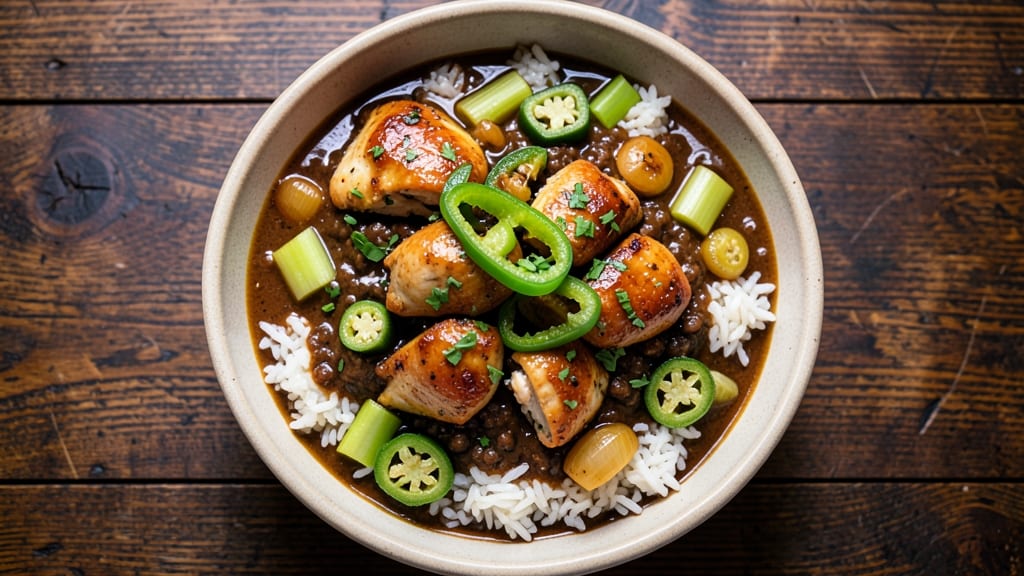
This chicken and rice gumbo soup recipe delivers deep, smoky comfort in every bowl—just like your grandmother’s, but with modern shortcuts.
The secret lies in a rich, okra-thickened broth that builds flavor as it simmers, while the perfect rice-to-liquid ratio ensures tender grains that soak up every last drop of savory goodness.
With a classic Cajun roux as the foundation and a trinity of onions, celery, and bell peppers for depth, this one-pot wonder balances heat, smokiness, and heartiness. The chicken breaks down into tender shreds, and the okra creates a velvety texture without gums or sliminess.
It’s the kind of soup that warms the soul on chilly evenings—or any day you crave a taste of Louisiana tradition.
Ingredients for chicken and rice gumbo soup
Good news—this gumbo uses pantry staples plus a few Louisiana essentials for soul-warming flavor.
| Ingredient | Amount | Notes |
|---|---|---|
| Chicken Thighs 🍗 | 2 lb | Bone-in, skin-on preferred |
| Long-Grain White Rice 🍚 | 1 ½ cups | Uncooked, jasmine or basmati |
| Fresh Okra 🌿 | 1 lb | Trimmed, sliced into 1/2-inch pieces |
| Yellow Onion 🧅 | 1 whole | Medium, diced |
| Celery Stalks 🧄 | 3 whole | Trimmed, chopped |
| Green Bell Pepper 🌶️ | 1 whole | Medium, diced |
| Garlic Cloves 🧄 | 4 cloves | Fresh, minced |
| Cajun Seasoning 🌶️ | 2 tbsp | Homemade or store-bought |
| Smoked Paprika 🌶️ | 1 tbsp | For extra smokiness |
| Dried Thyme 🌿 | 1 tsp | Or 1 tbsp fresh |
| Bay Leaves 🌿 | 2 whole | Fresh preferred |
| Vegetable or Chicken Broth 💧 | 6 cups | Low-sodium preferred |
| Unsalted Butter 🧈 | 4 tbsp | For roux, cold |
| All-Purpose Flour 🌾 | 4 tbsp | For roux |
| Sea Salt 🧂 | 1 ½ tsp | Adjust to taste |
| Black Pepper 🌶️ | ½ tsp | Freshly cracked |
| Fresh Parsley 🌿 | ¼ cup | Chopped, for garnish |
The okra is non-negotiable for that signature gumbo texture—farmers markets often have the freshest, but the frozen section works too. Trader Joe's sells pre-trimmed okra if you're short on time. Chicken thighs stay juicier than breasts in this long simmer, so don't swap unless you're okay with drying out. For the Cajun seasoning, Tony Chachere's is the classic choice, but any brand with smoked paprika and cayenne will do. The roux is where the magic happens—keep your eye on it like a hawk to avoid burning.
No okra? Substitute 1 tbsp cornstarch mixed with 2 tbsp cold water, stirred in at the end—it won't be identical, but it'll thicken. Out of Cajun seasoning? Mix paprika, garlic powder, onion powder, cayenne, and oregano (1 tbsp each) for a quick fix. The bell pepper can be any color—red or yellow work just fine. For the broth, low-sodium is key so you can control the saltiness. If using chicken broth, add an extra bay leaf for depth. The rice? Jasmine or basmati absorbs flavor best, but long-grain white works too.
This soup tastes even better the next day—double the batch if you can. Store in the fridge for 4-5 days or freeze portions for up to 3 months. I like to portion it into containers with a side of crusty bread for easy lunches. The okra and chicken can be prepped ahead and refrigerated for 2 days before cooking. Just don't skip the roux—that's where the flavor lives.
Why You'll Love This Recipe
- One-Pot Magic: I swear by this recipe—just dump everything into a pot, simmer, and walk away. The chicken thighs melt into the broth while the rice soaks up all that smoky, savory flavor without needing constant stirring. (Yes, even on a Tuesday night when you’re exhausted.)
- Okra’s Secret Weapon: Between us, I was skeptical about okra until I tried it in gumbo. That slight crunch and silky texture when it cooks? It’s the perfect contrast to the creamy rice and tender chicken—like a tiny flavor upgrade that makes the whole dish sing.
- Leftovers That Don’t Suck: This soup actually tastes better the next day. The flavors meld into this deep, rich harmony, and reheating it is zero effort—just a splash of water, a quick stir, and you’re back to comfort in minutes. (My lunchbox’s new best friend.)
- Budget-Friendly Feast: Chicken thighs and rice stretch into a hearty meal that won’t break the bank. Plus, you can swap in whatever veggies you have—celery, onions, even frozen okra in a pinch—and still end up with something that feels like a restaurant-worthy bowl. No guilt, all satisfaction.
Step-by-step instructions for chicken and rice gumbo soup
Here's how to build this rich, smoky gumbo with layers of flavor and that perfect okra-thickened texture.
Build the Perfect Roux
In a heavy Dutch oven, melt the 4 tablespoons unsalted butter over medium-low heat. Immediately add the 4 tablespoons all-purpose flour and whisk constantly to prevent burning. This is where the magic happens - you're creating the gumbo's foundation.
Cook the roux for 15-20 minutes, stirring frequently, until it turns a deep, chocolate brown color - not black. You'll notice it goes through stages: peanut butter, then chocolate, then finally that rich brown. This color means perfect flavor development. If it starts to smoke or burn, reduce the heat immediately and keep whisking.
Sauté the Holy Trinity and Seasonings
Once your roux reaches that perfect brown color, add the 1 whole yellow onion, 3 whole celery stalks, and 1 whole green bell pepper, all diced. Cook for 8-10 minutes until the vegetables soften and the flavors meld together. This vegetable combination is called the "holy trinity" in Cajun cooking for good reason - it creates the base flavor.
Add the 4 cloves garlic cloves, minced 1 lb fresh okra (sliced), 2 tablespoons Cajun seasoning, 1 tablespoon smoked paprika, 1 teaspoon dried thyme, and 2 whole bay leaves. Stir well to coat everything in the roux. The okra will begin to break down slightly, releasing its natural thickening properties. Let this cook for another 5 minutes while you prepare the chicken.
Brown the Chicken and Add Broth
Pat the 2 lb chicken thighs dry with paper towels - this helps create crispy skin. Working in batches, brown the chicken on all sides in the Dutch oven over medium-high heat for about 5-6 minutes per side. You want that golden crust to form. As each batch browns, remove it and set aside.
Once all chicken is browned, return it to the pot. Pour in the 6 cups vegetable or chicken broth, scraping up any browned bits from the bottom. The broth should just cover the chicken and vegetables. Bring to a gentle simmer, then reduce heat to low. Add 1.5 teaspoons sea salt and 0.5 teaspoon black pepper. The liquid should smell amazing at this point - like a symphony of Cajun spices.
Simmer Until Chicken is Tender
Let the gumbo simmer uncovered for 30 minutes. This gentle cooking allows all the flavors to meld together while the chicken becomes fork-tender. You'll notice the okra continues to break down, naturally thickening the soup. The chicken should pull away from the bone easily when tested with a fork.
Here's the thing - don't rush this step. The longer it simmers, the deeper the flavors become. If the soup starts to reduce too much, you can add a splash of water or broth, but generally, the okra will do its job beautifully. The gumbo should have a rich, dark color and be thick enough to coat the back of a spoon.
Finish with Rice and Fresh Herbs
Stir in the 1.5 cups long-grain white rice and bring the gumbo back to a gentle simmer. Cover and cook for 15-18 minutes until the rice is tender and has absorbed most of the liquid. You want the rice to be cooked through but still have a slight bite to it - al dente style.
Remove from heat and let sit covered for 5 minutes. This resting period allows the flavors to settle and the rice to finish absorbing any remaining liquid. Before serving, stir in the 0.25 cup fresh parsley and adjust seasoning if needed. The parsley adds a bright, fresh contrast to the rich, smoky flavors of the gumbo.
Pro Tips For Making Chicken And Rice Gumbo Soup
- Sear the Chicken First: Don’t just toss raw thighs into the pot—get them golden and crispy on all sides before adding liquid. I used to skip this, and the soup always tasted like it needed more depth. A quick 3-4 minutes per side in a hot Dutch oven builds flavor that simmers into richness later.
- Trim the Okra Like a Pro: Slit the okra lengthwise and scrape out the seeds with a spoon—this keeps the soup from turning slimy. Fresh okra is best, but if using frozen, thaw it first and pat it dry. Wet okra just dilutes the gumbo instead of thickening it.
- Layer the Holy Trinity Slow: Cook the onion and celery in batches if needed—don’t crowd the pan. I learned this after burning the first layer trying to fit everything at once. Sauté each batch until deeply softened (about 8-10 minutes total), or the base will taste raw.
- Salt the Water Like the Sea: Use 1½ teaspoons of salt per 4 cups of water for the rice—more than you’d think. Under-salting here means the finished gumbo tastes flat, even if you add extra seasoning later. Trust me, the rice absorbs way less salt than you’d expect.
Essential equipment for great chicken and rice gumbo soup
Dutch Oven
A heavy Dutch oven is non-negotiable for gumbo—it distributes heat evenly and handles the roux without scorching. I swear by the Lodge 5.5-quart cast iron Dutch oven ($60) for its durable construction and superior heat retention.
If you're on a budget, the Cuisinart MultiClad Pro ($120) offers similar performance with stainless steel. Avoid thin, lightweight pots—they'll burn your roux before it reaches that perfect chocolate-brown stage. 🔥
Wooden Spoon
You'll need a wooden spoon (at least 12 inches long) to stir that roux constantly without scratching your Dutch oven. A maple or hickory spoon works best—it's gentle on the pot and won't absorb flavors like plastic.
I keep a Oxo Good Grips wooden spoon ($12) in my kitchen specifically for gumbo-making. Pro tip: Soak it in hot, soapy water after use to remove any stuck-on bits. The last thing you want is a gumbo-flavored spoon ruining your next stir-fry. 🌿
Fine-Mesh Strainer
A fine-mesh strainer (like the OXO Good Grips Collapsible Strainer, $15) is essential for skimming foam from the simmering broth. This step removes impurities and prevents a cloudy gumbo. I strain the broth after the initial 30-minute simmer, then return it to the pot.
For extra clarity, you can even line the strainer with cheesecloth—just don’t skip this if you want that restaurant-quality finish. Trust me, your gumbo will taste cleaner and brighter. ⚡
Measuring Spoons
Precision matters with spices in gumbo—accurate measuring spoons (like the OXO Stainless Steel Measuring Spoons, $10) ensure your Cajun seasoning and smoked paprika are balanced. I use them to measure out the 2 tbsp Cajun seasoning and 1 tbsp smoked paprika without guesswork.
A set with 1/8 tsp, 1/4 tsp, 1/2 tsp, and 1 tsp measurements is ideal. Pro tip: Store them in a magnetic strip on your fridge for easy access while cooking. 💡
Kitchen Timer
Gumbo requires attention to time—especially the roux and simmering stages. A digital kitchen timer (like the OXO Good Grips Timer, $15) lets you set multiple alerts for the 15-20 minutes of roux cooking, 30-minute simmer, and 15-18 minutes of rice cooking.
I place mine where I can see it while stirring, so I never risk burning the roux. Set a secondary alert for the 5-minute rest before serving—this is when flavors meld perfectly. 🏰
Sharp Chef's Knife
A sharp 8-inch chef's knife (like the Wüsthof Classic, $60) is a game-changer for dicing the holy trinity (onion, celery, bell pepper) evenly. Dull knives crush vegetables instead of cleanly chopping them, which affects texture and cooking time.
I invest in a Wüsthof because it stays sharp longer, but Mercer Culinary ($30) is a great budget alternative. Keep it honed with a sharpening steel—a dull knife is the fastest way to ruin a gumbo. 🗡️
Nutrition facts
Frequently asked questions
Can I make this gumbo without okra?
Yes, but the texture will be different. For a similar thickening effect, substitute 1 tbsp cornstarch mixed with 2 tbsp cold water and stir it in during the last 5 minutes of cooking. If you omit okra entirely, the gumbo will be thinner and less authentic—okra is the traditional thickener in Cajun cooking.
How do I prevent the roux from burning?
Watch the roux like a hawk! Start with medium-low heat and whisk constantly for the first 5 minutes. If it starts to darken too quickly, reduce the heat immediately. A properly cooked roux should be a deep chocolate brown—not black. If it burns, start over with fresh butter and flour.
Can I use chicken breasts instead of thighs?
You can, but thighs are ideal for gumbo. Chicken breasts dry out during the long simmer, while thighs stay juicy and flavorful. If you must use breasts, cut them into 1-inch cubes and add them after the 20-minute simmer (instead of browning first) to reduce cooking time.
How long can I store leftover gumbo?
This gumbo tastes even better the next day! Store it in the fridge for 4-5 days in an airtight container. For longer storage, freeze portions for up to 3 months. The flavors deepen over time, making it perfect for meal prep. Just reheat gently on the stove with a splash of broth.
What’s the best way to reheat gumbo?
Reheat gently on the stove over low-medium heat—never microwave it directly. Stir occasionally and add a splash of broth or water if it gets too thick. If reheating from frozen, thaw overnight in the fridge first, then warm through. This prevents the rice from becoming mushy.