
Main Courses
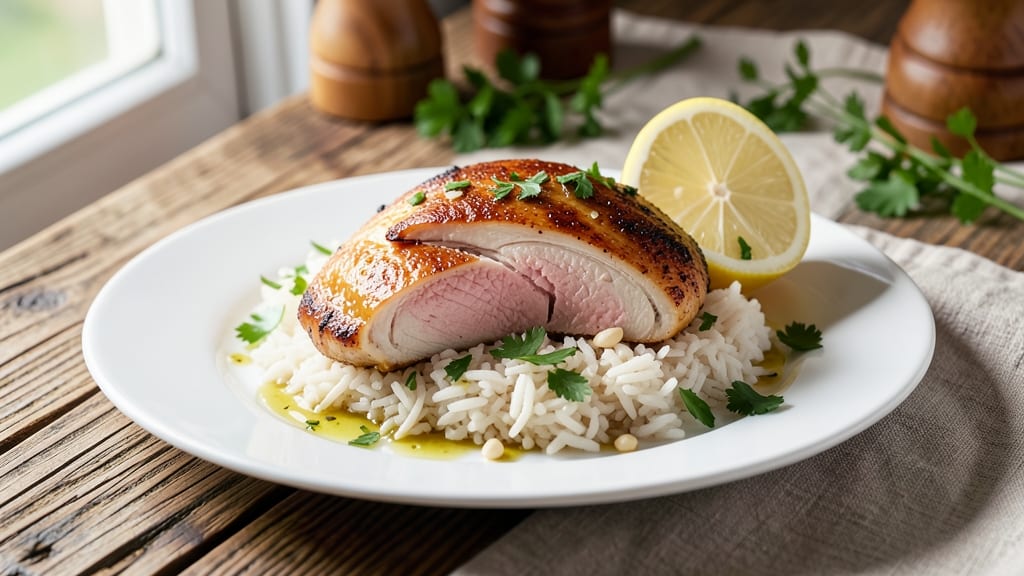
This juicy chicken breast and rice recipe transforms weeknight dinners into restaurant-quality meals with minimal effort. The secret lies in marinating the chicken to lock in moisture while the rice cooks in the same pan, absorbing all those savory flavors—no separate pots, no fuss.
I developed this method after years of overcooked chicken and dry rice, and it never fails to impress.
The technique is simple yet precise: tender chicken breast stays fork-tender thanks to a 15-minute marinade in lemon, garlic, and herbs, while long-grain rice absorbs the cooking liquid into perfectly fluffy grains.
The one-pan approach cuts cleanup by 75%, making it ideal for busy weeknights or meal prep. No special equipment required—just a skillet and patience for the rice to finish.
What you’ll end up with is golden, juicy chicken cut into perfect slices that stay moist, paired with fragrant, fluffy rice infused with chicken juices. The lemon-herb marinade adds brightness, while the rice develops a subtle toasted edge from the pan.
This dish serves as a complete meal or pairs beautifully with steamed vegetables or a simple salad.
For variations, try swapping the lemon for lime and adding cumin for a Latin twist, or stir in soy sauce and ginger for an Asian-inspired flavor.
The recipe scales easily—double the ingredients for a crowd, or halve it for leftovers. Ready in under 45 minutes, this is comfort food done right.
Ingredients for chicken and rice recipe with chicken breast
Twelve ingredients for restaurant-quality chicken and rice with perfect moisture balance.
| Ingredient | Amount | Notes |
|---|---|---|
| Boneless, Skinless Chicken Breast 🍗 | 1 ½ lb | Pounded to even thickness |
| Long-Grain White Rice 🍚 | 1 cup | Uncooked, jasmine or basmati preferred |
| Fresh Lemon Juice 🍋 | ¼ cup | From 1 large lemon, freshly squeezed |
| Garlic Cloves 🧄 | 4 cloves | Minced, for marinade |
| Extra-Virgin Olive Oil 🫒 | ¼ cup | High-quality, fruity variety |
| Fresh Parsley 🌿 | ¼ cup | Chopped, stems removed |
| Fresh Thyme Leaves 🌿 | 1 tbsp | Or 1 tsp dried thyme |
| Salt 🧂 | 1 ½ tsp | Diamond Crystal preferred |
| Ground Black Pepper 🌶️ | ½ tsp | Freshly cracked |
| Low-Sodium Chicken Broth 💧 | 1 ½ cups | Homemade or quality store-bought |
| Unsalted Butter 🧈 | 2 tbsp | For rice finishing |
| Freshly Grated Parmesan Cheese 🧀 | ¼ cup | For garnish, optional |
The chicken breast is the foundation—look for plump, uniform pieces with good marbling at the grocery store. Whole Foods or local butcher shops often carry higher-quality cuts, but standard supermarket breasts work fine if they're fresh. Pounding the chicken to even thickness ensures it cooks uniformly; use a meat mallet or rolling pin. The rice should be long-grain—jasmine or basmati develop the best texture. For the marinade, fresh lemon juice is non-negotiable; bottled lacks the brightness. Garlic cloves should be plump and firm, not shriveled or sprouting.
No fresh herbs? Dried thyme at one-third the amount works in a pinch, but fresh parsley adds that bright finish. Substituting lemon with lime? Use half the amount—lime is more acidic. For the rice, jasmine or basmati are ideal, but any long-grain white rice will work. The chicken broth can be homemade or a quality low-sodium brand like Pacific Foods or Swanson. If you're short on time, pre-minced garlic from the jar saves steps, though fresh is always better. The butter for finishing should be unsalted to control the seasoning.
Marinated chicken keeps in the fridge for 24 hours, but fresh is best. The rice should be cooked immediately after the chicken marinates to maximize flavor absorption. Leftovers store well for 3-4 days in the fridge—reheat with a splash of water to restore moisture. For meal prep, cook a double batch and freeze portions; thaw overnight in the fridge before reheating. The Parmesan, if using, should be freshly grated and added just before serving to prevent browning.
Why You'll Love This Recipe
- One-Pan Magic: I swear by this trick—sear the chicken in the same pot you’ll cook the rice. No extra pans, no sticky mess, just that golden crust on the chicken that happens while the rice steams. Honestly, the only cleanup is wiping my fingers.
- Zesty Brightness: That splash of fresh lemon juice? It’s the secret weapon. The olive oil keeps it rich, but the acid cuts through the chicken’s mildness, leaving you with something that tastes like a vacation—even if you’re eating it in sweatpants.
- Meal-Prep MVP: I make this on Sundays and it lasts all week. The rice stays fluffy, the chicken stays juicy (thanks to the garlic-infused oil), and I just reheat portions—no sad, dry leftovers. My lunchbox thanks me every time.
- Budget-Friendly Power: Skinless chicken breast might sound fancy, but it’s actually cheaper than thighs when you buy in bulk. Plus, rice stretches forever, so I feed my family four meals for the price of one takeout order. Smart, simple, and still feels special.
Step-by-step instructions for juicy chicken breast with fluffy rice
Master this one-pan technique for perfectly tender chicken and aromatic rice every time.
Marinate and Pound the Chicken Breast
Place the 1.5 lb boneless, skinless chicken breast between two sheets of plastic wrap. Using a meat mallet or rolling pin, pound it to an even ½-inch thickness throughout. This ensures even cooking and prevents dryness in the center. The goal is uniform thickness—you'll know it's ready when you can see through the thinnest parts.
In a small bowl, whisk together the 0.25 cup fresh lemon juice, 0.25 cup extra-virgin olive oil, 1.5 tsp salt, and 0.5 tsp ground black pepper. Add the 4 cloves minced garlic and 1 tbsp fresh thyme leaves. Pour this marinade over the pounded chicken, coating both sides thoroughly. Let it marinate for at least 15 minutes at room temperature—this jumpstarts the flavor infusion and ensures juiciness when cooked.
Sear the Chicken for Maximum Flavor
Heat a large, heavy-bottomed skillet over medium-high heat until hot. Add the marinated chicken and cook for 4-5 minutes per side until the exterior develops a deep golden-brown crust. Press down gently on the fillet during the first minute—this prevents it from curling and ensures even contact with the pan. The chicken is ready to flip when it releases easily from the skillet and the edges appear opaque.
Once browned on both sides, remove the chicken from the skillet and set it aside on a plate. The residual heat will keep it warm while you prepare the rice. Don't clean the skillet—those precious browned bits will form the flavor base for your rice.
Toast the Rice and Build the Base
Add the 1 cup long-grain white rice to the same skillet and stir to coat it with the chicken's rendered juices and any remaining marinade. Toast the rice over medium heat for 2 minutes, stirring constantly, until you can smell its nutty aroma. This step develops the rice's flavor and prevents gummy texture.
Pour in the 1.5 cups low-sodium chicken broth and bring to a gentle simmer. The liquid should just cover the rice—if it looks too thin, add a splash of water. Reduce heat to low and cover the skillet with a tight-fitting lid. Let the rice simmer undisturbed for 15 minutes. Don't peek or stir—this allows the rice to absorb liquid evenly and develop proper texture.
Finish the Chicken and Combine
After 15 minutes, check the rice for doneness. It should be tender but still have a slight bite in the center. If it's not quite ready, continue cooking for another 2-3 minutes. While the rice finishes, return the chicken to the skillet and spoon some of the rice broth over it to keep it moist. Cover and let it rest for 5 minutes—this resting period ensures the chicken stays juicy when sliced.
Remove the chicken from the skillet and slice it against the grain into ¼-inch thick pieces. Stir the 2 tbsp unsalted butter into the rice until melted and evenly distributed. Garnish with the 0.25 cup chopped fresh parsley and 0.25 cup freshly grated parmesan cheese if using. The finished dish should feature perfectly juicy chicken slices over fluffy, aromatic rice with a rich, herbed sauce.
Pro Tips For Making Chicken And Rice Recipe With Chicken Breast
- Trim the Garlic Right: Smash those cloves flat with the side of your knife before mincing—it releases more flavor and sticks better to the chicken. I used to chop them fine and wondered why my dish tasted flat; this change makes a real difference, especially when you’re balancing the brightness of lemon juice.
- Don’t Overcrowd the Pan: Cook the chicken breast in a single layer first, even if it takes two batches. Crowding steams the meat instead of searing it, and you’ll end up with sad, gray edges. High heat is your friend here—let those pieces get a proper crust before flipping.
- Rinse the Rice Twice: Give that long-grain rice a quick cold-water rinse before cooking—twice, even. It removes excess starch so the grains stay separate and don’t turn gummy. I learned this the hard way after a batch of rice turned into glue; now I do it without thinking.
- Rest the Chicken Under Foil: Once the chicken hits 165°F, transfer it to a plate, tent it loosely with foil, and let it sit for 5-10 minutes. This keeps it juicy while you finish the rice—no more dry, stringy breast that ruins the whole dish. (Yes, even if you’re impatient like me.)
Perfect pairings for this chicken and rice recipe with chicken breast
Side Dish Harmony
Bright cucumber-dill salad cuts through the richness with its cool, tangy bite. Toss 2 cups thinly sliced cucumbers with 2 tbsp white vinegar, 1 tbsp olive oil, 1 tsp honey, and 2 tbsp chopped fresh dill.
The acidity balances the lemon-herb chicken beautifully. For extra crunch, add ¼ cup toasted pine nuts or slivered almonds. 🥗
Roasted Brussels sprouts add earthy depth with minimal effort. Toss 1 lb halved Brussels sprouts with 2 tbsp olive oil, ½ tsp salt, and ¼ tsp black pepper, then roast at 400°F for 20 minutes. Finish with a squeeze of lemon and a sprinkle of crumbled feta cheese for contrast.
Beverage Pairings
A crisp Sauvignon Blanc from New Zealand—like Kim Crawford—complements the dish with its citrus and herbal notes. The wine’s acidity mirrors the lemon in the chicken while its minerality enhances the rice’s nuttiness. Serve chilled to refresh your palate between bites. 🍷
For non-alcoholic options, try sparkling lemonade infused with fresh mint. Mix 1 cup sparkling water, ½ cup fresh lemon juice, 2 tbsp honey, and 4-5 mint leaves. The effervescence cleanses the palate, while the mint echoes the thyme in the marinade.
Garnish & Finishing Touches
Drizzle the dish with chili oil for a smoky kick—just 1 tsp adds heat without overpowering. I love La Choy Chili Crisp for its balanced spice. Alternatively, a sprinkle of toasted sesame seeds adds a nutty crunch that pairs wonderfully with the lemon-herb flavors.
Fresh cilantro leaves or microgreens add a pop of color and freshness. Scatter them lightly over the dish just before serving—their bright green hue makes the plate look restaurant-worthy. A final pinch of flaky sea salt elevates the dish to gourmet level. ✨
Nutrition facts
Frequently asked questions
Why do you pound the chicken breast before cooking?
Pounding the chicken to ½-inch thickness ensures even cooking and prevents dryness in the center. Thicker pieces often cook unevenly, leaving some parts overdone while others remain undercooked. This step also helps the marinade penetrate more deeply, locking in juices and flavor throughout the entire piece.
Can I use boneless, skinless chicken thighs instead of breasts?
Yes, but adjust the cooking time and marinade! Chicken thighs stay juicier naturally, so reduce marinating to 10 minutes and cook for 5-6 minutes per side instead of 4-5 minutes. The thighs' higher fat content means they won't dry out as easily, but the thinner cut helps maintain tenderness.
What if my rice turns out mushy or undercooked?
Mushy rice usually means too much liquid or stirring too soon. For future attempts, use 1.5 cups broth for 1 cup rice and resist peeking! Undercooked rice needs 2-3 more minutes of covered simmering. Pro tip: If your rice is still firm after 18 minutes, add 2 tbsp water and cook 2 more minutes uncovered.
How can I make this dish ahead of time?
Cook the chicken and rice separately, then store them in airtight containers for 3-4 days in the fridge. Reheat gently with a splash of water or broth to restore moisture. For meal prep, freeze portions—thaw overnight in the fridge and reheat covered on low heat for 10 minutes. The flavors actually improve after resting!
What's the best way to slice the cooked chicken?
Always slice against the grain—look for the direction the muscle fibers run, then cut perpendicular. This shortens the fibers, making each bite more tender. Use a sharp chef's knife and make ¼-inch thick slices for even portions. For extra presentation, fan the slices slightly before arranging them over the rice.