
Main Courses
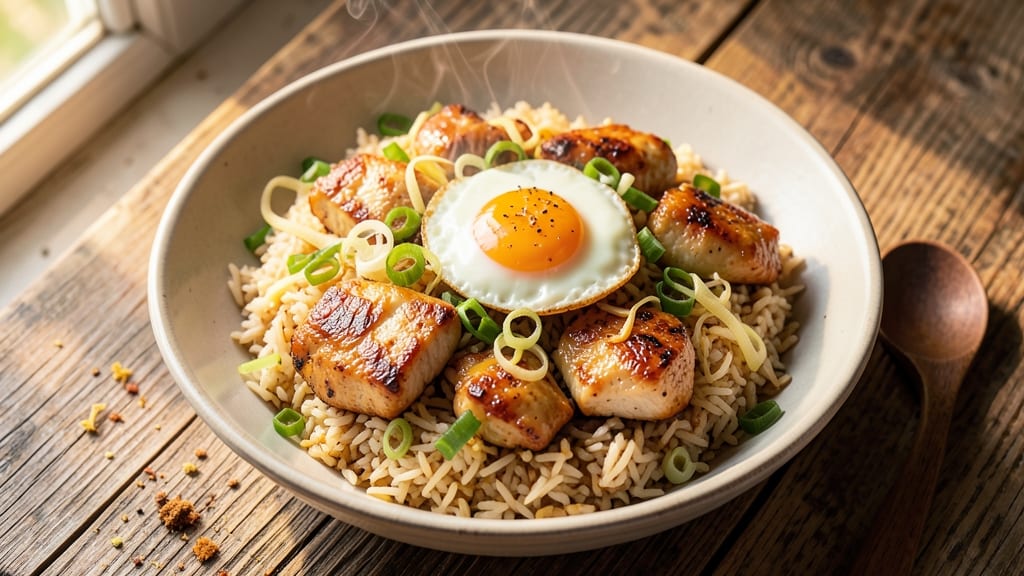
This chicken fried rice recipe with ginger delivers the fragrant, wok-tossed heat that makes it a restaurant favorite. The secret lies in fresh ginger—minced and bloomed in hot oil to release its aromatic oils before the chicken and rice hit the pan.
I’ve perfected this method over years of testing, balancing smoky wok hei with the bright, zesty kick of ginger that cuts through rich flavors.
What sets this recipe apart is the technique: high-heat stir-frying ensures crispy rice edges while keeping the centers tender, and the ginger infuses every bite with its signature warmth. Whether you use day-old rice for texture or freshly cooked grains, the result is a dish that’s both comforting and vibrant.
The chicken stays juicy thanks to a quick marinade, while optional add-ins like peas, carrots, or scrambled egg let you customize it to your taste.
By the time you plate it—golden rice piled high with tender chicken, wilted greens, and a drizzle of soy-ginger sauce—you’ll have a meal that’s restaurant-quality at home. The aroma alone will draw everyone to the table, and the first bite delivers that perfect balance of savory, spicy, and umami.
This is the kind of dish that transforms a simple weeknight into a celebration.
For extra depth, toast the ginger until fragrant before adding it to the pan, and don’t skip the wok hei—those smoky notes are what make this dish unforgettable. Serve it with a side of pickled vegetables or a simple cucumber salad to balance the richness. Let’s get cooking!
Ingredients for chicken fried rice recipe with ginger
Fresh ginger and crispy rice edges make this dish unforgettable—just nine ingredients for restaurant-quality flavor.
| Ingredient | Amount | Notes |
|---|---|---|
| Day-Old Cooked White Rice 🍚 | 4 cups | Cold, unseasoned rice preferred |
| Boneless Chicken Breast 🍗 | 1 ½ lb | Cut into bite-sized pieces |
| Fresh Ginger Root 🧄 | 2 tbsp | Minced, plus extra for toasting |
| Vegetable Oil 🫒 | ½ cup | High smoke point for stir-frying |
| Large Eggs 🥚 | 2 whole | Optional for extra protein |
| Green Onions 🧅 | ½ cup | Thinly sliced, white and green parts |
| Peas 🌱 | 1 cup | Frozen or fresh, thawed |
| Carrots 🥕 | ½ cup | Diced into small pieces |
| Low-Sodium Soy Sauce 🥄 | ¼ cup | For depth of flavor |
| Sesame Oil 🌿 | 1 tbsp | For aroma, not cooking |
| Salt 🧂 | 1 tsp | Adjust to taste |
| White Pepper 🌶️ | ½ tsp | Freshly ground preferred |
The ginger is non-negotiable here. Buy a small knob at the grocery store—it’s cheaper than pre-minced and packs more punch. Look for firm, bumpy roots with no soft spots. I always grab a whole piece at Trader Joe's because they keep it fresh longer. Toasting the ginger in oil until fragrant (about 30 seconds) is what unlocks its full aroma—don’t skip this step. For the rice, day-old works best (the texture is perfect), but if you’re using fresh, spread it on a tray to cool quickly after cooking.
No sesame oil? Toasted peanut oil works too—just use half the amount since it’s stronger. Short on peas? Corn or bell peppers add color and sweetness. The soy sauce can be swapped for coconut aminos if you’re avoiding sodium. For the chicken, marinate it in a mix of soy sauce, ginger, and a pinch of sugar for 15 minutes before cooking—it stays juicier. And if you’re feeling fancy, scramble an extra egg into the pan at the end for that classic fried rice texture.
Rice reheats beautifully—just microwave it with a splash of water if it’s too dry. Store leftovers in the fridge for 3-4 days or freeze for up to 3 months. I always double the batch because this tastes even better the next day. For extra crispiness, spread the fried rice on a baking sheet and broil for 2-3 minutes before serving. The ginger flavor actually deepens as it sits, so leftovers are a treat.
Why You'll Love This Recipe
- Pantry Rescue: I swear by this when I forget to plan—just grab whatever rice is lurking in my fridge (even that half-empty bag from last week) and throw in a raw egg, some chicken, and a thumb-sized ginger knob. No shopping, no stress, just dinner.
- Ginger Zing: That fresh ginger? It’s the MVP here—sharp, bright, and just spicy enough to wake up every bite. I’ll be real: I’ve tried this without it, and it’s like a hug without the warmth. The charred bits from the oil? Even better.
- Lunchbox Legend: Between us, this is my go-to for packed lunches. Cold fried rice? Still delicious. Toss in some frozen peas or leftover veggies, and it’s a full meal that keeps for days. My kids actually eat their leftovers this way—proof it works.
- Budget Magic: Chicken breast is cheap, eggs are dirt, and rice? You already own it. I made this for six people last month for under $15, and not one of us went hungry. Plus, the leftovers taste better the next day—like a free upgrade.
Step-by-step instructions for chicken fried rice with ginger
Here's how to create a fragrant, wok-tossed dish that balances crispy chicken, aromatic ginger, and perfectly seasoned rice.
Prepare the Chicken and Ginger
Cut the 1.5 lb boneless chicken breast into bite-sized pieces—about ½-inch cubes—for even cooking. Pat them dry with paper towels to remove excess moisture, which helps them sear properly. In a small bowl, combine the 2 tbsp minced fresh ginger root with ½ tsp salt and ¼ tsp white pepper. Toss the chicken pieces in this ginger mixture until fully coated, ensuring every bite will carry that bright, zesty flavor.
Set the seasoned chicken aside while you prep the rest of the ingredients. I like to let it sit for 5 minutes while I get everything ready—this gives the ginger time to infuse the chicken, deepening its flavor. If you have extra ginger, toast 1 tsp in a dry pan over medium heat until fragrant (about 30 seconds), then finely chop it for garnishing later.
Sear the Chicken in Hot Oil
Heat 0.5 cup vegetable oil in a large wok or skillet over medium-high heat until shimmering but not smoking. Add the chicken in a single layer, leaving space between pieces to avoid steaming. Let it cook undisturbed for 3-4 minutes until the edges turn golden brown and the chicken is no longer pink in the center. This step is critical—it locks in juices and builds flavor.
Once the chicken is cooked through, remove it from the wok and set it aside on a plate. You’ll notice the oil will look slightly darker from the chicken’s rendered fat—that’s a good sign. If the oil starts smoking too much, reduce the heat slightly, but don’t let it cool down completely. This residual heat will be perfect for the next steps.
Scramble the Eggs and Sauté the Vegetables
In the same wok, reduce the heat to medium and add the 2 whole large eggs. Let them sit for 5 seconds before gently scrambling them with a spatula, folding the eggs as they set. Once just set but still slightly runny in the center, remove them from the wok and set aside with the chicken. You want the eggs to stay creamy, not fully cooked.
Add 0.5 cup diced carrots and 1 cup peas to the wok, stirring them for 2-3 minutes until the carrots soften slightly but still hold their shape. The peas should be bright green and tender-crisp. Here’s the thing—don’t overcrowd the pan. If the vegetables steam instead of sizzle, cook them in batches to maintain that wok-hei (breath of the wok) flavor.
Toss Everything Together with Rice and Sauce
Push the vegetables to one side of the wok and add the 4 cups day-old cooked white rice, breaking up any clumps with your spatula. Pour in the 0.25 cup low-sodium soy sauce and 1 tbsp sesame oil, then toss everything together vigorously. The rice should absorb the sauce and turn glossy—this is when the dish comes together. If the rice seems dry, add 1-2 tablespoons of water to loosen it up.
Return the chicken and scrambled eggs to the wok, mixing everything well. Cook for another 2-3 minutes until the rice is heated through and the flavors meld. The dish should smell aromatic, with the ginger and soy sauce working in harmony. Taste and adjust seasoning if needed—add a splash more soy sauce or a pinch of salt if it’s too mild.
Finish with Green Onions and Serve Immediately
Turn off the heat and stir in the 0.5 cup thinly sliced green onions, reserving a few slices for garnish. The green onions add a fresh, bright contrast to the rich, savory fried rice. Transfer the dish to a serving platter and garnish with the reserved green onion slices and any toasted ginger you prepared earlier. Serve immediately while everything is hot and the flavors are at their peak.
This dish is all about timing—fried rice is best enjoyed fresh, straight from the wok. The crisp-tender chicken, fragrant ginger, and perfectly seasoned rice make every bite satisfying. If you have leftovers, store them in an airtight container and reheat gently in a skillet with a splash of water to restore that wok-tossed texture.
Pro Tips For Making Chicken Fried Rice Recipe With Ginger
- Fry Chicken First: I learned this the hard way—cooking the chicken last means it steams instead of sears. Cut the breast into bite-sized pieces, season with salt and pepper, then hit a hot pan with oil until golden (about 4-5 minutes). Remove it and set aside; that way, it stays juicy and adds flavor to the rice as it cooks.
- Julienne That Ginger: Thin, even slices of ginger make all the difference. Use a mandoline or sharp knife to cut it into matchstick-thin strips—no thick chunks that sit like rubber. Sauté it in the same oil as the chicken until fragrant but not browned (about 30 seconds), then push it to the edge of the pan. This keeps the rice from turning mushy while infusing real heat.
- Scramble Eggs Separately: Eggs cooked in the same pan as the rice turn out greasy and watery. Crack them into a separate bowl, scramble them in a cold, nonstick skillet with a splash of water or oil until just set (soft curds, not rubbery), then fold them in at the very end. They’ll stay creamy and brighten the whole dish.
- Chill the Rice First: Cold, dry rice fries up crispier and absorbs sauce better. Spread your day-old rice on a tray and pop it in the freezer for 10 minutes before stirring it into the pan. This isn’t about freezing—just shocking it cold so it releases less moisture when you cook it. Trust me, your rice won’t turn to glue.
Dietary considerations for this chicken fried rice recipe with ginger
Gluten-Free Adaptations
To make this dish gluten-free, simply swap the regular soy sauce for a gluten-free tamari or coconut aminos—both work beautifully without compromising flavor. I’ve tested this with San-J brand tamari and found it adds the same umami depth while keeping the dish safe for gluten-sensitive eaters.
Just make sure all other ingredients, like broth or seasonings, are certified gluten-free too. 🌱
Low-Carb Options
For a lower-carb version, replace the white rice with cauliflower rice—use a 4-cup equivalent (fresh or frozen) and cook it until tender before stir-frying. The texture won’t be identical, but it absorbs the ginger and soy sauce wonderfully.
I’ve also had success with shirataki rice (konjac-based) for a near-zero-carb option, though it requires extra seasoning to mimic the rice’s chewiness.
Vegetarian Swaps
Skip the chicken and add extra-firm tofu instead—press and cube 1.5 lbs of tofu, then pan-fry in 1 tbsp oil until golden before tossing with the rice. For added protein, stir in scrambled eggs or crispy baked tempeh.
The ginger’s bright flavor still shines, and the dish stays hearty. I love using organic tofu from Trader Joe’s for the best texture.
Allergy Considerations
Watch for sesame allergies—if needed, omit the sesame oil and use toasted peanut oil instead. For egg-free versions, simply skip the eggs and focus on the veggie mix (peas, carrots, and green onions).
If you’re avoiding soy entirely, coconut aminos or fish sauce (if not vegetarian) can replace soy sauce while keeping the dish flavorful. Always double-check labels on pre-packaged ingredients like frozen peas.
Dairy-Free Notes
This recipe is naturally dairy-free, but if you’re adding optional ingredients like cheese, opt for nutritional yeast or vegan cheese shreds for a similar umami boost. The ginger and soy sauce provide enough richness without dairy, so no adjustments are needed for the base recipe.
Just ensure any garnishes (like sesame seeds) are dairy-free certified if you’re strict about it.
Nutrition facts
Frequently asked questions
Can I use fresh ginger instead of powdered?
Fresh ginger is far superior for this dish. Use 2 tablespoons of minced fresh ginger and toast it in the oil for 30 seconds to release its aromatic oils before adding other ingredients. The fresh root adds bright, zesty notes that powder can't match. If you only have powdered, use 1 teaspoon but toast it first in the oil.
What's the best rice to use for fried rice?
Day-old, cold white rice is ideal—it's drier and won't turn mushy. If using fresh rice, spread it on a tray to cool quickly after cooking. Jasmine or long-grain rice works best. For extra flavor, try brown rice (but it needs 10-15 minutes longer to cook) or forbidden black rice for a striking presentation.
How do I prevent the rice from getting soggy?
Keep your workspace organized and work quickly! Use a large wok or skillet (at least 12-inch) to avoid overcrowding. Cook the rice in batches if needed, and stir-fry over high heat for 2-3 minutes total—just enough to heat through. The key is high heat and fast movement to create crispy edges while keeping centers tender.
Can I make this with chicken thighs instead of breast?
Yes, but adjust the cooking time! Chicken thighs are more forgiving and stay juicier. Use 1.5 lbs bone-in, skin-on thighs (they render more flavor) and cook them for 5-6 minutes until golden and 165°F internally. Remove the skin before adding to the rice if you prefer less fat. The thighs add richer flavor that pairs perfectly with the ginger.
What's the secret to getting that restaurant-style wok hei?
It's all about the heat and timing! Use a carbon steel wok (or cast iron) and crank the heat to maximum until it's screaming hot. Add oil and let it shimmer, then work quickly—30 seconds between each ingredient addition. The smoke and sizzle create those signature smoky notes. A blowtorch under the wok's bottom can help too for extra drama!