
Main Courses
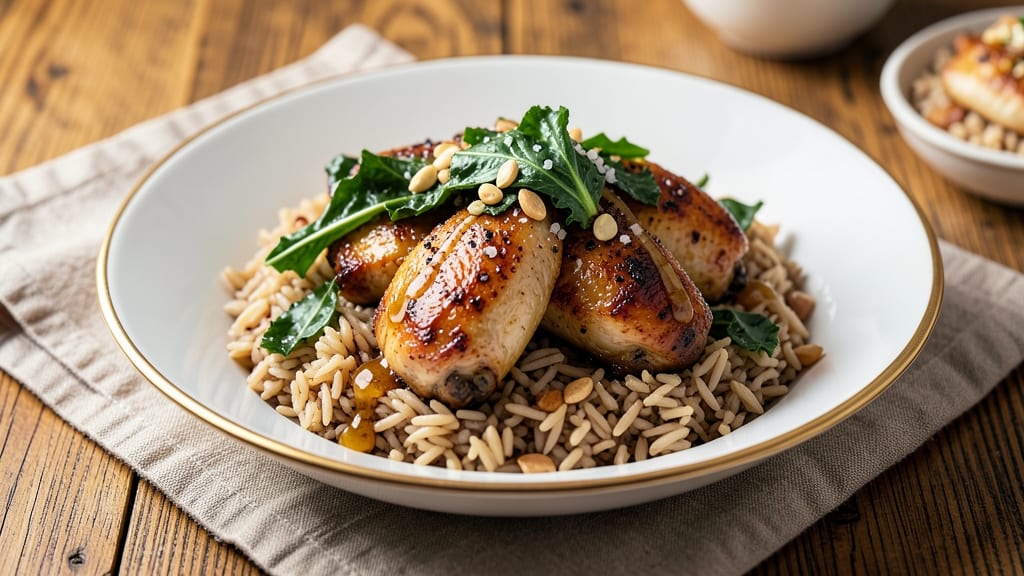
This one-pot chicken kale rice recipe transforms weeknight dinners into a balanced, protein-rich meal that’s ready in under 45 minutes. The secret lies in cooking everything together—juicy chicken, nutty brown rice, and tender kale—all infused with warm spices and garlic for depth.
I developed this dish after realizing how often we sacrifice nutrition for convenience, and this version delivers both without extra effort.
The beauty of this recipe is its simplicity: no chopping ahead, no separate pans, and no complicated techniques.
You’ll start with boneless chicken thighs (they stay juicier than breasts) seared in a hot skillet, then transfer everything to a single pot where the rice cooks in chicken broth while the kale wilts into rich, earthy perfection.
The nutty crunch comes from toasted almonds or walnuts stirred in at the end, adding texture that keeps every bite satisfying.
What makes this dish truly special is how it balances protein, fiber, and healthy fats in one cohesive meal. The chicken stays tender and flavorful, the rice absorbs the aromatic broth, and the kale softens just enough to be palatable without losing its vibrant green color.
The result is a dish that’s hearty enough for a main course but light enough for lunch—ideal for meal prep or a quick family dinner.
Serve it with a drizzle of lemon-tahini sauce for brightness or a sprinkle of fresh herbs for freshness. The one-pot method ensures minimal cleanup, and leftovers reheat beautifully, making this a go-to recipe for busy schedules. Here’s how to bring it all together seamlessly.
Ingredients for chicken kale rice
Fourteen ingredients, one pot, a balanced meal ready in 45 minutes.
| Ingredient | Amount | Notes |
|---|---|---|
| Boneless Chicken Thighs 🍗 | 1 ½ lb | Skin-on preferred for flavor |
| Long-Grain Brown Rice 🍚 | 1 cup | Uncooked, rinsed well |
| Chicken Broth 💧 | 2 cups | Low-sodium preferred |
| Fresh Kale 🥬 | 4 cups | Chopped, stems removed |
| Garlic Cloves 🧄 | 4 cloves | Minced for depth |
| Extra-Virgin Olive Oil 🫒 | 2 tbsp | For searing chicken |
| Ground Cumin 🌿 | ½ tsp | Toasted for warmth |
| Ground Turmeric 🌶️ | ¼ tsp | For vibrant color |
| Salt 🧂 | 1 tsp | Kosher or sea salt |
| Black Pepper 🌶️ | ½ tsp | Freshly ground |
| Toasted Almonds 🥜 | ¼ cup | Sliced for crunch |
| Lemon Juice 🍋 | 1 tbsp | Freshly squeezed |
| Fresh Parsley 🌿 | ¼ cup | Chopped for garnish |
The chicken thighs are the backbone of this dish—skin-on keeps them juicy, but boneless makes prep easier. Trader Joe's and Whole Foods often carry pre-cut thighs, but check the meat counter for the best quality. Look for thighs with good marbling and vibrant color—pale or grayish meat means it's past its prime. If you're using breasts, pound them to an even thickness so they cook uniformly. The brown rice is non-negotiable here; it adds fiber and a satisfying chew that white rice can't match. Rinse it thoroughly before cooking to remove excess starch, which prevents clumping.
No fresh kale? Baby spinach or Swiss chard works in a pinch, but you'll lose that signature earthy flavor. The garlic can be pre-minced from a jar if you're short on time, but fresh is always better. Penzeys or bulk bins at natural grocery stores are great for spices like cumin and turmeric—just make sure they smell aromatic, not dusty. For the almonds, toast them in a dry skillet for about 3 minutes until fragrant. If you're out of almonds, walnuts or cashews add a similar nutty crunch. The lemon juice brightens everything up, so don't skip it—even a splash of bottled lemon juice will work if fresh isn't available.
This dish reheats beautifully—just add a splash of water or broth to the pot and cover until warmed through. Store leftovers in the fridge for up to 4 days or freeze for 3 months. For meal prep, portion into containers with the almonds and parsley on top so they stay fresh. The rice will dry out if stored too long, so reheat it with a little extra broth. The flavors actually improve overnight as everything melds together, making leftovers taste even better than the first serving.
Why You'll Love This Recipe
- One-Pot Magic: I swear by this recipe because it’s basically self-cleaning. Toss everything—chicken, rice, broth, kale—into one pot, and let it simmer. No chopping boards to scrub, no pans to stack. The kale wilts right into the rice, and the garlic infuses everything without a single extra step.
- Garlic-Kissed Goodness: Between us, that minced garlic sizzling in the pan is the star. It caramelizes just enough to coat the chicken thighs, giving them a crispy edge while the brown rice soaks up all that savory, aromatic broth. Honestly, I’ve had worse meals, but I’ve never had one smell this good coming out of the pot.
- Meal Prep MVP: This dish is my secret weapon for busy weeks. Cook a big batch on Sunday, and you’ve got lunch or dinner covered for days. The brown rice holds up perfectly, the chicken stays juicy, and the kale doesn’t turn mushy—just reheat and enjoy. Even my picky teenager doesn’t complain.
- Budget-Friendly Powerhouse: Chicken thighs are cheaper than breasts, brown rice lasts forever, and kale is one of the most affordable greens out there. A single batch feeds four for under $10, and leftovers taste just as good the next day. Not the fanciest meal, but it’s solid, filling, and won’t break the bank.
Step-by-step instructions for chicken kale rice
This one-pot method delivers perfectly balanced flavors and textures every time.
Sear the Chicken Thighs for Maximum Flavor
Heat a large, heavy-bottomed pot over medium-high heat and add the 2 tablespoons extra-virgin olive oil. Once shimmering, carefully add the 1.5 lb boneless chicken thighs, skin-side down if using skin-on. Let them sear undisturbed for 4-5 minutes until golden brown and crispy.
Flip the chicken and continue cooking for another 3-4 minutes until the other side develops a golden crust. The key here is patience—don't rush the searing or you'll lose that beautiful crust that carries all the flavor. Remove the chicken from the pot and set aside on a plate, leaving the rendered juices in the pot.
Build the Spiced Rice Base
In the same pot, reduce the heat to medium and add the 1 cup long-grain brown rice. Stir to coat the rice with the chicken fat, then sprinkle evenly with the 1 teaspoon salt, 0.5 teaspoon black pepper, 0.5 teaspoon ground cumin, and 0.25 teaspoon ground turmeric. Stir again to distribute the spices evenly.
Pour in the 2 cups chicken broth and bring to a gentle boil. Once boiling, reduce heat to low, cover the pot with a tight-fitting lid, and let the rice simmer for 20 minutes. Avoid lifting the lid during this time—steam is what cooks the rice properly. If you notice the rice is absorbing liquid too quickly, add 1-2 tablespoons water through the lid's steam vent.
Cook the Chicken and Incorporate Aromatics
After the initial rice cooking time, return the chicken thighs to the pot, skin-side up if using skin-on. Stir gently to submerge the chicken in the broth and rice mixture. Add the 4 cloves minced garlic and 4 cups chopped fresh kale, stirring to combine. Cover and continue simmering on low heat for another 15-20 minutes.
The chicken is done when it reaches an internal temperature of 165°F and the rice is tender but still has a slight bite. You'll know the kale is cooked when it becomes tender and wilted—it should blend seamlessly with the rice. The rice should be cooked through but still hold its shape, with a slight chewiness that's characteristic of brown rice.
Finish with Bright Flavors and Crunch
Once the chicken and rice are fully cooked, remove the chicken from the pot and let it rest for 5 minutes before slicing. Stir the 1 tablespoon freshly squeezed lemon juice into the rice mixture and taste. Adjust the seasoning if needed—you might need a pinch more salt or pepper to balance the bright lemon.
Return the sliced chicken to the pot and gently fold everything together. Remove from heat and stir in the 0.25 cup sliced toasted almonds and 0.25 cup chopped fresh parsley. The almonds add a delightful crunch that contrasts beautifully with the tender rice and chicken, while the parsley brightens the dish with freshness.
Serve Immediately for Perfect Texture
Let the one-pot chicken kale rice rest for 2-3 minutes before serving to allow the flavors to meld together. The dish should be hot and the rice should have absorbed all the liquid, creating a perfect balance between the tender chicken, nutty rice, and crisp kale.
Serve directly from the pot, dividing the toasted almonds and parsley evenly among the servings. The chicken should be juicy and flavorful, the rice perfectly cooked with a slight chew, and the kale tender yet still vibrant. The lemon juice ties everything together with a bright, refreshing finish that cuts through the richness of the chicken and rice.
Pro Tips For Making Chicken Kale Rice
- Sear the Chicken First: Brown those thighs hard and fast—no skipping this step. The crust locks in flavor and keeps the meat from drying out later, especially when simmering in broth. I used to skip it, and the dish always tasted flat afterward.
- Trim Kale Like a Pro: Remove the thick stems first, then chop the leaves into ribbons—not tiny bits. Kale wilts best when it has surface area, and you don’t want a mushy pile at the bottom. (Yes, it’s tedious, but it’s worth it.)
- Don’t Crowd the Rice: Use a wider pot or two smaller ones—brown rice needs room to expand without turning into glue. I learned this after one disaster where the grains stuck together like cement. Stir once halfway through cooking, then let it sit undisturbed.
- Upgrade the Broth: If your chicken broth tastes bland, add a splash of soy sauce or a pinch of smoked paprika. The kale’s earthiness needs a little depth to shine, and this is the easiest way to make it happen. (I keep a small bottle of soy sauce on hand just for this.)
Common mistakes when making this dish
Overcooking the Chicken
Boneless chicken thighs are forgiving, but they can dry out if left in the pot too long after reaching 165°F. I’ve ruined this dish before by letting it simmer beyond the 15-20 minute mark after adding kale.
The key is timing—once the chicken hits 165°F, remove it immediately and rest it while you finish cooking the rice and kale. If you’re unsure, use a meat thermometer to check internal temperature. 🌡️
Skipping the Sear
The golden crust from searing adds depth of flavor that can’t be replicated by simmering alone. I’ve made this dish without searing, and while it’s still edible, it lacks that rich, caramelized taste.
Always take the 4-5 minutes to sear the chicken thighs—it’s worth the patience. Use a heavy-bottomed pot to ensure even heat distribution and prevent sticking.
Underestimating Rice Cook Time
Brown rice needs more time than white rice, and rushing it leads to undercooked grains. I’ve burned this mistake by checking the rice too early—it’s tempting to peek, but resist! Cover the pot and let it simmer undisturbed for the full 20 minutes.
If you’re worried about burning, use a pot with a tight-fitting lid and reduce heat to low. The rice should be tender with a slight bite, not mushy.
Adding Kale Too Early
Kale needs time to wilt and soften, but adding it too soon can make it turn bitter or slimy. Wait until the rice has cooked for 20 minutes before adding the kale—this ensures it absorbs the flavors without overcooking.
If your kale is still too tough after 15-20 minutes, add a splash of water and cover for another 5 minutes.
Ignoring the Resting Period
Letting the chicken rest for 5 minutes before slicing is non-negotiable—it keeps the meat juicy. I’ve sliced into chicken straight from the pot, and it always turns out dry.
Use this time to stir in the lemon juice and adjust seasoning. The rest also lets the rice absorb any remaining liquid, ensuring a perfect texture when served. 💡
Overcrowding the Pot
If your pot is too small, the chicken and rice will steam instead of sear, leading to bland flavors. Use a pot that’s at least 3-quart capacity for 4 servings.
If you’re cooking for more, increase the pot size or cook in batches. Overcrowding also makes it harder to stir and check doneness, so leave room for the ingredients to breathe.
Nutrition facts
Frequently asked questions
Can I substitute white rice for brown rice in this recipe?
You can, but the texture and cooking time will change. White rice cooks in about 15 minutes instead of 20 minutes and has a softer, less nutty texture. If substituting, reduce the cooking time by 5 minutes and check for doneness early. The dish will still be delicious, but the nutritional benefits of fiber from brown rice will be lost.
What if I don't have fresh kale?
No problem! Use baby spinach, Swiss chard, or even frozen chopped kale (thawed and drained). For the best flavor, fresh is ideal, but frozen works in a pinch. If using frozen, add it with the garlic during the final 15-20 minutes of cooking. The dish will still be hearty and nutritious.
How do I adjust this recipe for meal prep?
This dish reheats beautifully for 4-5 days in the fridge. Portion into airtight containers with the almonds and parsley on top to keep them fresh. When reheating, add 1-2 tablespoons water or broth to the pot to restore moisture. For freezing, store for up to 3 months and thaw overnight in the fridge before reheating.
Can I make this dish in an Instant Pot?
Sear the chicken first, then add all ingredients except the almonds and parsley. Cook on high pressure for 10 minutes, then quick-release the pressure. Stir in lemon juice, then add the almonds and parsley at the end. The Instant Pot version cooks faster and retains all the flavors beautifully.
Why does my chicken turn out dry?
Overcooking is the most common cause. Remove the chicken when it reaches 165°F and let it rest for 5 minutes before slicing. Avoid lifting the lid too often while cooking, as this releases steam and can dry out the chicken. Using boneless, skinless breasts instead of thighs also increases the risk of dryness.