
Main Courses
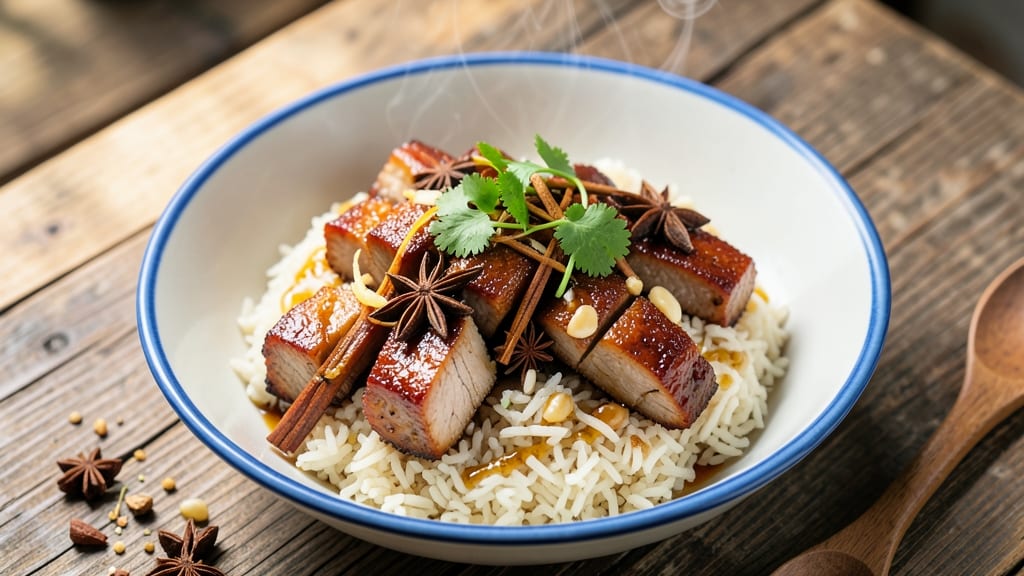
This Chinese pork steamed rice recipe delivers tender pork and fragrant five-spice rice in one comforting dish. The secret lies in marinating the pork with star anise, cinnamon, and soy sauce before stir-frying it to perfection—creating a dish that balances rich flavors with delicate textures.
I developed this recipe after years of perfecting the balance between tender meat and fragrant rice, ensuring every bite is harmonious.
The foundation of this dish starts with jasmine rice, cooked just until tender to absorb the aromatic pork juices during steaming. Layering the pork over the rice before steaming ensures the meat stays moist while infusing the rice with its savory essence.
This method transforms a simple meal into a restaurant-quality experience without requiring advanced techniques.
What makes this recipe special is the five-spice blend, which adds warmth and depth to both the pork and rice. The result is a dish where each component—tender pork, fragrant rice, and aromatic spices—comes together seamlessly.
The final touch of scallions and a drizzle of soy sauce elevates the presentation, making it perfect for family dinners or special occasions.
Ready in about 45 minutes, this recipe is ideal for weeknight meals that feel like a celebration. The combination of tender pork and fragrant rice makes it a complete dish that requires minimal effort but delivers maximum flavor. Let's get started!
Ingredients for chinese pork steamed rice
Fragrant jasmine rice and tender pork cubes create a harmonious dish where five-spice blend and star anise elevate every bite.
| Ingredient | Amount | Notes |
|---|---|---|
| Boneless Pork Loin 🥩 | 1 ½ lb | Cut into 1-inch cubes |
| Jasmine Rice 🌾 | 1 ½ cups | Uncooked, long-grain preferred |
| Soy Sauce 🍶 | ½ cup | Light or dark variety |
| Star Anise 🌿 | 2 whole | Crushed lightly with mortar |
| Ground Cinnamon 🌶️ | 1 tsp | Freshly ground preferred |
| Five-Spice Powder 🌶️ | 1 ½ tsp | Homemade or store-bought blend |
| Sesame Oil 🫒 | 1 tbsp | Toasted for aroma |
| Green Onions 🧅 | ¼ cup | Thinly sliced, white and green parts |
| Garlic Cloves 🧄 | 4 cloves | Minced finely |
| Ginger Root 🌿 | 1 tbsp | Freshly grated |
| Neutral Oil 🫒 | 2 tbsp | Vegetable or canola |
| Water 💧 | 2 cups | Room temperature |
| Salt 🧂 | 1 tsp | Diamond Crystal preferred |
| Black Pepper 🌶️ | ½ tsp | Freshly ground |
The jasmine rice is the backbone of this dish—its delicate floral notes pair perfectly with the rich pork. For optimal texture, use long-grain jasmine rice from brands like Lotus Foods or Thai Kitchen, which maintain their shape during steaming. If substituting, bombay rice works well, but avoid basmati as it lacks the necessary fragrance. The pork loin should be center-cut for tenderness; trim any visible fat to prevent excess grease during cooking. Star anise and ground cinnamon are essential for the five-spice blend—look for whole star anise pods at Asian markets for fresher flavor, and crush them lightly with a mortar or rolling pin to release their aroma without bitterness.
No five-spice powder on hand? Create your own blend with 1 tsp each of ground star anise, cinnamon, cloves, fennel seeds, and Sichuan peppercorns—toast the whole spices in a dry pan for 1 minute to deepen their flavor. If you're short on time, 1 tsp Chinese five-spice plus 0.5 tsp ground cloves works as a substitute. For the soy sauce, light varieties like Lee Kum Kee add brightness, while dark soy sauce contributes color—use a mix of both for depth. The sesame oil should be toasted; heat 1 tbsp in a dry pan for 30 seconds until fragrant, then cool before using. Fresh ginger and garlic are non-negotiable here—their brightness cuts through the richness of the pork and spices.
Prep the rice and pork marinade ahead to save time. Cook the rice just until tender (about 12 minutes) before layering with pork—this ensures it absorbs the pork juices during steaming without becoming mushy. Store the five-spice blend in an airtight container for up to 6 months, and keep the sesame oil in the fridge to preserve its flavor. Leftover pork and rice reheat beautifully—steam covered for 10 minutes to restore moisture. For meal prep, portion into glass containers to maintain freshness for 3 days in the fridge or freeze for 3 months.
Why You'll Love This Recipe
- One-Pot Magic: I swear by this recipe when I’m too tired to dirty multiple pans. The pork and rice steam together—no chopping, no fuss—just slice the meat, toss it in, and let the star anise and cinnamon work their aroma magic while you sip tea.
- Umami Bomb: That soy sauce caramelizes into something deep—not salty, not sweet, but this perfect savory punch that makes my taste buds sit up. The pork stays juicy, and the rice soaks up all the flavor like a sponge.
- Lunchbox Hero: Between us, this is my go-to for meal prep. The leftovers? Still delicious three days later. Pack it cold or reheat it gently—either way, it’s the kind of lunch that makes coworkers ask for seconds.
- Budget Win: I buy pork loin in bulk, and a single cut stretches across two meals. Jasmine rice is cheap, and those whole spices? A little goes a long way. Honestly, it’s the kind of recipe that makes grocery day feel like a victory.
Step-by-step instructions for Chinese pork steamed rice
Master this aromatic technique for perfectly tender pork and fragrant five-spice rice every time.
Marinate and Prepare the Pork
Cut the 1.5 lb boneless pork loin into 1-inch cubes and place them in a bowl. Add the 0.5 cup soy sauce, 1.5 tsp five-spice powder, 1 tbsp sesame oil, 4 minced garlic cloves, 1 tbsp grated ginger root, 1 tsp ground cinnamon, 1 tsp salt, and 0.5 tsp black pepper. Mix thoroughly until every piece of pork is evenly coated in the marinade.
Cover the bowl and refrigerate for at least 30 minutes—this allows the flavors to penetrate deeply. For maximum tenderness, marinate for up to 2 hours, but don't exceed this time as the acidity in the soy sauce can start to break down the meat fibers. I like to press the pork pieces gently with my fingers during the marinating process to ensure the seasoning clings to every surface.
Toast the Spices and Aromatics
Heat a clean skillet over medium heat and add the 2 tbsp neutral oil. Once the oil shimmers, add the 2 lightly crushed whole star anise and toast for 30 seconds until fragrant. Remove the star anise with a slotted spoon and set aside—they'll infuse the rice with their signature anise flavor.
In the same pan, add the 1.5 cups jasmine rice and stir for 1 minute to lightly toast the grains. This step enhances the nutty aroma of the rice and prevents it from becoming mushy during steaming. Remove the rice from the pan and set it aside in a bowl, reserving the oil in the skillet for later use.
Cook the Pork Until Tender
Return the skillet with the reserved oil to medium-high heat. Add the marinated pork pieces in a single layer, ensuring they don't overcrowd the pan. Cook for 4-5 minutes without stirring, allowing a golden crust to form on each piece. Flip the pork and continue cooking for another 4-5 minutes until the exterior is deep golden brown and the meat is 80% cooked through. Remove the pork and set it aside on a plate.
Here's the thing—this initial searing is critical. The Maillard reaction that occurs creates deep, savory flavors that carry through the entire dish. If the pork releases easily from the pan, it's ready to move to the next stage. If not, give it another minute or two to develop that perfect crust.
Steam the Pork and Rice Together
Line a steamer basket with a clean kitchen towel or cheesecloth to create an even cooking surface. Arrange the cooked pork pieces evenly on the towel, then spread the toasted jasmine rice around them. Pour the 2 cups room-temperature water evenly over the rice, ensuring every grain is moistened.
Place the steamer basket over a pot of simmering water, ensuring the bottom of the basket doesn't touch the water. Cover with a tight-fitting lid and steam over medium-high heat for 15 minutes. After this initial steaming period, reduce the heat to low and continue steaming for another 15-20 minutes until the rice is tender and fluffy and the pork reaches an internal temperature of 165°F.
I know it's tempting to peek, but resist the urge. Each time you lift the lid, you release steam and extend the cooking time. The rice should absorb all the water, leaving it fragrant and slightly sticky—this is the hallmark of perfectly steamed jasmine rice.
Garnish and Serve
Remove the steamer from heat and let it sit, covered, for 5 minutes. This resting period allows the residual heat to finish cooking the rice and pork evenly. Transfer the pork and rice to a serving platter, then sprinkle evenly with the 0.25 cup thinly sliced green onions. Drizzle lightly with any remaining marinade from the bowl to add extra flavor.
Serve immediately while the pork is still juicy and the rice maintains its delicate texture. Each bite should deliver tender, aromatic pork infused with five-spice warmth, paired with fragrant jasmine rice that clings together just enough to create a satisfying mouthful. The star anise and green onions add bright, fresh accents that balance the rich, savory flavors.
Pro Tips For Making Chinese Pork Steamed Rice
- Sear the Pork First: Hit that pork loin with a screaming-hot pan for 3-4 minutes per side before steaming—it builds flavor and keeps it from turning into mush when it hits the rice. I used to skip this, and the pork always tasted bland and watery afterward.
- Toast the Spices Dry: Bloom your star anise and cinnamon in the pan with a splash of oil for 30 seconds until fragrant—this unlocks their aroma way better than just tossing them in raw. (Yes, even if you’re impatient like me, don’t rush this part.)
- Don’t Overmix the Rice: Once the pork and rice go into the steamer, resist the urge to poke or fold everything together—it releases too much moisture and makes the rice gummy. Just let it steam undisturbed, like a lazy Sunday brunch.
- Use Light Soy Sauce: Swap regular soy for light soy sauce in the marinade—it’s sweeter and less salty, so you won’t overpower the pork’s natural flavor. I learned this the hard way after making my first batch taste like a salt lick.
Wine and beer pairings for chinese pork steamed rice
Light Beer Pairings
A crisp, light lager like Sapporo or Asahi complements the dish beautifully. The subtle sweetness and clean finish of these Japanese beers balance the five-spice warmth without overwhelming the delicate flavors.
I always reach for a Sapporo Original when serving this recipe—its mild carbonation and hint of maltiness cleanse the palate between bites of fragrant rice and tender pork. 🍺
Dry Riesling Options
For a white wine pairing, a dry German Riesling from the Mosel region adds an elegant contrast. The wine's bright acidity and stone fruit notes mirror the star anise and ginger in the dish, while its slight sweetness enhances the soy sauce's umami depth.
Look for a Dr. Loosen Blue Slate—its crisp profile won't compete with the pork's richness but will elevate the overall dining experience.
Sake for Authenticity
To stay true to the dish's Chinese origins, serve with a dry Japanese sake like Dassai 17. The sake's clean, slightly nutty flavor bridges the gap between the pork's savory depth and the rice's floral aroma.
Chill it slightly before serving to enhance its refreshing qualities—this is especially important during warmer months when the spice blend can feel more intense. 🍶
Spiced Rum Cocktail
For a festive touch, mix a dark rum cocktail with a splash of Lime Juice and a dash of Angostura bitters. The rum's caramel notes complement the five-spice blend, while the bitters add complexity that mirrors the dish's depth.
Serve chilled in a rocks glass—this pairing works wonderfully for holiday gatherings or special occasions.
Herbal Tea Pairing
If you prefer non-alcoholic options, a jasmine-scented green tea enhances the dish's aromatic profile. The tea's floral notes harmonize with the rice, while its light bitterness balances the pork's richness.
Brew Lipton Jasmine Green Tea and serve it hot—it's a refreshing yet sophisticated choice that complements every component of the meal.
Nutrition facts
Frequently asked questions
Can I use chicken instead of pork in this recipe?
Chicken breast or thigh works beautifully—just adjust the cooking time to 12-15 minutes for thighs or 10-12 minutes for breasts. Use the same marinade but reduce the five-spice powder to 1 tsp since chicken absorbs flavors faster. The steaming method remains identical, ensuring tender meat and fragrant rice.
Why does my rice turn out mushy after steaming?
Overcooking or insufficient heat distribution causes mushy rice. Use room-temperature water (never cold) and steam over medium-high heat for 15 minutes, then reduce to low for 15-20 minutes. Also, ensure your steamer basket isn't overcrowded—rice needs space to absorb steam evenly. For extra insurance, toast the rice for 1 minute in oil before steaming.
Can I make this dish ahead of time?
Yes! Assemble the pork and rice in the steamer basket, cover, and refrigerate for up to 12 hours before steaming. Add 5 extra minutes to the steaming time if cold. For leftovers, store in an airtight container for 3 days and reheat by steaming covered for 10 minutes. The flavors deepen overnight, making it even more aromatic!
What's the best rice substitute if I don't have jasmine?
Use bombay rice or short-grain white rice for similar texture. Avoid basmati—it stays too firm. For extra fragrance, add 1 tsp pandan extract to the water before steaming. If using long-grain rice, reduce water by 2 tbsp since it absorbs less. The dish will still be delicious, though the aroma won't be identical.
How do I prevent the pork from drying out?
Keep the pork 80% cooked before steaming—this ensures it finishes tenderizing with the rice's moisture. Use a meat thermometer to check (145°F internal temp). Also, don't overcrowd the pork in the pan during searing, and cover the steamer immediately after adding water to trap steam. For extra moisture, add 1 tbsp reserved pork marinade to the rice before steaming.