
Main Courses
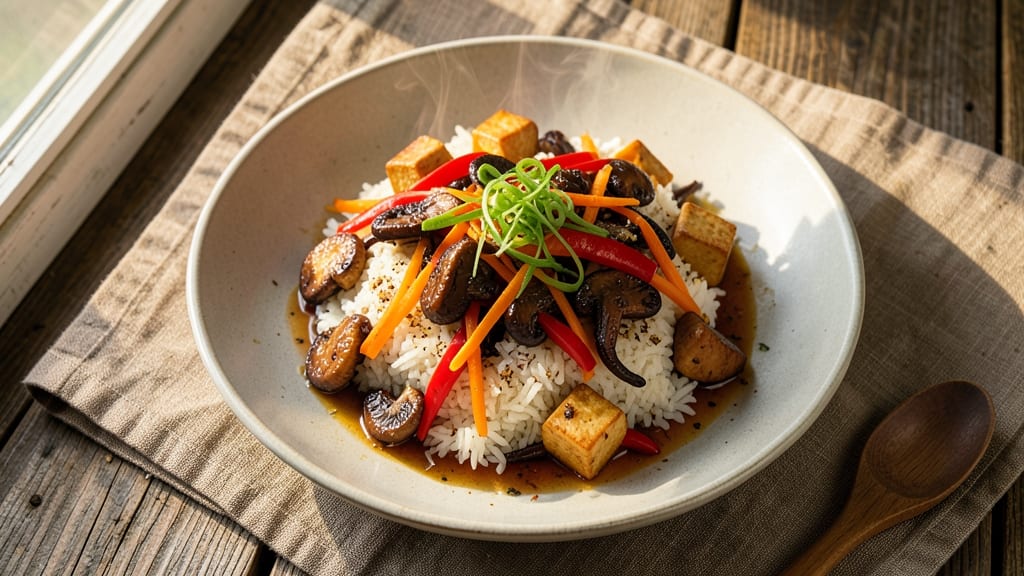
This Chinese veg rice recipe delivers restaurant-quality wok-tossed crunch with vibrant fresh herbs—no meat required. The secret lies in perfectly toasted jasmine rice, crisp-tender vegetables, and that signature wok hei aroma from high-heat stir-frying.
I've refined this dish over years of testing, ensuring every bite delivers authentic umami depth without relying on animal products.
What makes this recipe shine is the balance of textures: crispy edges on your veggies, chewy rice, and fresh herbs that add brightness. We'll use tofu for protein, mushrooms for meaty texture, and a sauce packed with garlic, ginger, and soy that transforms simple ingredients into something extraordinary.
The result is a dish that's as satisfying as it is healthy—ideal for weeknight dinners or meal prep.
Ingredients for chinese veg rice
Perfectly toasted jasmine rice meets crisp veggies and aromatic herbs in this restaurant-quality vegan dish.
| Ingredient | Amount | Notes |
|---|---|---|
| Jasmine Rice 🍚 | 1 ½ cups | Uncooked, long-grain preferred |
| Extra-Firm Tofu 🧇 | 1 lb | Pressed and cubed |
| Shiitake Mushrooms 🍄 | 8 oz | Sliced, stems removed |
| Carrots | 2 medium | Julienned, about 1 cup |
| Bell Peppers 🌶️ | 2 whole | Red/yellow, sliced into strips |
| Green Onions 🧅 | ½ cup | Sliced, including green tops |
| Fresh Ginger 🌿 | 2 tbsp | Finely grated, peeled |
| Garlic Cloves 🧄 | 6 cloves | Minced, fresh preferred |
| Cilantro 🌿 | ¼ cup | Chopped, stems removed |
| Sesame Oil 🫒 | 1 tbsp | For aroma, not cooking |
| Vegetable Oil 🫒 | 3 tbsp | High smoke point preferred |
| Low-Sodium Soy Sauce 🥄 | 3 tbsp | Kikkoman preferred |
| Rice Vinegar 🍶 | 1 tbsp | Seasoned preferred |
| Sesame Seeds 🌾 | 1 tsp | Toasted, for garnish |
| Salt 🧂 | 1 tsp | Diamond Crystal preferred |
Jasmine rice is non-negotiable here—its floral aroma and slightly sticky texture are essential for that authentic wok rice feel. Day-O brand is my go-to, but any long-grain jasmine works. For the tofu, extra-firm pressed blocks hold up best to high-heat stir-frying. Pat it dry thoroughly before cubing to prevent sogginess. Shiitake mushrooms should be fresh, not rehydrated—their meaty texture is what mimics traditional Chinese stir-fry textures. Look for plump, firm mushrooms with tightly closed caps at Whole Foods or Asian markets.
No fresh ginger? Powdered ginger at half the amount works in a pinch, though fresh delivers that bright, zesty punch. Substituting bell peppers? Snow peas or bok choy add a nice crunch. For the soy sauce, low-sodium is key—regular versions can overpower the delicate flavors. The sesame oil should be toasted, not flavored—it's all about that nutty aroma. If you can't find rice vinegar, apple cider vinegar with a pinch of sugar mimics the sweet-tangy balance. Always toast your sesame seeds in a dry pan for 30 seconds until fragrant—this makes all the difference.
Rice keeps best in an airtight container for 4 days in the fridge. The stir-fry components reheat beautifully—just add a splash of water or soy sauce to restore crispness. For meal prep, store components separately: rice, veggies, and sauce. Assemble fresh when ready to eat to maintain that perfect texture contrast. This dish freezes well for 3 months—just thaw overnight in the fridge before reheating. The sauce can be prepped a day ahead and stored in the fridge for 5 days.
Why You'll Love This Recipe
- One-Pan Magic: I swear by this recipe—just toss everything in one wok, and the tofu soaks up the garlic and soy while the mushrooms melt into the rice. No dirty dishes, no stress, just flavor.
- Umami Bomb: Those shiitake mushrooms? They’re the secret weapon—earthy, meaty, and so satisfying. Add a splash of dark soy sauce, and suddenly your rice isn’t just veggie—it’s ridiculously good.
- Lunchbox Hero: Between us, this keeps perfectly for days. Pack it in containers for work lunches or school lunches—crunchy carrots, chewy tofu, and that sticky-jasmine-rice goodness? My kids fight over it.
- Budget Stretch: Jasmine rice is cheap, tofu’s a protein powerhouse, and carrots/peppers last forever. I make this twice a week and never break the bank—plus, it feeds four for under $8. (Yes, even on a Tuesday night.)
Step-by-step instructions for wok-tossed vegetable rice
Master this vibrant stir-fry technique for restaurant-quality texture and flavor balance.
Prepare the Tofu and Vegetables for Even Cooking
Press the 1 lb extra-firm tofu between paper towels for 20 minutes to remove excess moisture. Cut into ½-inch cubes—uniform size ensures even cooking. In a bowl, toss the tofu cubes with 1 tsp salt and let them sit while you prepare the remaining vegetables.
Slice the 8 oz shiitake mushrooms into ¼-inch strips, removing stems first. Julienne the 2 medium carrots into 2-inch matchsticks for quick cooking. Cut the 2 whole bell peppers into ½-inch strips, removing seeds and membranes. Finely grate the 2 tbsp fresh ginger and mince the 6 cloves garlic—these aromatics form the flavor base.
Cook the Rice to Al Dente Perfection
Rinse the 1.5 cups jasmine rice under cold water until the water runs clear, then drain. In a pot, combine the rice with 2 cups water and 1 tbsp low-sodium soy sauce. Bring to a boil over high heat, then reduce to a simmer, cover, and cook for 12 minutes. Remove from heat and let steam uncovered for 5 minutes—this prevents mushiness while keeping grains separate.
Fluff the rice with a fork immediately after steaming. The grains should be tender but still slightly firm to the tooth—this texture holds up during tossing. Keep the rice covered at room temperature while you prepare the stir-fry components.
Build Flavor Layers Through Sequential Cooking
Heat 3 tbsp vegetable oil in a 14-inch wok or large skillet over medium-high heat until shimmering. Add the tofu cubes and cook for 4-5 minutes, stirring occasionally, until golden brown on all sides. Remove tofu and set aside on a plate.
In the same pan, add 1 tbsp vegetable oil and stir-fry the shiitake mushrooms for 3 minutes until they release their moisture and begin to brown. Add the carrots and bell peppers, cooking for 3-4 minutes until the vegetables soften but still retain their crisp-tender bite. Push vegetables to one side, add the garlic and ginger, and stir for 30 seconds until fragrant.
Combine All Elements for Maximum Texture Contrast
Return the tofu to the wok along with the cooked vegetables. Add the 3 tbsp low-sodium soy sauce and 1 tbsp rice vinegar, tossing everything together for 1-2 minutes until the sauce coats the ingredients evenly. The vegetables should be hot and vibrant, with the tofu maintaining its crisp edges.
Add the cooked rice to the wok and toss vigorously for 2-3 minutes using two spatulas. The high heat and constant motion create that signature wok-tossed texture—grains should be lightly coated in sauce while vegetables remain crunchy. If the mixture seems dry, add 1-2 tablespoons water to steam and loosen.
Finish with Aromatics and Garnish for Freshness
Remove the wok from heat and stir in the 1 tbsp sesame oil and 0.5 cup green onions. The sesame oil infuses instantly, adding nutty depth, while the green onions provide a bright, fresh contrast. Taste and adjust seasoning with additional soy sauce if needed—balance is key between umami and acidity.
Transfer the vegetable rice to a serving platter and garnish with 0.25 cup chopped cilantro and 1 tsp toasted sesame seeds. Serve immediately while the vegetables maintain their crisp texture and the rice stays separate and fluffy. The dish should burst with layered flavors—savory, slightly sweet, with herbal brightness.
Pro Tips For Making Chinese Veg Rice
- CRISP THE TOFU FIRST: I learned this the hard way—soft tofu turns to mush in stir-fries. Press extra-firm tofu for 20 minutes, then cut into cubes and pan-fry in 1 tablespoon oil until golden on all sides before adding other veggies. The crunch stays longer, and the texture holds up to the rice.
- PREP MUSHROOMS LAST: Shiitake mushrooms release water like crazy when cooked. Slice them just before stir-frying, and keep them separate until the very end—toss them in for the final 30 seconds. This keeps them tender instead of soggy, and the flavor stays concentrated.
- SALT THE RICE WATER: Skipping salt in the rice water is a rookie move. Add 1½ teaspoons of salt to the water for 2 cups of jasmine rice—it makes the grains fluffier and prevents blandness later. (Yes, even if you’re using low-sodium soy sauce in the stir-fry.)
- STIR-FRY IN BATCHES: Crowding the pan steams the veggies instead of searing them. Cook carrots and bell peppers first in a hot wok, then remove them to a bowl. Add the tofu and mushrooms to the same pan, and stir-fry until they’re nearly done before tossing everything together. Your veggies will actually taste cooked, not boiled.
Wine and beer pairings for chinese veg rice
Light Beer Pairings
A crisp, pilsner-style beer like Sapporo or Asahi cuts through the richness of the stir-fry while complementing its fresh herbs. The subtle malt sweetness balances the dish's umami, and the light carbonation cleanses your palate between bites.
I always reach for a Japanese lager when serving this—it mirrors the dish's Asian influences beautifully. 🍺
Dry Riesling
For a wine lover's twist, a dry riesling from Germany or Austria enhances the dish's bright acidity. The wine's citrus notes harmonize with the rice vinegar and green onions, while its crisp finish prevents the meal from feeling heavy.
Look for a Kabinett-level riesling—it's light enough to let the stir-fry shine without overpowering it.
Sake for Tradition
If you want to stay true to Chinese-Japanese fusion, dry sake is my go-to choice. A junmai ginjo with its clean, slightly nutty profile mirrors the sesame oil and toasted sesame seeds in the dish.
Serve it chilled to highlight its crispness—it's the perfect companion for the dish's wok hei aroma. 🍶
Non-Alcoholic Options
For a refreshing non-alcoholic pairing, try yuzu soda—its tart citrus notes echo the rice vinegar in the sauce. Alternatively, a ginger beer with a squeeze of lime adds a zesty kick that complements the fresh ginger in the stir-fry. Both options keep the meal vibrant and hydrating without alcohol.
Beer and Wine Service Tips
When serving beer, pour it into chilled glasses—this enhances the carbonation and keeps the flavor crisp. For wine, decant a dry riesling for 10-15 minutes before serving to let its aromas open up. I always recommend serving sake in small, traditional ceramic cups to emphasize the cultural connection. 💡
Nutrition facts
Frequently asked questions
Can I use regular white rice instead of jasmine?
While you can substitute white rice, jasmine's floral aroma and slightly sticky texture are key to authentic flavor. For the best results, use long-grain white rice and reduce cooking time by 2 minutes—this prevents mushiness during tossing. If you must use jasmine, toast it in the wok for 1-2 minutes before adding other ingredients to enhance its natural fragrance.
How do I prevent the veggie fried rice from turning mushy?
Overcooking is the #1 culprit! Cook vegetables in batches using high heat and remove them as soon as they're crisp-tender (about 3-4 minutes for most veggies). Keep rice separate until the very end, then toss everything together over medium-high heat for just 2-3 minutes. If needed, add 1 tbsp water to steam components without overcooking.
What's the best tofu substitute if I don't have extra-firm?
Use firm tofu instead—it holds shape better than soft varieties. For extra texture, try tempeh (marinate in soy sauce first) or seitan (for a meaty bite). If using silken tofu, drain well and press for 30 minutes to remove moisture. Pro tip: Sprinkle tofu with cornstarch before cooking for extra crispiness.
Can I make this ahead of time?
Yes! Cook the rice and stir-fry components separately, then store in airtight containers for 4 days. Reheat in a skillet with 1 tbsp oil and a splash of water to restore crispness. For best texture, assemble fresh—this keeps vegetables crunchy and rice fluffy. The sauce can be prepped 5 days ahead and stored in the fridge.
Why does my veggie fried rice taste bland?
Three likely culprits: under-seasoned sauce, overcooked vegetables, or lack of aromatics. Double-check your soy sauce (low-sodium is key), add fresh ginger/garlic, and ensure veggies are crisp-tender. For extra depth, stir in 1 tsp miso paste or a dash of fish sauce substitute (like vegan Worcestershire) at the end.