
Main Courses
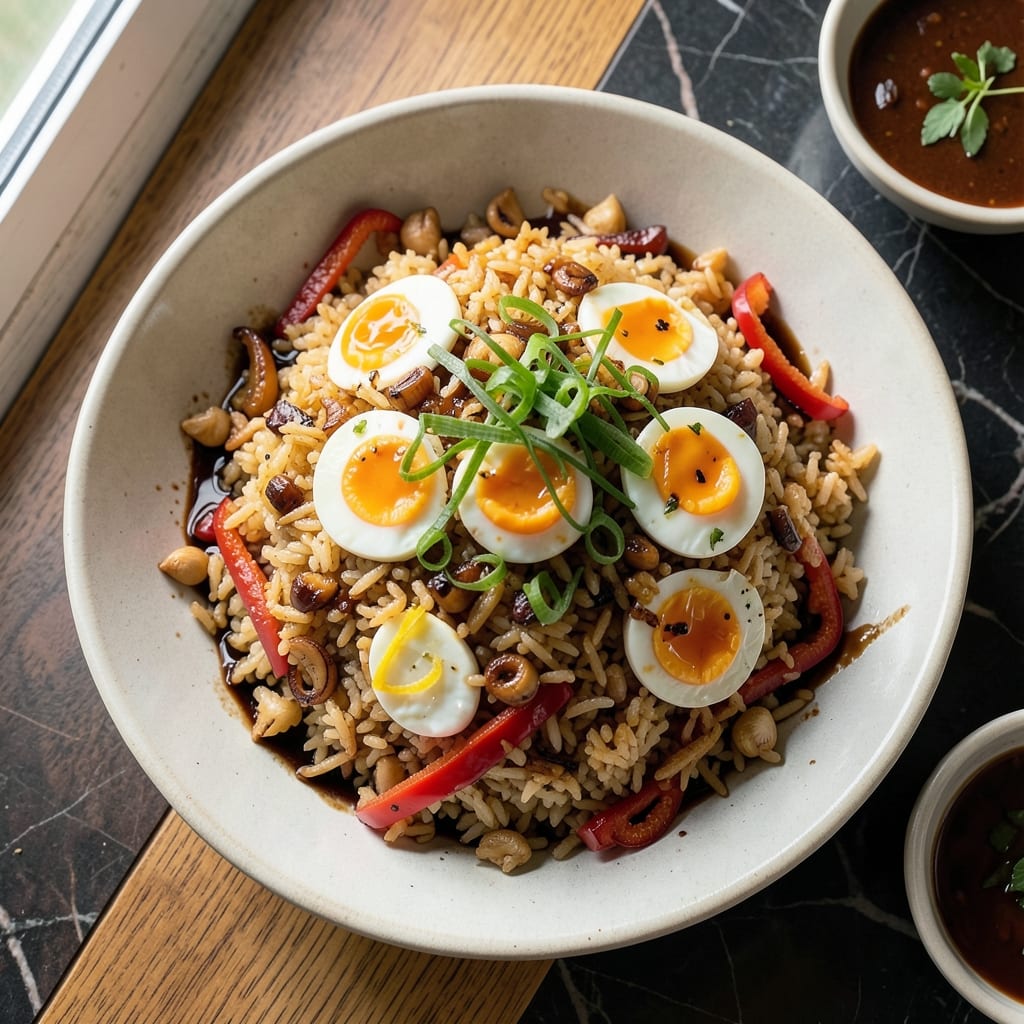
This anda fried rice recipe transforms humble ingredients into a fragrant, wok-tossed masterpiece where tender eggs and day-old rice come together in perfect harmony. The secret lies in high-heat stir-frying—where each grain gets crispy edges while staying tender inside. I’ve perfected this version to balance Singaporean richness with Malaysian flair, ensuring every bite delivers that signature umami depth without overwhelming heat. What sets this recipe apart is the two-stage cooking method: first, the eggs are scrambled to creamy perfection, then the rice absorbs their richness as it sizzles in the wok. Optional garnishes like fried shallots or scallions add crunch, while a drizzle of soy sauce ties everything together. It’s the kind of dish that turns a simple weeknight dinner into a restaurant-worthy experience—foolproof yet impressive. The result is a plate of golden, aromatic fried rice with pockets of fluffy egg and wok-tossed texture. Each forkful delivers a symphony of flavors: savory, slightly sweet, and just crisp enough to keep you reaching for more. Whether you’re feeding a crowd or treating yourself, this recipe delivers every time. For extra depth, consider adding a pinch of chili flakes or fresh herbs like cilantro. The possibilities are endless, but the foundation remains the same: high heat, quick tossing, and patience—that’s how you achieve restaurant-quality fried rice at home. Let’s get cooking!
Ingredients for anda fried rice
High-heat stir-fry essentials meet Singaporean-Malaysian fusion in this aromatic fried rice masterpiece.
| Ingredient | Amount | Notes |
|---|---|---|
| Day-Old Jasmine Rice 🍚 | 4 cups | Cold, broken into small pieces |
| Large Eggs 🥚 | 4 whole | Freshly beaten, room temperature |
| Vegetable Oil 🫒 | ½ cup | High smoke point for wok |
| Light Soy Sauce 🥢 | 3 tbsp | High-quality, low-sodium preferred |
| Dark Soy Sauce 🥢 | 1 tbsp | For color and depth |
| Oyster Sauce 🍲 | 2 tbsp | Kikkoman brand recommended |
| Sesame Oil 🫒 | 1 tbsp | Toasted, for aroma |
| Fresh Ginger 🌿 | 1 ½ tbsp | Finely grated, aromatic |
| Garlic Cloves 🧄 | 4 cloves | Minced, pungent aroma |
| Green Onions 🧅 | 4 whole | Cut into 1-inch pieces |
| Salt 🧂 | ½ tsp | Diamond Crystal preferred |
| White Pepper 🌶️ | ¼ tsp | Freshly ground for warmth |
| Fried Shallots 🧅 | 2 tbsp | For garnish, optional |
The rice is non-negotiable—day-old jasmine rice is essential for that signature wok-tossed texture. Costco or local Asian markets carry bulk jasmine rice at unbeatable prices. Break it up into small pieces before cooking to ensure even browning. For the eggs, farm-fresh from Trader Joe's delivers the creamiest texture, but any large eggs will work. The high-heat vegetable oil is crucial—avoid olive oil, which burns at these temperatures. I keep a bottle of Avocado Brand oil in my pantry specifically for stir-frying.
No oyster sauce? Vegetable stock concentrate plus a dash of soy sauce mimics its umami depth. Substitute dark soy sauce with a pinch of maltose powder if unavailable. Fresh ginger and garlic can be swapped for paste versions at half the amount, though fresh delivers superior aroma. The green onions add freshness—use the white and green parts for maximum flavor. For extra heat, add a pinch of chili flakes or a dash of Sriracha. The fried shallots are optional but worth the five minutes of frying for that restaurant-quality crunch.
Store cooked fried rice in an airtight container for up to 3 days in the fridge—it reheats beautifully with a splash of water. For freezing, portion into single-serving containers with a sprinkle of sesame oil on top to prevent drying. The egg mixture can be prepped ahead and refrigerated for up to 24 hours, though freshly beaten eggs yield the best texture. This dish tastes even better the next day as flavors meld—a testament to the two-stage cooking method that makes it truly special.
Why You'll Love This Recipe
- No-Chop Needed: I swear by this trick—just scramble those eggs first, then toss in the cold rice. No chopping, no fuss, and the eggs soak up the soy sauce like a dream, turning every bite into little flavor bombs.
- Umami Magic: That combo of light and dark soy sauce? It’s the secret weapon. The dark sauce gives it that glossy, caramelized depth, while the light keeps it bright and savory. Honestly, I’ve tried other fried rice recipes, but this one’s the only one that tastes like it belongs in a restaurant.
- Lunchbox Hero: Between us, this is my go-to for packed lunches. The day-old rice stays firm, the eggs add protein, and it reheats like a champ. My kids actually finish their lunch now—call me a miracle worker.
- Pantry Staple: You’ve got rice, eggs, and soy sauce? Done. No fancy ingredients, no last-minute grocery runs. I’ve made this on a Tuesday night with whatever was left in the fridge, and it still came out solid. Budget-friendly doesn’t get much better than this.
Step-by-step instructions for anda fried rice
Master this wok technique for restaurant-quality fried rice with tender eggs and perfectly textured grains.
Prepare the Egg Mixture
In a medium bowl, beat the 4 whole Large Eggs until frothy but not fully emulsified. You want soft peaks that hold their shape when dropped. Add the 0.5 tsp Salt and 0.25 tsp White Pepper, mixing until evenly distributed. Set aside while you prep the remaining ingredients.
Here's the thing about egg preparation—overbeating creates dense, rubbery eggs. You're aiming for a delicate, custard-like texture that breaks apart beautifully when tossed with the rice. The eggs should look just slightly thicker than when raw, with no streaks of white remaining.
Break Down the Rice and Aromatics
Using your hands, break apart the 4 cups Day-Old Jasmine Rice into small clusters, no larger than golf balls. This prevents large clumps that won't cook evenly in the wok. In a separate small bowl, combine the 1.5 tbsp Fresh Ginger and 4 cloves Garlic Cloves. Mince the garlic finely and grate the ginger using a microplane for maximum aromatic release.
The day-old rice is crucial—fresh rice contains too much moisture and will turn mushy. The slight dryness from resting allows the grains to absorb the sauce properly while maintaining their individual texture. Keep the broken rice covered until you're ready to cook to prevent it from drying out further.
Cook the Eggs in Stages
Heat the 0.5 cup Vegetable Oil in a wok over medium-high heat until shimmering but not smoking. Working quickly, pour the egg mixture into the wok and let it sit undisturbed for 10-15 seconds. You'll see the edges begin to set while the center remains runny—this is perfect.
Using a spatula, gently push the cooked edges toward the center, allowing the raw egg to flow to the edges. Continue this motion for about 30 seconds until the eggs form soft curds with a slightly glossy surface. Remove from the wok and set aside on a plate. The eggs should look like delicate, cloud-like clusters rather than fully scrambled pieces.
Build the Flavor Base
Return the wok to medium heat and add the minced ginger and garlic. Sauté for 30 seconds until fragrant—you should smell the pungent aroma of garlic and the warm, citrusy notes of ginger. Add the 3 tbsp Light Soy Sauce, 1 tbsp Dark Soy Sauce, and 2 tbsp Oyster Sauce, stirring constantly for 1 minute to combine.
Here's where the sauce magic happens. The dark soy sauce adds that signature mahogany color while balancing the saltiness of the light soy. The oyster sauce contributes umami depth that transforms this from ordinary fried rice to something extraordinary. Let the sauce reduce slightly by about 20% before adding the rice.
Combine and Toss to Perfection
Add the broken rice to the wok and toss vigorously for 1-2 minutes, breaking up any remaining clumps. The rice should begin to sizzle and absorb the sauce. After 2 minutes, add the 1 tbsp Sesame Oil and the 4 whole Green Onions cut into 1-inch pieces. Continue tossing for another 2 minutes until the rice is heated through and slightly charred in spots.
Return the egg mixture to the wok and toss everything together for 30-45 seconds until the eggs are heated through and the rice is evenly coated. The final dish should have distinct rice grains with pockets of creamy egg throughout. Taste and adjust seasoning if needed—you might need a touch more light soy sauce for balance.
Finish with Garnish
Transfer the fried rice to serving plates and immediately garnish with the 2 tbsp Fried Shallots. The shallots add a delightful crunch contrast to the tender rice and eggs. Serve immediately while hot, as the texture and flavors develop best when enjoyed right away.
This dish achieves the perfect balance of textures—crisp rice edges, creamy egg clusters, and the satisfying crunch of fried shallots. The aromatic ginger and garlic linger on the palate, while the soy sauces provide that essential umami richness that defines authentic anda fried rice.
Pro Tips For Making Anda Fried Rice
- USE HIGH HEAT FOR EGGS: Scramble those eggs over the hottest flame your pan can handle—no simmering, no half-hearted heat. I learned this the hard way when my eggs turned out greasy and sad; now they’re light, fluffy, and ready to soak up the rice’s flavors.
- BREAK THE RICE CLUMPS FIRST: Before tossing day-old rice into the pan, run a fork through it to separate any stubborn clumps. I skip this step sometimes, and the rice ends up sticking together like glue—even after stirring. Takes 30 seconds, saves you from frustration.
- SAVE THE SOY SAUCE LAST: Mix light and dark soy sauce together in a small bowl first, then add it at the very end of cooking. Stirring it in too early burns the dark soy’s caramelized goodness, and you’ll end up with a bitter, uneven sauce. Trust me, the last splash makes all the difference.
- DON’T OVERMIX THE RICE: Once the rice hits the pan, give it 2-3 minutes of undisturbed sizzling to crisp the edges. Then stir—just enough to combine, not mash it into a paste. I used to treat fried rice like stir-fry, and the texture suffered. Less stirring = better texture.
Pro cooking tips for anda fried rice
Wok Temperature Secrets
The key to perfect anda fried rice lies in your wok's temperature—it should be hot enough to sizzle but not smoking. I use a 14-inch carbon steel wok from Mauviel because it heats evenly and retains heat beautifully. Heat the wok over high heat for 2-3 minutes until a drop of water sizzles and evaporates instantly. This ensures your rice gets those coveted crispy edges while staying tender inside. 🔥
Egg Cooking Technique
Don't overmix your eggs—they should be lightly beaten with just soft peaks. I recommend using room-temperature eggs for even cooking. When frying, let them set undisturbed for 10-15 seconds before gently folding them. The goal is soft curds that break apart easily when tossed with rice. Overcooking turns them rubbery, ruining the dish's creamy texture.
Rice Texture Mastery
Day-old rice is non-negotiable—it's slightly drier and absorbs flavors better. Break it into golf-ball-sized clusters with your hands before cooking. For extra texture, I recommend using jasmine rice from Thai Kitchen brand. Toss the rice with the sauce for no more than 2 minutes—any longer and it becomes mushy. The high heat should create slight char marks on some grains for that authentic wok-house flavor.
Sauce Reduction Timing
Let your sauce reduce by about 20% before adding rice—this concentrates the flavors. I stir the soy sauce mixture for exactly 1 minute over medium heat before incorporating the rice. The dark soy sauce should give the rice its signature mahogany color while balancing the saltiness. Taste as you go—you can always add more light soy sauce later if needed.
Two-Stage Cooking Method
Cook the eggs first, then set them aside while you build the flavor base. This two-stage approach prevents the eggs from overcooking when the rice goes in. When combining everything at the end, toss for just 30-45 seconds—long enough to heat through but short enough to preserve the egg's delicate texture. The result should be pockets of creamy egg throughout the rice, not fully scrambled pieces. ✨
Garnish Like a Pro
Fried shallots are my secret weapon for restaurant-quality texture. I fry them in small batches with just enough oil to get them golden and crispy, then drain on paper towels. Sprinkle them right before serving so they stay crunchy. For extra freshness, add chopped scallions and a drizzle of toasted sesame oil just before eating—this adds layers of flavor that take the dish to the next level.
Nutrition facts
Frequently asked questions
Why is day-old rice better for fried rice?
Day-old rice has lost some moisture, making it perfect for high-heat stir-frying. Fresh rice turns mushy when tossed in hot oil because of its high water content. The slight dryness helps the grains absorb flavors while creating those coveted crispy edges. Plus, the starches release more easily, giving you that signature wok-tossed texture.
Can I make anda fried rice with fresh eggs?
Fresh eggs work, but room-temperature eggs cook more evenly. For best results, let them sit at room temperature for 30 minutes before beating. Cold eggs can create uneven curds that don't break apart as beautifully. If you must use cold eggs, beat them vigorously to warm them up slightly before cooking.
What's the difference between light and dark soy sauce?
Light soy sauce is salty and thin, used for flavor, while dark soy sauce is thicker, sweeter, and gives fried rice its signature mahogany color. Use 3 tbsp light soy sauce and 1 tbsp dark soy sauce for perfect balance. If you only have light soy sauce, add a pinch of sugar to mimic the dark variety's depth.
How do I fix mushy fried rice?
Mushy rice happens from over-tossing or using fresh rice. If it's already cooked, spread it on a baking sheet and dry it in a 200°F oven for 10 minutes. For next time, use day-old rice and toss for only 1-2 minutes over high heat. The key is high heat and quick tossing—never let the rice sit in the wok too long.
Can I make this recipe without a wok?
Yes! Use a large, heavy skillet with high sides. Heat it over medium-high heat until smoking hot, then reduce to medium-high for cooking. A non-stick skillet works too, but a stainless steel or cast iron pan gives better heat distribution. The goal is to mimic a wok's high heat and quick cooking time.