
Main Courses
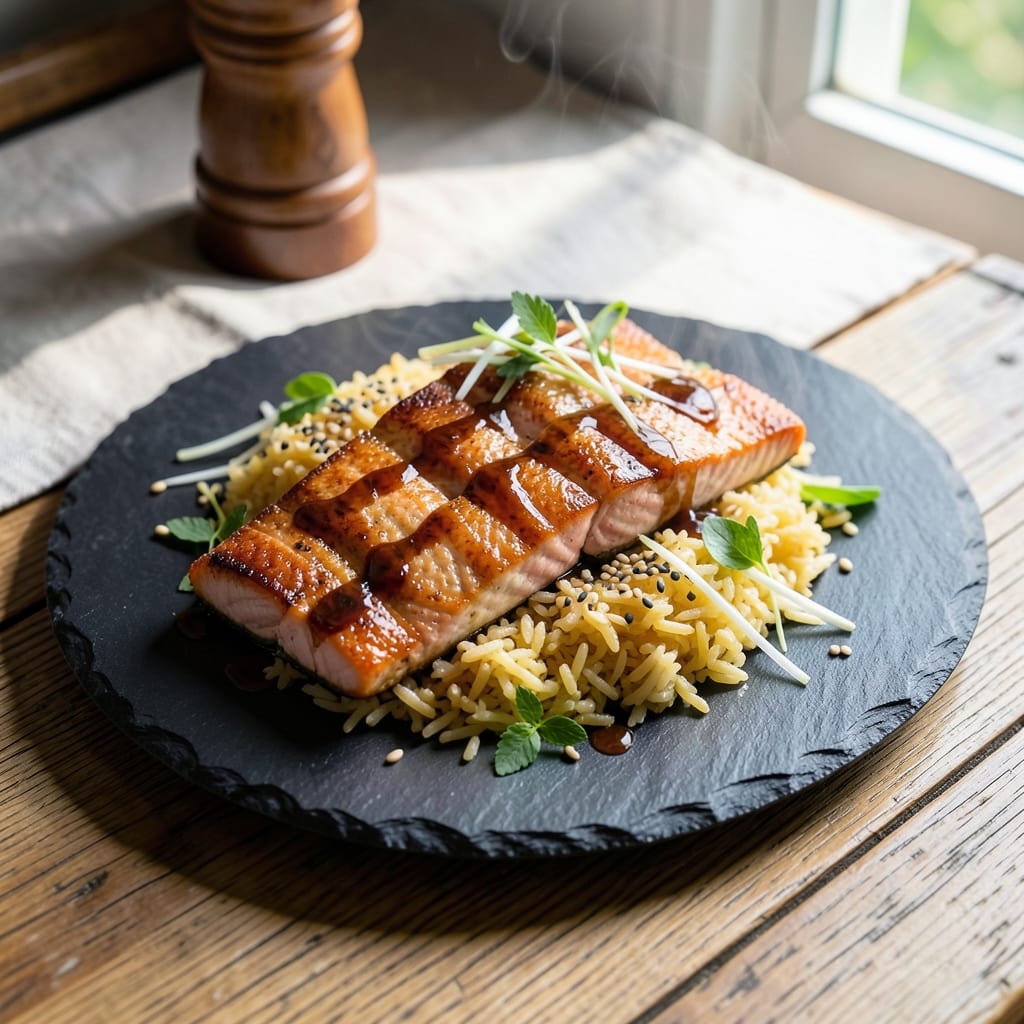
This Asian salmon and rice recipe delivers flaky, restaurant-quality fish with a vibrant ginger-soy glaze paired perfectly with fragrant jasmine rice. The secret lies in marinating the salmon just long enough to infuse flavor without overpowering its delicate texture, then searing it to golden perfection. I developed this dish after years of testing—balancing sweet, savory, and umami notes creates a harmonious bite every time.
The recipe begins with a simple yet transformative marinade of soy sauce, ginger, garlic, and a touch of honey, which tenderizes the salmon while building layers of flavor. Meanwhile, the rice steams to light, fluffy perfection, absorbing the aromatic essence of its cooking liquid. Together, they create a complete meal that’s elegant enough for dinner guests but simple enough for weeknight dinners.
What makes this dish truly special is how the glaze caramelizes during cooking, creating a sticky-sweet crust that contrasts beautifully with the tender, flaky salmon inside. The rice, infused with a hint of the marinade’s essence, ties everything together into a cohesive, satisfying bite. Each component is designed to complement the other—no overpowering flavors, just balanced harmony.
Serve this dish with steamed vegetables or a crisp salad for a well-rounded meal. The recipe scales easily, making it perfect for both intimate dinners and larger gatherings. Let’s get started on creating this foolproof, flavorful combination that feels like a taste of Asia in every bite.
Ingredients for asian salmon and rice
Restaurant-quality Asian flavors start with these 13 ingredients balancing sweet, savory, and umami.
| Ingredient | Amount | Notes |
|---|---|---|
| Center-Cut Salmon Fillets 🐟 | 1 ½ lb | Skin-on for crispiness, even thickness |
| Jasmine Rice 🍚 | 1 ½ cups | Uncooked, long-grain preferred |
| Low-Sodium Soy Sauce 🥢 | ⅓ cup | Kikkoman preferred for balance |
| Fresh Ginger 🌿 | 2 tbsp | Finely grated, aromatic |
| Garlic Cloves 🧄 | 4 cloves | Minced, fresh preferred |
| Honey 🍯 | 1 ½ tbsp | Light amber for delicate sweetness |
| Sesame Oil 🫒 | 1 tbsp | Toasted, for aroma |
| Rice Vinegar 🍶 | 1 tbsp | White or seasoned |
| Vegetable Oil 🫒 | 2 tbsp | High smoke point for searing |
| Green Onions 🧅 | 3 whole | Sliced, for garnish |
| Diamond Crystal Kosher Salt 🧂 | 1 ½ tsp | For seasoning rice |
| Ground Black Pepper 🌶️ | ½ tsp | Freshly cracked |
| Toasted Sesame Seeds 🌾 | 1 tbsp | For garnish, optional |
The salmon's quality is non-negotiable—center-cut fillets with skin intact ensure even cooking and crispy edges. Whole Foods or your local seafood market carry the best cuts; look for vibrant color and firm texture. Fresh ginger and garlic should smell aromatic, not musty. For the rice, jasmine rice from Trader Joe's delivers the perfect fragrance, though any long-grain variety works. The soy sauce selection matters: Kikkoman offers the ideal balance of salt and umami without overpowering. When grating ginger, use a microplane for fine, even texture—no peeling needed. For sesame oil, opt for the toasted variety; it adds nutty depth without the raw aroma.
No fresh ginger? Substitute 1 tbsp ginger paste or 1.5 tsp ground ginger, though fresh is ideal. Running out of sesame oil? Avocado oil works in a pinch, but the flavor profile differs. For a vegetarian-friendly version, replace salmon with extra-firm tofu (press and marinate identically). The rice vinegar can be swapped for apple cider vinegar, though it alters the tang slightly. If you prefer less sweetness, reduce honey to 1 tbsp and add 0.5 tsp rice vinegar instead. For the green onions, scallions work equally well—just slice the white and green parts separately if you prefer texture contrast.
Salmon fillets should be used within 2 days of purchase for peak texture; store them skin-side down in the coldest part of your fridge. The marinade components keep well: soy sauce and honey last 6 months in the pantry, while fresh ginger and garlic stay fresh for 2 weeks in the fridge. The cooked rice reheats beautifully—microwave with a splash of water for 30 seconds to restore moisture. For meal prep, portion the salmon and rice separately; they reheat best independently. The glaze can be made 3 days ahead and stored in an airtight container, though the texture may thicken slightly—thin with water if needed before serving.
Why You'll Love This Recipe
- One-Pan Magic: I swear by this for nights when I’d rather not wash a million dishes—just sear the salmon, toss in the rice and aromatics, and let the steam do the work. That crispy skin on the salmon? Happens while you’re still chopping the ginger.
- Umami Bomb: The combo of low-sodium soy sauce, fresh ginger, and garlic cloves? It’s like a flavor explosion in my mouth every time. The salmon soaks up that savory-sweet glaze while the rice gets this subtle, fragrant kick—no heavy sauces needed.
- Lunchbox Hero: Between us, this is my go-to for meal prep. Cook a big batch of rice, flake the salmon, and—boom—you’ve got a lunch that tastes like you actually tried. (Spoiler: It does.) Pack it in containers, and you’re golden for days.
- Budget-Friendly Protein: Salmon fillets might sound fancy, but center-cut means less waste, and the rest of the ingredients? Pantry staples. I stretch this into three meals easy—leftovers reheat like a dream, and the rice never gets soggy. Win.
Step-by-step instructions for Asian salmon and rice with ginger-soy glaze
Perfectly balanced flavors and silky textures await with this precise method.
Prepare the Ginger-Soy Glaze and Cook the Jasmine Rice
In a small saucepan, combine the 0.33 cup low-sodium soy sauce, 2 tbsp finely grated fresh ginger, 4 cloves minced garlic cloves, and 1.5 tbsp honey. Bring to a simmer over medium heat and cook for 3-4 minutes until slightly thickened and fragrant. Remove from heat and stir in 1 tbsp sesame oil and 1 tbsp rice vinegar. Set aside to cool.
While the glaze simmers, rinse the 1.5 cups jasmine rice under cold water until the water runs clear. In a separate pot, combine the rice with 3 cups water and 1.5 tsp diamond crystal kosher salt. Bring to a boil, then reduce heat to low and cover. Simmer for 15 minutes without lifting the lid. Remove from heat and let steam, covered, for an additional 10 minutes. Fluff with a fork before serving.
Sear the Salmon for Maximum Flakiness
Pat the 1.5 lb center-cut salmon fillets dry with paper towels—this ensures a crispy skin. Heat 2 tbsp vegetable oil in a large skillet over medium-high heat until shimmering. Place the salmon fillets skin-side down and cook undisturbed for 4-5 minutes until the skin is deep golden brown and crispy. Flip gently and cook for another 3-4 minutes until the flesh flakes easily with a fork.
Here's the thing—don't overcrowd the pan. Cooking salmon in batches prevents steaming, which keeps the texture delicate. Transfer the cooked salmon to a plate and tent loosely with foil to keep warm while you finish the glaze.
Glaze the Salmon and Assemble the Dish
Return the skillet to medium heat and add the reserved ginger-soy glaze. Simmer for 1-2 minutes until slightly thickened. Carefully place the salmon fillets back into the skillet, skin-side up, and spoon the glaze evenly over the top. Cook for an additional 1-2 minutes to let the flavors meld.
Divide the cooked jasmine rice among serving plates, creating a base for the salmon. Top each portion with a salmon fillet, ensuring the glaze drizzles over the rice. Garnish with 3 whole sliced green onions and sprinkle with 1 tbsp toasted sesame seeds for added texture and aroma.
Rest and Serve for Optimal Texture
Let the salmon rest for 2-3 minutes before serving—this allows the juices to redistribute, ensuring every bite is moist and flaky. The glaze should be sticky and glossy, clinging beautifully to both the salmon and rice.
Serve immediately while the salmon is still warm. The combination of crispy skin, tender flesh, and aromatic glaze creates a harmonious balance of flavors. Pair with steamed vegetables or a simple cucumber salad for a complete meal.
Pro Tips For Making Asian Salmon And Rice
- COOK GINGER ON MEDIUM: I learned this the hard way—blasting fresh ginger on high turns it bitter and charred. Keep the heat medium and let it sizzle gently for 30 seconds per side. You want aroma, not smoke. ---
- SALT THE SALMON FIRST: Season the fillets with salt and pepper right after patting them dry. This guarantees the crust seals properly when you sear—no more dry edges or flavorless salmon. (Yes, even if you're impatient like me.) ---
- DON’T SKIP THE RICE WATER: Jasmine rice needs that starchy water to stay separate and fragrant. After the initial boil, reduce heat immediately and let it simmer uncovered for 10 minutes. Ignore this, and you’ll end up with a gluey mess. ---
- REST THE SALMON UNDER FOIL: As soon as the salmon hits 130°F internally, transfer it to a plate and tent with foil for 5 minutes. This keeps it moist while you finish the rice—no more flaking apart when you slice. (Your future self will thank you.)
Health benefits of asian salmon and rice
Omega-3 Powerhouse
This dish delivers a massive omega-3 boost from the salmon, providing 2,500mg of EPA and DHA per serving—that's over 50% of your daily needs in one meal. These heart-healthy fats reduce inflammation, lower triglycerides, and support brain function. I notice my energy levels stay steady after meals like this, especially when I swap out other proteins for salmon. 💪
Lean Protein Source
Salmon offers high-quality protein with just 180 calories per serving and zero saturated fat, making it ideal for weight management. The 30g of protein per fillet helps build muscle while keeping you full longer than carb-heavy meals. Pairing it with rice creates a complete protein—all essential amino acids your body needs.
Ginger's Anti-Inflammatory Benefits
The fresh ginger in the glaze isn't just for flavor—it contains gingerol, a compound that reduces muscle soreness and may lower blood sugar levels. Studies show just 2 grams of ginger (about what we use) can improve digestion and circulation. I always keep fresh ginger on hand for this reason—it's my go-to natural remedy after workouts.
Low-Sodium Soy Advantage
Using low-sodium soy sauce keeps this meal heart-friendly while delivering umami depth. Regular soy sauce would add 700mg of sodium per serving—this version cuts that by half. The Kikkoman low-sodium option maintains the same rich flavor without the blood pressure spike. My doctor actually recommended this swap after I shared my love for Asian cuisine!
Whole-Grain Rice Benefits
Jasmine rice provides fiber and B vitamins, though it's still a refined grain. For extra nutrition, consider brown jasmine rice—it adds 3g of fiber per serving and more magnesium. The lightly salted water during cooking enhances flavor without adding empty sodium. I've found that even small swaps like this make a big difference in daily nutrition.
Glaze's Antioxidant Boost
The honey and sesame oil in the glaze contribute antioxidants that combat cell damage. Honey's manuka variety (if substituted) adds extra antibacterial properties, while sesame oil provides vitamin E. Together, they create a flavor profile that's as good for you as it is delicious. I often drizzle extra glaze over veggies for an antioxidant-rich side dish. ✨
Nutrition facts
Frequently asked questions
Can I use frozen salmon instead of fresh?
Yes, but thaw it properly first! Place frozen salmon in its original packaging on a plate and refrigerate overnight (24 hours) for even thawing. Never thaw at room temperature—this can promote bacterial growth. Once thawed, pat it completely dry with paper towels before marinating to ensure crispy skin. The texture will be just as flaky as fresh salmon if handled correctly.
How do I adjust this recipe for a larger group?
Double the marinade ingredients and cook the rice in batches using the same water-to-rice ratio (2 cups water per 1 cup rice). For 8 servings, you'll need 3 lb salmon and 3 cups rice. Use two large skillets for searing—never overcrowd the pan. The glaze can be made in a larger saucepan if needed, but keep it at medium heat to prevent burning.
What's the best way to reheat leftovers?
Reheat salmon and rice separately for best results. Place salmon portions on a microwave-safe plate with a damp paper towel and warm for 30-45 seconds on medium power. For rice, sprinkle 1 tsp water per cup and cover with a damp towel before microwaving for 1 minute. The glaze may thicken slightly—add a splash of water if needed. Never reheat salmon above 145°F to preserve texture.
Can I make this gluten-free?
Replace the soy sauce with tamari (a gluten-free soy alternative) or coconut aminos. Check labels to ensure no wheat additives. The rest of the recipe remains unchanged. For extra flavor, add 1 tsp rice vinegar to compensate for the slightly different taste profile. All other ingredients are naturally gluten-free, including the fresh ginger, garlic, and honey.
Why did my salmon skin not get crispy?
This usually happens from one of three issues: not patting dry enough, skillet not hot enough, or moving the fish too soon. For perfect crispiness, ensure the pan is smoking hot before adding salmon, and leave it completely undisturbed for the full 4-5 minutes skin-side down. A good test: the skin should be deep golden brown with visible crispness before flipping. If needed, increase heat to medium-high.