
Side Dishes
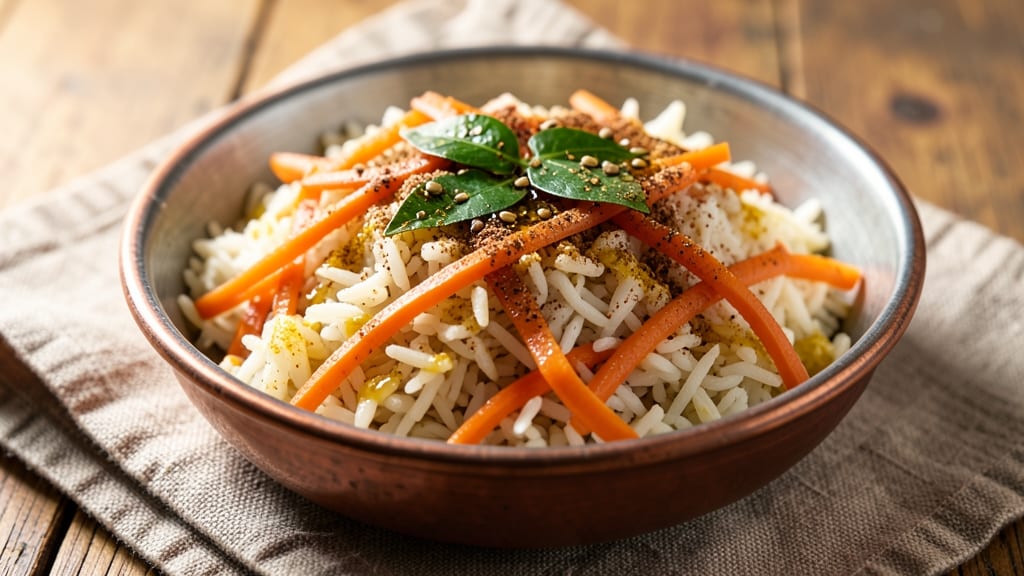
This carrot rice recipe in Tamil transforms simple basmati rice into a fragrant, five-spice-infused side dish with tender carrots and aromatic spices. The secret lies in tempering mustard seeds, curry leaves, and turmeric—classic Tamil flavors that elevate every bite.
Perfect for pairing with dosa, idli, or grilled fish, this dish delivers both sweet crunch and savory depth in one comforting bowl.
With just 15 minutes of active prep and 20 minutes of simmering, you'll achieve perfectly cooked rice with vibrant orange carrots that stay tender yet slightly crisp. The five-spice blend (cinnamon, cardamom, cloves, fennel, and pepper) adds warmth without overpowering the natural sweetness of the carrots.
This is the kind of dish that makes every meal feel special—authentic, flavorful, and impossible to resist.
Ingredients for carrot rice recipe in tamil
Transform ordinary basmati rice into aromatic, five-spice-infused carrot rice with these carefully chosen ingredients.
| Ingredient | Amount | Notes |
|---|---|---|
| Basmati Rice 🍚 | 1 cup | Uncooked, long-grain preferred |
| Medium Carrots 🥕 | 2 cups | Baby carrots or julienned strips |
| Mustard Seeds 🌱 | 1 tbsp | Whole, yellow preferred |
| Curry Leaves 🌿 | ¼ cup | Fresh, dried as substitute |
| Turmeric Powder 🌶️ | ½ tsp | Freshly ground preferred |
| Ground Cinnamon 🌿 | ¼ tsp | Ceylon cinnamon preferred |
| Green Cardamom Pods 🌿 | 4 whole | Lightly crushed |
| Cloves 🌿 | 2 whole | Lightly crushed |
| Fennel Seeds 🌱 | ½ tsp | Toasted for aroma |
| Black Peppercorns 🌶️ | ½ tsp | Crushed |
| Vegetable Oil 🫒 | 3 tbsp | Coconut oil for authentic flavor |
| Water 💧 | 2 cups | Filtered preferred |
| Salt 🧂 | ¾ tsp | Diamond Crystal kosher |
| Fresh Coriander Leaves 🌿 | ¼ cup | Chopped for garnish |
| Lemon Juice 🍋 | 1 tbsp | Freshly squeezed |
The five-spice blend is the heart of this dish. Ceylon cinnamon and cardamom deliver authentic Tamil warmth, while curry leaves add a distinct, slightly bitter depth that's essential. For the best quality, source spices from Penzeys or local Indian markets—pre-ground spices lose potency quickly. Mustard seeds should be bright yellow and whole, not powdered. The carrots? Baby carrots or julienned strips cook evenly and retain their sweet crunch. If using whole carrots, cut them into even 1/4-inch slices for consistent texture. Fresh curry leaves are non-negotiable—they're the signature flavor of Tamil cuisine, though dried leaves in a pinch will work.
No curry leaves? Dried curry powder at half the amount is a reasonable substitute, though it lacks the aromatic complexity. Running short on fennel seeds? Asafoetida powder (hing) at one-quarter teaspoon mimics its earthy notes. For the rice, jasmine rice can replace basmati, though basmati's long grains hold up better to the cooking process. The oil matters—coconut oil gives authentic flavor, but any neutral oil works. Fresh coriander leaves are ideal for garnish, but dried coriander at one-third the amount will suffice. The lemon juice brightens the dish at the end—never skip this step—it balances the richness of the spices.
Rice and spices keep best in airtight containers. Store whole spices in dark glass jars to preserve their aroma for up to 6 months. Fresh curry leaves last only 3-4 days in the fridge, so use them quickly. The cooked carrot rice reheats beautifully—simply add a splash of water and steam for 2-3 minutes. For meal prep, portion into containers and store for 4-5 days. Freezing isn't recommended as it alters the texture of the carrots, but you can freeze the cooked rice separately and stir in fresh carrots when reheating for a quick weeknight meal.
Why You'll Love This Recipe
- One-Pot Magic: I swear by this recipe when I’m too tired to wash multiple bowls—just rice, carrots, and spices in one pot. The mustard seeds and curry leaves sizzle into the rice, so you don’t even need a separate tempering pan. Honestly, I’ve made it after work with takeout containers still in my bag.
- Sweet-Savory Balance: That caramelized carrot flavor? It’s the star. The turmeric gives it a golden hue and a gentle warmth, while the mustard seeds add a tiny kick—like a hug for your taste buds. Between us, my kids ask for seconds before the plate even hits the table.
- Lunchbox Hero: I pack this cold or warm in my son’s lunchbox—it stays fresh for days, and he actually eats it. (Yes, even on a Tuesday.) The rice holds its shape, and the carrots add crunch, so it’s not just another sad, soggy meal. Pro tip: Add a pinch of salt before packing to keep it crisp.
- Pantry Staple Power: I make a big batch on Sundays because it’s dirt cheap—basmati rice and carrots are always on sale, and the spices last forever. Leftovers? They reheat like a dream, and the flavors only get better. My husband calls it my “secret weapon” for lazy nights.
Step-by-step instructions for carrot rice in Tamil style
Master this aromatic five-spice carrot rice with perfect texture and vibrant color.
Toast the Whole Spices for Deep Flavor
Heat a heavy-bottomed pan over medium-low heat and add the 3 tablespoons vegetable oil. Once the oil shimmers, add the 4 whole green cardamom pods, 2 whole cloves, 0.5 teaspoon fennel seeds, and 0.5 teaspoon black peppercorns. Toast for 30 seconds until the spices release their aroma—you'll smell a warm, earthy fragrance that's unmistakably South Indian.
Immediately add the 0.25 cup curry leaves and 1 tablespoon mustard seeds. The mustard seeds will pop and sizzle—this is your signal to keep stirring constantly. Cook for another 30 seconds until the mustard seeds turn golden. Remove from heat and let the spices cool for 1 minute—this prevents them from burning when you add the rice.
Sauté the Carrots Until Tender-Crisp
Return the pan to medium heat and add the 2 cups medium carrots (julienned or baby carrots cut into matchsticks). Sauté for 5-6 minutes until the carrots soften but still retain a slight crunch—you want them to hold their shape while becoming tender. Stir occasionally to ensure even cooking.
Add the 0.5 teaspoon turmeric powder and 0.25 teaspoon ground cinnamon, stirring for 30 seconds to coat the carrots evenly. The turmeric will give the rice its signature golden hue, while the cinnamon adds warmth. Remove the carrots to a bowl and set aside temporarily.
Parboil the Rice for Perfect Texture
In the same pan, add the 1 cup basmati rice and stir for 1 minute on medium heat to toast the grains lightly—this removes excess starch and prevents mushiness. Pour in the 2 cups water and bring to a boil. Once boiling, reduce heat to low and simmer uncovered for 10 minutes.
After 10 minutes, check the rice—it should be about 70% cooked (grains will still have a slight bite). Drain the rice in a colander, reserving ½ cup of the cooking water. This partial cooking ensures the rice absorbs the carrot flavors perfectly later.
Combine and Steam to Perfection
Return the drained rice to the pan and add the sautéed carrots, reserved cooking water, and 0.75 teaspoon salt. Stir gently to combine, then spread the mixture evenly in the pan. Cover with a tight-fitting lid and cook on low heat for 10-12 minutes until the rice is tender and the liquid is completely absorbed.
Here's the secret: don't peek! Every time you lift the lid, steam escapes and the rice dries out. Instead, check by gently pressing a grain—it should be soft with a slight resistance. The carrots should be tender but still hold their shape, adding a pleasant crunch.
Finish with Fresh Herbs and Acid
Remove from heat and fluff the rice gently with a fork. Stir in the 0.25 cup fresh coriander leaves and 1 tablespoon lemon juice. The lemon juice brightens the flavors and cuts through the richness of the spices. Let the rice sit covered for 5 minutes to allow the flavors to meld.
Serve immediately while still warm. The rice should be fragrant with a delicate balance of sweet carrots, warm spices, and the bright finish of lemon. Each grain should be distinct yet tender, with the carrots adding both color and texture. Garnish with additional coriander leaves for presentation.
Pro Tips For Making Carrot Rice Recipe In Tamil
- SOAK THE RICE HALF-HOUR: I learned this the hard way—skipping the soak makes basmati rice turn mushy in carrot rice. Toss the washed rice in room-temperature water for 20-30 minutes before cooking. The starches soften just enough to prevent that sad, gluey texture when the carrots release moisture.
- GRATE CARROTS, DON’T CHOP: Thinly grated carrots (on the large holes of a box grater) cook faster and blend better with rice than diced pieces. They also caramelize slightly in the tempering, adding natural sweetness. (Yes, even if it looks like a mess—it disappears into the rice.)
- TEMPER MUSTARD LOW: After adding mustard seeds, immediately reduce the heat to medium-low. I used to burn them every time, which made the whole dish taste bitter. Let them pop gently—about 20 seconds—before adding curry leaves. Patience here keeps the flavors clean.
- ADD TURMERIC TO WATER: Mix turmeric powder directly into the rice cooking water, not the tempering. It dissolves better and colors the rice evenly. (I tried adding it later once, and half the rice stayed pale—don’t make that mistake.) A pinch (¼ tsp) is enough; too much turns the rice yellowish.
Essential equipment for great carrot rice recipe in tamil
Heavy-Bottomed Pan
You’ll need a heavy-bottomed pan—I recommend a stainless steel or cast iron skillet like the All-Clad Stainless or Lodge Cast Iron—to distribute heat evenly and prevent burning. These pans maintain consistent temperatures, which is crucial for toasting spices and cooking rice without scorching.
Avoid non-stick pans for this recipe, as they don’t conduct heat as well and can alter the flavor development of the spices. 🔥
Curry Leaf Basket
A curry leaf basket (also called a curry leaf holder) is a game-changer for this dish. These small, perforated metal baskets let you fry curry leaves in oil without burning them—just place the basket in the pan, add the leaves, and let them sizzle until fragrant.
If you don’t have one, use a small metal strainer or fry the leaves in batches for 10-15 seconds before removing them. Penzeys Spices sells affordable curry leaf baskets online.
Fine-Mesh Strainer
For draining the partially cooked rice, a fine-mesh strainer (like the OXO Good Grips) ensures you capture all the grains while reserving the starchy cooking water. This step is critical—reserving ½ cup of the cooking water helps steam the rice to perfection later.
A regular colander won’t work as well, as its larger holes let rice grains slip through. Pro tip: Rinse the strainer with cold water after use to prevent rice from sticking.
Tight-Fitting Lid
A tight-fitting lid is non-negotiable for the final steaming step. Use a glass or metal lid (avoid plastic, as it can warp from heat). If your pan doesn’t have a lid, a large plate or bowl pressed firmly on top works in a pinch.
The goal is to trap steam and cook the rice evenly—don’t peek! Lifting the lid too soon releases steam and dries out the rice. I use a glass lid so I can peek just once to check doneness without losing too much steam. ✨
Wooden Spoon
A wooden spoon (preferably bamboo or teak) is ideal for stirring the rice and carrots. Wood distributes heat gently and prevents scratching your pan. Avoid metal spoons, which can react with the spices and alter the flavor.
For the final fluffing step, a fork works better than a spoon to separate the grains without mashing them. Keep your wooden spoon clean—soak it in warm water after use to remove any stuck rice.
Microplane for Spices
While not essential, a microplane (like the Microplane Zester/Grater) comes in handy for freshly grating fennel seeds or ginger if you want to add extra depth. Freshly grated spices release more aroma than pre-ground ones.
For this recipe, I focus on whole spices, but if you’re experimenting, a microplane ensures you get the most flavor from fresh ingredients. Store-bought ground spices lose potency quickly, so toasting whole spices in the pan is the key to authentic taste. 💫
Nutrition facts
Frequently asked questions
Can I substitute basmati rice with jasmine rice?
Yes, you can use jasmine rice, but basmati is preferred for its long grains that stay distinct. Jasmine rice will work, though the texture may be slightly stickier. If using jasmine, reduce the water by ¼ cup (use 1.75 cups instead of 2 cups) and cook for 5 minutes less to avoid mushiness.
What if I don't have fresh curry leaves?
Use ½ teaspoon dried curry powder as a substitute, but expect slightly less aroma. For a closer match, lightly toast ¼ teaspoon dried curry leaves in the oil before adding other spices. Never skip curry leaves—they’re the heart of Tamil flavors!
How do I make this dish less spicy?
Reduce the black peppercorns to ¼ teaspoon and omit the chili powder if using. For milder heat, add ½ teaspoon sugar to balance the spices. The cinnamon and cardamom provide warmth without heat, so focus on adjusting those quantities first.
Can I make this recipe in a rice cooker?
Sauté the spices and carrots in a separate pan first, then transfer everything to the rice cooker. Use 1.5 cups water (instead of 2 cups) and follow the rice cooker's instructions. The rice will be slightly stickier, but the flavors remain authentic.
Why does my carrot rice turn out mushy?
Overcooking or peeking while steaming are the most common causes. Always use a tight lid and avoid lifting it until the 10-12 minutes are up. If the rice is still firm after cooking, add 2 tablespoons hot water and steam for 2 more minutes—never add cold water.