
Side Dishes
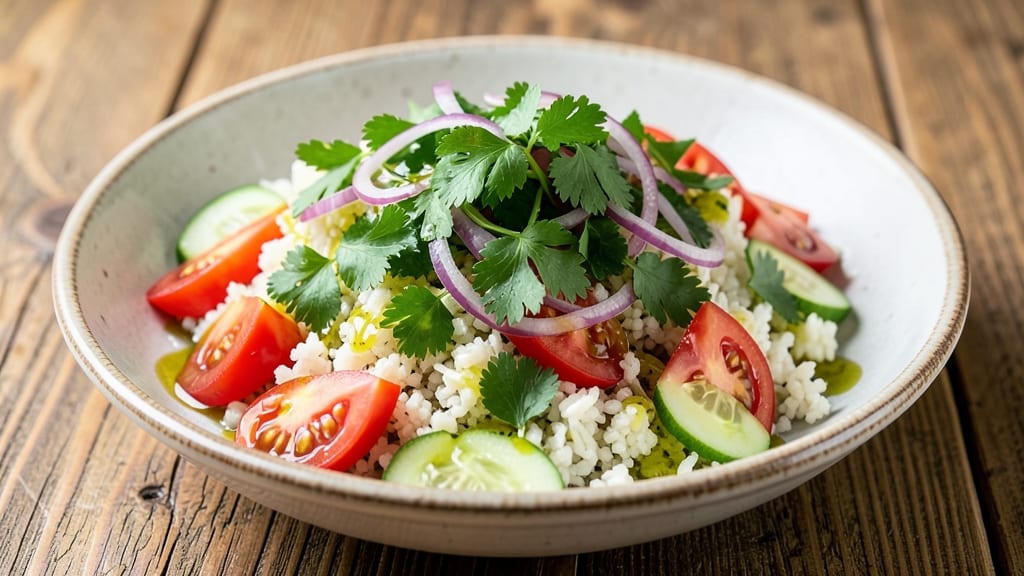
This cauliflower rice tabbouleh recipe transforms a classic Middle Eastern salad into a lighter, low-carb version without sacrificing flavor.
The secret lies in perfectly rinsing the cauliflower rice to remove bitterness, then balancing its mild texture with bright parsley, juicy tomatoes, and crisp cucumbers—all tossed in a zesty lemon-olive oil dressing. It’s the ideal side for grilled proteins or a satisfying vegetarian main when served with whole-grain pita.
The key to success is proper prep: finely chopping fresh parsley (the herb’s flavor should dominate) and letting the salad sit for 10 minutes before serving. This allows the cauliflower rice to absorb the dressing while the vegetables release their juices, creating a harmonious, herby bite.
For extra creaminess, stir in a spoonful of tangy yogurt, or use vegan yogurt for a dairy-free option. Every forkful delivers a refreshing, herb-packed crunch that’s both nutritious and deeply satisfying.
Ingredients for cauliflower rice tabbouleh
Fresh herbs, crisp vegetables, and zesty dressing create this vibrant cauliflower twist on tabbouleh.
| Ingredient | Amount | Notes |
|---|---|---|
| Fresh Cauliflower Florets 🥬 | 4 cups | Riced finely for texture |
| Fresh Parsley Leaves 🌿 | 1 ½ cups | Finely chopped, stems removed |
| Medium Tomatoes 🍅 | 2 whole | Diced, seeds removed |
| English Cucumber 🥒 | 1 whole | Diced, peeled if preferred |
| Red Onion 🧅 | ¼ cup | Finely diced, white part only |
| Extra-Virgin Olive Oil 🫒 | ½ cup | High-quality, fruity variety |
| Fresh Lemon Juice 🍋 | ¼ cup | Freshly squeezed, strained |
| Plain Yogurt 🥛 | ¼ cup | Greek or vegan alternative |
| Garlic Cloves 🧄 | 2 cloves | Minced, not powdered |
| Diamond Crystal Kosher Salt 🧂 | 1 tsp | Adjust to taste |
| Fresh Mint Leaves 🌿 | ¼ cup | Optional, finely chopped |
| Ground Black Pepper 🌶️ | ½ tsp | Freshly ground preferred |
The cauliflower is the foundation, so choose fresh, firm florets—the younger, the better. Trader Joe's or Whole Foods often carry pre-riced cauliflower, but grating it yourself ensures finer texture. Rinse the rice thoroughly to remove bitterness, then drain well. For parsley, Italian flat-leaf has the most intense flavor—avoid curly varieties. The tomatoes and cucumber should be ripe but firm; heirloom tomatoes add sweetness, while Persian cucumbers stay crisp longer. Store fresh herbs in damp paper towels to maintain vibrancy.
No fresh parsley? Dried parsley at half the amount works in a pinch, though it lacks depth. Substitute cilantro or basil for a different herbal profile, but reduce to 0.5 cup to avoid overpowering. The yogurt can be swapped for vegan yogurt or sour cream, though texture will differ. For extra brightness, add 1 tsp lemon zest or a splash of pomegranate molasses. If you prefer less moisture, omit the cucumber or drain it well. The dressing ratio is critical—balance the olive oil and lemon to taste, but start with equal parts for harmony.
This tabbouleh keeps best when refrigerated in an airtight container for up to 3 days, though flavor peaks at 1-2 days as ingredients meld. For meal prep, store components separately—mix dressing last to prevent sogginess. The cauliflower rice absorbs dressing over time, so add extra lemon juice before serving if needed. To revive texture, toss with a drizzle of olive oil. Pairs beautifully with grilled chicken, falafel, or as a standalone vegetarian bowl.
Why You'll Love This Recipe
- No Pulse Needed: I just pulse the cauliflower florets in my food processor—maybe 10 seconds max—until it looks like rice. No perfect texture? Who cares. The flavor still shines through.
- Herb Bomb Brightness: That parsley alone makes this dish pop, but add the crisp cucumber and juicy tomatoes? It’s like summer in a bowl. The red onion brings just enough bite to keep it interesting.
- Lunchbox Hero: Pack this for work—it stays fresh for days, and honestly? My coworkers always ask for seconds. Toss it in a jar, and it’s a no-fuss, no-mess meal that actually tastes homemade.
- Budget-Friendly Flex: Cauliflower stretches further than rice, and the veggies are cheap but pack a punch. Between us, I’ve fed four people for under $10 with this—plus, leftovers taste just as good the next day.
Step-by-step instructions for cauliflower rice tabbouleh
Transform fresh vegetables into a vibrant, low-carb tabbouleh with this precise method.
Prepare the Cauliflower Rice Foundation
Start by rinsing the 4 cups of fresh cauliflower florets under cold water to remove any debris. Using a food processor fitted with the grating disc, pulse the florets until they resemble fine rice grains. You want the texture to be consistent—no large chunks should remain. Transfer the cauliflower rice to a colander and press gently with a clean kitchen towel to remove excess moisture. This step is crucial; any lingering water will dilute your dressing later.
In a large mixing bowl, combine the drained cauliflower rice with the 0.25 cup of finely diced red onion (white part only) and the 2 cloves of minced garlic. Set this mixture aside while you prepare the remaining vegetables. The onion and garlic will infuse flavor as you build the tabbouleh, creating a balanced herb-forward dish without overpowering the fresh ingredients.
Dice and Combine Vegetables
Cut the 2 whole medium tomatoes in half and remove the seeds using a small spoon. Dice the tomato flesh into small, even pieces—about ¼-inch cubes. Peel the 1 whole English cucumber (if preferred) and cut it in half lengthwise. Remove the seeds and dice the flesh into similar-sized pieces as the tomatoes. The uniformity in size ensures even distribution throughout the dish.
Finely chop the 1.5 cups of fresh parsley leaves, removing any tough stems. If using, finely chop the 0.25 cup of fresh mint leaves as well. Add all the diced vegetables to the bowl with the cauliflower rice mixture. Gently toss everything together with your hands or a large spoon, ensuring the vegetables are evenly distributed. This step creates the vibrant, colorful base that defines tabbouleh.
Prepare the Dressing
In a small bowl, whisk together the 0.5 cup of extra-virgin olive oil, 0.25 cup of fresh lemon juice, 0.25 cup of plain yogurt, 1 tsp of Diamond Crystal kosher salt, and 0.5 tsp of freshly ground black pepper. The dressing should be smooth and well-emulsified—no oil should separate. Taste and adjust the seasoning if needed, balancing the acidity of the lemon with the creaminess of the yogurt and olive oil.
Here's the thing—this dressing is the soul of your tabbouleh. The high-quality olive oil adds depth, while the lemon brightens everything. The yogurt provides a creamy contrast to the crunchy cauliflower and fresh herbs. Don't rush this step; the flavor balance is what makes this dish exceptional.
Combine and Rest
Pour the dressing over the vegetable mixture and gently fold everything together with a large spoon. Be careful not to overmix—just enough to coat all the ingredients evenly. The tabbouleh should look vibrant and moist, with the herbs and vegetables glistening from the dressing. If it seems too dry, add a splash of water or lemon juice to loosen it.
Cover the bowl and refrigerate the tabbouleh for at least 30 minutes before serving. This resting period allows the flavors to meld together perfectly. The cauliflower rice will absorb the dressing, and the herbs will release their full aroma. Real talk: this waiting time makes all the difference in the final texture and taste.
Serve and Enjoy
Before serving, give the tabbouleh one final toss to redistribute any settled ingredients. The dish should be cool, vibrant, and perfectly balanced in texture—crisp cauliflower rice, tender vegetables, and fresh herbs throughout. Serve immediately as a side dish or as a light main course with grilled proteins or warm pita bread.
Each bite should deliver a refreshing burst of lemon, the creaminess of yogurt, and the bright freshness of parsley and mint. The cauliflower rice provides a satisfying texture without the heaviness of traditional bulgur wheat. This tabbouleh is the perfect example of how simple ingredients can create something extraordinary when prepared with care.
Pro Tips For Making Cauliflower Rice Tabbouleh
- CHOP CAULIFLOWER SMALL: Use a food processor or knife to get pieces no bigger than ¼-inch—any larger and they’ll turn mushy when tossed with the wet ingredients. I learned this the hard way after serving a bowl where half the "rice" was still in clumps.
- SALT THE CAULIFLOWER FIRST: Toss the raw cauliflower rice with ½ teaspoon salt and let it sit for 10 minutes before mixing with anything else. This draws out moisture, so your tabbouleh won’t turn soggy when you add the cucumber and tomatoes.
- SKIP THE SOAKING CUCUMBER: Resist the urge to soak the cucumber in saltwater—it dulls the flavor and adds unnecessary water. Instead, seed it, dice it, and toss it in right away. The lemon juice in the dressing will do the job of brightening it up.
- USE A LEMON ZEST: Grate a strip of lemon zest into the parsley before mixing—it adds a subtle brightness that cuts through the richness of the cucumber and tomatoes. I was skeptical until I tried it; now I can’t imagine skipping it.
Storing and reheating this cauliflower rice tabbouleh
Refrigerator Storage
Store your cauliflower rice tabbouleh in an airtight container for up to 3 days—the flavors actually improve as the herbs infuse further. I like using glass Pyrex containers because they keep the dish fresh longer and allow me to see the vibrant colors.
Always press a damp paper towel over the surface before sealing to prevent drying out. The cauliflower rice absorbs moisture over time, so add a splash of lemon juice before serving if it looks dry. 🥗
Freezer-Friendly Prep
For longer storage, freeze the tabbouleh in single-serving portions for up to 1 month. Use quart-sized freezer bags or silicone molds to maintain texture. Exclude the yogurt (add it fresh when serving) to prevent separation.
When ready to eat, thaw overnight in the fridge, then toss with a little extra lemon juice and olive oil to revive the freshness. This method works perfectly for meal prep—just grab and serve! ❄️
Reheating for Best Texture
If reheating from the fridge, I recommend stovetop method for the best results. Warm the tabbouleh over low heat for 3-4 minutes, stirring gently with a wooden spoon. Avoid microwaving—it can turn the cauliflower rice mushy.
For extra brightness, finish with a drizzle of fresh lemon juice and a sprinkle of black pepper. The goal is to restore the crisp texture while keeping the herbs vibrant. 🔥
Reviving Day-Old Tabbouleh
If your tabbouleh loses some crunch after sitting, don't toss it! Toss the cooled mixture with 1 tablespoon olive oil and 1 teaspoon lemon juice, then let it rest for 10 minutes. The acidity will perk up the flavors, and the oil adds a fresh layer of richness.
This trick works like magic for restoring texture without starting over. Trust me, it's a lifesaver for busy weeknights! ✨
Serving After Reheating
Serve reheated tabbouleh as a refreshing side with grilled chicken or fish, or pile it into warm pita pockets for a satisfying meal. For extra flair, top with toasted pine nuts or crumbled feta (if using dairy).
The contrast of warm bread with cool tabbouleh is pure comfort food magic. Always taste and adjust seasoning—sometimes reheated dishes need a pinch more salt or a squeeze of lemon. 💫
Nutrition facts
Frequently asked questions
Why does my cauliflower rice turn mushy in tabbouleh?
Over-rinsing or not draining well causes soggy cauliflower rice. Always press it in a clean towel after grating, and avoid adding liquid until the final dressing step. The key is proper prep: rinse briefly, drain thoroughly, and let it sit uncovered for 5 minutes before mixing with other ingredients.
Can I make this tabbouleh ahead for meal prep?
Store components separately in airtight containers for up to 3 days. Keep the dressing separate until ready to serve to maintain crispness. For longer storage, freeze the veggie-herb mix (without yogurt) for 1 month
What's the best parsley substitute if I don't have fresh?
Use dried parsley at half the amount (0.75 cup) for a milder flavor, or swap with cilantro or basil (0.5 cup max). For extra depth, add 1 tsp lemon zest or ½ tsp dried mint. The herb should dominate—don't overdo substitutions!
How do I make this vegan-friendly?
Replace yogurt with vegan yogurt or coconut yogurt, and use olive oil-based dressing> instead of dairy. For extra creaminess, stir in 1 tbsp tahini or avocado slices when serving. The texture will be slightly different but still delicious!
Can I add protein to make it a complete meal?
Yes! Top with grilled chicken, chickpeas, or crumbled falafel for a hearty meal. For extra protein, mix in ¼ cup cooked quinoa or toasted pumpkin seeds. Just add these components fresh after assembling the tabbouleh to keep everything crisp.