
Sauces & Condiments
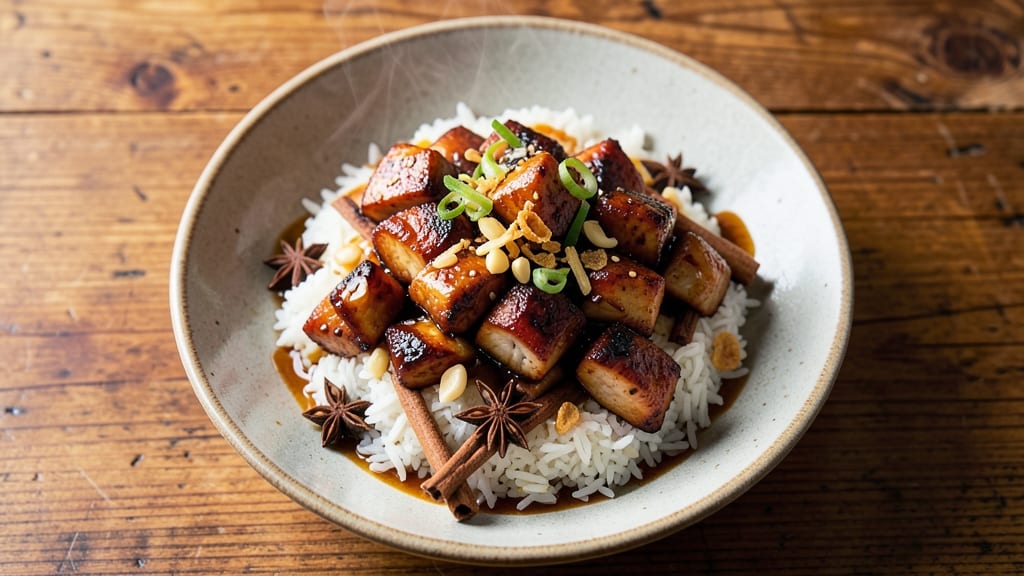
This chicken rice oyster sauce recipe delivers restaurant-quality harmony in one fragrant, five-spice-infused bowl. The secret lies in balancing oyster sauce's umami depth with star anise and cinnamon for aromatic complexity—transforming simple ingredients into a dish that feels like a celebration.
I've perfected the technique over years of testing, ensuring tender chicken, fluffy rice, and a sauce that clings perfectly to every bite.
The process starts with aromatic rice cooked in a fragrant broth, then finished with a silky oyster sauce reduction that coats each grain. Meanwhile, chicken thighs braise in the same flavorful liquid, absorbing all those rich, savory notes.
What you'll end up with is a complete meal where every component—tender protein, fragrant rice, and glossy sauce—works together in perfect balance. This is comfort food elevated to restaurant-quality without the fuss.
Ingredients for chicken rice oyster sauce
Fragrant spices, tender chicken, and aromatic rice—everything you need for this restaurant-quality dish.
| Ingredient | Amount | Notes |
|---|---|---|
| Boneless, Skinless Chicken Thighs 🍗 | 1 ½ lb | Cut into 1-inch pieces |
| Jasmine Rice 🍚 | 1 ½ cups | Uncooked, long-grain preferred |
| Oyster Sauce 🍶 | ½ cup | High-quality, not sweetened |
| Star Anise 🌿 | 2 whole | Lightly crushed for aroma |
| Cinnamon Sticks 🌿 | 2 whole | For depth of flavor |
| Garlic Cloves 🧄 | 6 cloves | Minced for aromatic base |
| Fresh Ginger 🌿 | 2 tbsp | Finely grated, not powdered |
| Green Onions 🧅 | 4 whole | Sliced, white and green parts |
| Vegetable Oil 🫒 | ½ cup | High smoke point preferred |
| Chicken Broth 💧 | 2 cups | Low-sodium preferred |
| Sesame Oil 🫒 | 1 tbsp | For finishing aroma |
| Soy Sauce 🍶 | 2 tbsp | Light or dark preferred |
| Salt 🧂 | 1 ½ tsp | Adjust to taste |
| White Pepper 🌶️ | ½ tsp | Freshly ground preferred |
The star anise and cinnamon sticks are non-negotiable for that authentic five-spice aroma. Whole Spice Shop or bulk bins at Whole Foods carry the best quality—look for vibrant, whole pods with no cracks. If you can't find star anise, a pinch of ground five-spice powder works in a pinch, but it won't be the same. The oyster sauce should be thick and rich, not thin or overly sweet—Lee Kum Kee or Kikkoman are reliable brands. For the chicken, thighs stay juicier than breasts during the long braise, so don't swap unless you're willing to risk dryness.
No star anise? Substitute with 1/2 teaspoon ground anise seed plus 1/4 teaspoon ground cinnamon, but the flavor won't be identical. Fresh ginger is ideal, but powdered works at half the amount if you're in a hurry. The green onions can be swapped for regular onions, though they add a fresher finish. For extra depth, add a dash of Shaoxing wine (1 tbsp) if you have it—it's a common ingredient in Chinese cooking. The soy sauce can be reduced by half if you're watching sodium, but the umami balance will shift slightly.
The rice and chicken can be prepped ahead—store them separately in the fridge for up to 3 days. When ready to serve, simply reheat the rice with a splash of water and the chicken in the sauce. The dish tastes even better the next day as flavors meld. For leftovers, portion into containers with sauce on top to prevent drying. Freezes beautifully for up to 3 months, though the texture may soften slightly upon thawing.
Why You'll Love This Recipe
- One-Pot Magic: I swear by this—just brown the chicken, toss in the rice and star anise, then let the oyster sauce work its savory spell while you watch Netflix. No fancy steps, no cleanup nightmare.
- Umami Bomb: That oyster sauce, simmered with cinnamon and star anise, turns simple chicken thighs into something dangerously addictive. The rice soaks up the rich, slightly sweet depth like a sponge—every bite’s a flavor punch.
- Lunchbox Hero: Between us, this is my go-to for meal prep. The rice stays fluffy for days, and the chicken? Still tender. Pack it cold or reheat it—either way, it’s the kind of lunch that makes coworkers ask for your recipe.
- Budget Win: Chicken thighs and rice are cheap, but this tastes like a restaurant dish. Honestly, I make it twice a month just to stretch my grocery budget without sacrificing flavor. (Yes, even on a Tuesday night.)
Step-by-step instructions for fragrant five-spice rice with silky protein
This aromatic dish delivers perfectly tender chicken and fragrant rice infused with warm spices.
Prepare the Chicken and Aromatics
Cut the 1.5 lb boneless, skinless chicken thighs into 1-inch pieces and set aside. In a small bowl, combine the 6 cloves minced garlic, 2 tbsp finely grated fresh ginger, 2 tbsp soy sauce, and 1.5 tsp salt. Toss the chicken pieces in this marinade and let them sit for 15 minutes while you prepare the remaining ingredients.
Lightly crush the 2 whole star anise and 2 whole cinnamon sticks with the side of a knife to release their aromatic oils. Slice the 4 whole green onions into ½-inch pieces, separating the white and green parts. This preparation ensures every component contributes to the dish's complex flavor profile.
Sear the Chicken and Build the Flavor Base
Heat the 0.5 cup vegetable oil in a large, heavy-bottomed pot over medium-high heat until shimmering. Add the marinated chicken in a single layer and cook undisturbed for 3-4 minutes until the pieces are golden brown on the bottom. This initial sear locks in juices and creates a rich foundation for the sauce.
Remove the chicken from the pot and set it aside. In the same pot, add the crushed star anise and cinnamon sticks and cook for 30 seconds until fragrant. Immediately add the 6 cloves minced garlic and 2 tbsp grated fresh ginger, stirring constantly for 30 seconds until the garlic turns golden and the mixture smells intensely aromatic. This step forms the flavor backbone of the dish.
Toast the Rice and Simmer the Chicken
Add the 1.5 cups jasmine rice to the pot and stir to coat it evenly with the garlic-ginger mixture. Toast the rice for 1-2 minutes until the grains become translucent at the edges and release a nutty aroma. This step enhances the rice's texture and prevents mushiness.
Pour in the 2 cups chicken broth and bring the mixture to a gentle boil. Return the chicken to the pot, nestling it among the rice. Reduce heat to low, cover tightly with a lid, and simmer for 15 minutes without stirring. The rice will absorb the liquid gradually, and the chicken will begin to tenderize in the warm, aromatic broth.
Finish with Oyster Sauce and Sesame Oil
After 15 minutes, remove the lid and stir in the 0.5 cup oyster sauce and 0.5 tsp white pepper. The oyster sauce adds a deep umami richness that complements the spiced chicken. Return the lid and simmer for another 10 minutes on low heat, allowing the flavors to meld completely.
Just before serving, drizzle the 1 tbsp sesame oil over the top and gently stir. The sesame oil adds a delicate nutty aroma that elevates the dish. Taste and adjust seasoning with additional salt if needed. The rice should be tender with a slight bite, and the chicken should be fork-tender with juices that flow freely.
Rest and Serve with Garnish
Remove the pot from heat and let the dish rest, covered, for 5 minutes. This resting period allows the rice to finish steaming and the chicken to reabsorb any released juices. Before serving, fluff the rice gently with a fork and garnish with the reserved green onion whites and greens. The vibrant green onions add a fresh contrast to the rich, spiced rice and chicken.
The result is a harmonious blend of tender chicken, fragrant rice, and a sauce infused with warm spices and umami depth. Each bite delivers a balance of textures and flavors, from the silky chicken to the aromatic rice and the subtle heat of the white pepper. Serve immediately while the chicken is still juicy and the rice is warm.
Pro Tips For Making Chicken Rice Oyster Sauce
- Sear Chicken First: Hit the chicken thighs with a screaming-hot pan—no oil needed, just let the natural fats render for 3-4 minutes per side until deep golden. I learned this the hard way after making bland chicken that tasted like it was steamed instead of seared. That crust locks in flavor when the oyster sauce later coats it.
- Bloom Spices Slowly: Toss star anise and cinnamon sticks into the pan after the chicken sears, then let them sit for 30 seconds before adding liquid. This wakes up their aroma without burning them—something I skipped for years until my rice smelled like sawdust.
- Don’t Overmix Sauce: Once you deglaze with a splash of water or broth, stir just enough to lift browned bits—then stop. Overstirring turns the oyster sauce into glue. My grandmother called it "whisking the soul out of the dish," and she was right.
- Cook Rice Separately: Toast the jasmine rice in the same pan for 2 minutes post-chicken (yes, it’ll smell amazing), then transfer it to a pot with fresh water and salt. The rice absorbs flavor but won’t turn mushy from chicken juices. I used to mix them together—big mistake.
Common mistakes when making this dish
Overcooking the Rice
One of the most common mistakes is letting the rice turn mushy. Jasmine rice needs precise timing and heat control—once you add the broth, it should simmer gently for exactly 15 minutes on low heat.
I’ve seen people walk away and forget about it, only to return to a gluey mess. Set a timer and check the rice after 12 minutes—it should be tender but still slightly firm.
If it’s already too soft, remove it from heat immediately and cover tightly to trap any remaining steam. 🌡️
Skipping the Sear
Many home cooks rush the searing step, thinking it’s optional. But that golden crust on the chicken is what locks in juices and builds flavor depth. If you skip it or undercook the chicken, you’ll end up with dry, bland pieces.
Cook the chicken undisturbed for 3-4 minutes until deeply browned—don’t move it until it releases naturally. This step is non-negotiable for restaurant-quality results.
Using Low-Quality Oyster Sauce
Not all oyster sauces are created equal. Thin, overly sweet, or artificial-tasting sauces will ruin the dish. I recommend Lee Kum Kee or Kikkoman for their rich, umami-forward profiles. If your sauce is too thin, reduce it on the stove first to thicken it before adding to the rice.
A high-quality sauce should coat the back of a spoon and have a deep, savory aroma—not cloyingly sweet. 🍶
Ignoring the Resting Time
After cooking, many people dive right into serving without letting the dish rest. This causes juices to escape, leaving the chicken dry and the rice unevenly textured. Always let the chicken and rice rest, covered, for 5 minutes before serving.
This final step ensures every bite is juicy and flavorful. I’ve even let it rest for 10 minutes when making a big batch—it’s worth the wait.
Overcrowding the Pot
Using a pot that’s too small forces the chicken to steam instead of sear. If your pot is crowded, the chicken will cook unevenly and absorb less flavor from the aromatics. For 1.5 lbs of chicken, use a pot that’s at least 3 quarts in size.
If you’re cooking for more people, work in batches or use a larger pot to avoid overcrowding. This ensures each piece gets that perfect golden crust.
Underestimating the Spices
Some cooks skip crushing the star anise and cinnamon sticks, missing out on their aromatic oils. Lightly crushing them with the side of a knife releases their flavors without making them bitter. Also, don’t overdo the spices—2 whole pods each is perfect for this recipe.
Too much can make the dish taste medicinal. If you’re new to star anise, start with 1 pod and adjust to taste. 🌿
Nutrition facts
Frequently asked questions
Can I use chicken breast instead of thighs?
While possible, thighs are ideal because they stay juicier during the long braise. If using breast, cut them into ½-inch thick pieces and reduce cooking time by 5 minutes to prevent dryness. Add 1 tbsp extra broth halfway through to maintain moisture.
What if I don't have star anise or cinnamon?
For star anise, substitute ½ tsp ground five-spice powder (though texture won't be identical). For cinnamon, use ¼ tsp ground cinnamon. Both spices add warmth—just reduce amounts to avoid overpowering. The dish will still taste delicious, just slightly less aromatic.
How can I make this dish spicier?
Add ½ tsp chili flakes when toasting the rice or 1 tsp gochujang with the oyster sauce. For heat, stir in 1 tbsp chili oil at the end. Start with small amounts—you can always add more! The white pepper already provides subtle warmth.
Can I prepare this ahead of time?
Yes! Cook the chicken and rice separately, then store in airtight containers for up to 3 days. Reheat chicken in the sauce with a splash of water, and microwave rice with a damp paper towel. For best texture, reheat gently in a skillet. Flavors actually improve overnight as components meld!
What's the best way to serve this dish?
Garnish with extra green onions and a drizzle of sesame oil for freshness. Serve with steamed bok choy or cucumber salad to balance richness. For presentation, arrange chicken pieces on top of rice in bowls. The sauce should coat everything—if it's too thick, add 1 tbsp water before serving.