
Main Courses
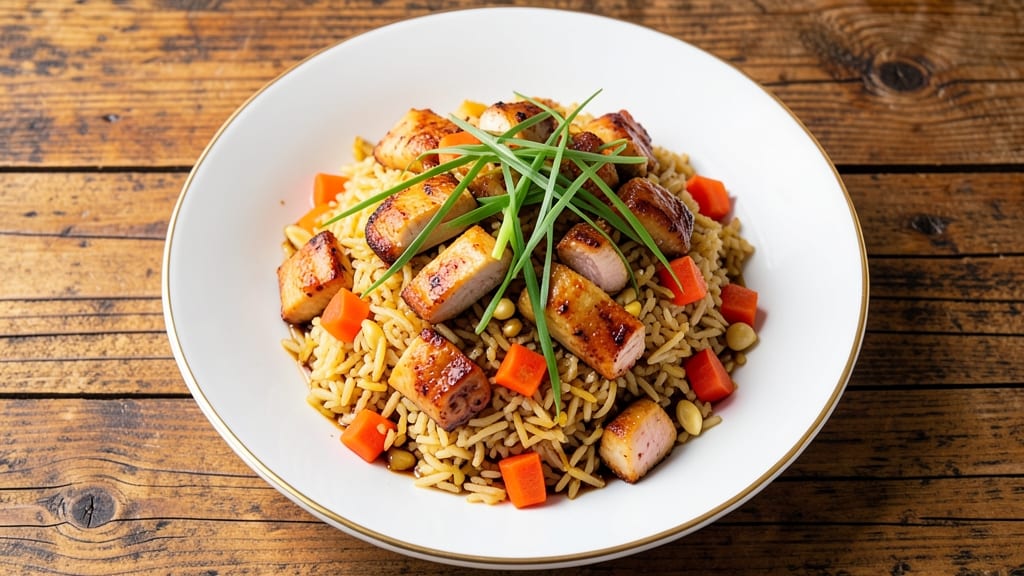
This Chinese basmati fried rice recipe transforms simple ingredients into a restaurant-worthy dish with crispy edges and aromatic garlic-scallion sparkle. The key lies in perfectly toasted basmati rice—chewy yet distinct—coated in a savory wok-tossed sauce that balances umami, garlic heat, and fresh scallions.
I developed this method after years of testing, ensuring every bite delivers that signature crunch and layered flavor.
What sets this apart is the two-step stir-fry technique: first searing proteins (scrambled eggs, chicken, or tofu) until golden, then tossing with pre-toasted rice and aromatics for maximum texture. The result?
A dish that’s foolproof yet professional, with a wok-hei finish that’s impossible to resist. Ready in under 30 minutes, it’s your new go-to for weeknight dinners or meal prep.
Ingredients for chinese basmati fried rice
Toasted basmati rice, crispy edges, and aromatic garlic-scallion sparkle—here’s what you’ll need for restaurant-quality fried rice.
| Ingredient | Amount | Notes |
|---|---|---|
| Basmati Rice 🍚 | 2 cups | Uncooked, long-grain variety |
| Large Eggs 🥚 | 4 whole | Freshly beaten for texture |
| Boneless Chicken Breast 🍗 | 1 lb | Diced into 0.5-inch pieces |
| Green Onions (Scallions) 🧅 | ½ cup | White and green parts, sliced |
| Garlic Cloves 🧄 | 4 cloves | Minced for aromatic base |
| Carrots 🥕 | ½ cup | Diced into small pieces |
| Peas 🌱 | ½ cup | Fresh or frozen, thawed |
| Soy Sauce 🍶 | ⅓ cup | Light or all-purpose variety |
| Sesame Oil 🫒 | 1 tbsp | Toasted for nutty aroma |
| Vegetable Oil 🫒 | 2 tbsp | High smoke point preferred |
| Ginger Root 🌿 | 1 tbsp | Freshly grated, peeled |
| Salt 🧂 | 1 tsp | Kosher or sea salt |
| Black Pepper 🌶️ | ½ tsp | Freshly ground preferred |
The basmati rice makes all the difference—look for long-grain varieties labeled as 'basmati' in the rice aisle. Lundberg or Uncle Ben’s are reliable brands, but any high-quality basmati works. Day-old rice is ideal for this recipe—it’s drier and absorbs the sauce better. If using fresh rice, spread it on a tray after cooking to dry it out for about 30 minutes. The chicken breast should be cut into even 0.5-inch pieces for consistent cooking, and boneless, skinless is best for simplicity. For extra flavor, marinate the chicken in a little soy sauce and sesame oil for 15 minutes before cooking.
No fresh ginger? Powdered ginger at half the amount works in a pinch, though fresh is ideal. The scallions can be swapped for regular green onions, but the white parts add more flavor—don’t skip them. Peas can be frozen (thawed first) or fresh, but avoid canned for texture. For the soy sauce, light or all-purpose varieties are best—avoid dark soy sauce, which can make the rice too bitter. Sesame oil is non-negotiable for that authentic nutty aroma, but use it sparingly—just a splash at the end. If you’re vegetarian, swap the chicken for extra-firm tofu pressed and cubed, or add mushrooms and bell peppers for extra texture.
Rice keeps best in an airtight container in the fridge for 3-4 days, though it’s best used within 2 days for optimal texture. Scallions and ginger stay fresh in the fridge for 5-7 days when wrapped in damp paper towels. For meal prep, cook the rice and proteins ahead, then reheat in a hot skillet with a splash of water to restore crispiness. The soy sauce and sesame oil can be pre-mixed and stored in a small jar for up to 1 week in the fridge, making assembly faster later.
Why You'll Love This Recipe
- One-Pan Magic: I swear by this for nights when I’d rather not scrub a million dishes—just toss everything into one hot pan. The chicken browns while the garlic sizzles, the eggs scramble into crispy little pockets, and the basmati soaks up all the flavor without needing a separate pot. (Yes, even on a Tuesday night.)
- Garlic Bomb Flavor: That first bite? Chef’s kiss. The garlic cloves get toasted until they’re fragrant and sweet, then chopped fine into the rice—no paste, no shortcuts. The eggs add richness, the scallions bring freshness, and the basmati’s nutty crunch ties it all together. Honestly, it’s the kind of dish that makes me want to call it dinner at 6:30 PM.
- Lunchbox Hero: Between us, this is my go-to for meal prep. Cook a big batch on Sunday, and I’ve got lunches for the week—just reheat and add a sprinkle of sesame seeds. The chicken stays juicy, the rice doesn’t turn mushy, and my kids actually eat it. (Not the prettiest, but the taste makes up for it.)
- Budget-Friendly Powerhouse: Basmati rice lasts forever, chicken breast stretches far, and eggs are always cheap. I can feed four people for under $10, and there’s almost always leftovers for another meal. Plus, it’s the kind of dish that feels fancy but won’t break the bank—perfect for when you want to impress without stressing.
Step-by-step instructions for Chinese basmati fried rice
Master the wok technique and aromatic balance for restaurant-quality fried rice every time.
Prepare the Chicken and Vegetables
Cut the 1 lb boneless chicken breast into ½-inch pieces using a sharp chef's knife. This even size ensures consistent cooking. In a separate bowl, combine the ½ cup diced carrots, ½ cup peas (thawed if frozen), ½ cup sliced green onions (scallions), 4 cloves minced garlic, and 1 tbsp freshly grated ginger root. Set aside—we'll add these sequentially for maximum texture contrast.
Here's the thing—proper prep makes all the difference. The chicken should be uniformly sized so it cooks through without drying out, while the vegetables need to be cut to similar dimensions so they all finish at the same time. I like to keep the scallions whole for their signature sparkle, but slice the white parts thinly so they soften properly.
Cook the Chicken Thoroughly
Heat 1 tablespoon vegetable oil in a wok or large skillet over medium-high heat until shimmering. Add the chicken pieces in a single layer and cook undisturbed for 2-3 minutes until the edges turn opaque. This initial sear locks in juices—don't move them yet.
Once the chicken releases easily from the pan (about 3-4 minutes total), remove it to a plate and set aside. The chicken should be fully cooked through with no pink remaining. If using frozen peas, make sure they're completely thawed before adding them later—frozen peas release moisture that can steam your rice instead of crisping it.
Scramble the Eggs Perfectly
In the same wok, add the remaining 1 tablespoon vegetable oil and swirl to coat. Pour in the 4 whole beaten eggs and let them sit undisturbed for 5-7 seconds until the edges begin to set. Then gently push the eggs from one side of the wok to the other using a spatula, creating soft curds.
Remove the eggs from the wok and set aside with the chicken. The eggs should be just set but still slightly runny in the center—this creates that signature silky texture in fried rice. If they look too dry, you've overcooked them. We'll incorporate them back at the end for maximum flavor integration.
Toast the Aromatics and Prepare the Rice
Return the wok to medium-high heat and add 1 tablespoon sesame oil. Add the ½ cup sliced green onions and 4 cloves minced garlic, stirring constantly for 30 seconds until fragrant. This quick toasting enhances their natural sweetness and aromatic depth.
Add the 2 cups uncooked basmati rice to the wok and stir for 1 minute to coat with the oil. Then pour in 0.33 cup soy sauce, 1 tbsp grated ginger root, 1 tsp salt, and ½ tsp black pepper. Stir vigorously for 2 minutes until the rice absorbs the flavors and begins to develop a golden crust in spots.
Wok-Toss to Perfection
Add the cooked chicken, peas, carrots, and scrambled eggs back to the wok. Increase heat to high and stir-fry vigorously for 4-5 minutes, using a spatula to toss the rice constantly. The goal is to develop a crispy texture on the edges while keeping the centers tender.
When the rice is hot and the edges are beginning to crisp (about 5-6 minutes total cooking time), drizzle with the remaining 1 tablespoon sesame oil and toss one final time. The rice should be evenly coated with a glossy sheen from the oil, indicating perfect moisture balance. Serve immediately while hot, garnished with extra scallions if desired.
Pro Tips For Making Chinese Basmati Fried Rice
- STIR-FRY COLD RICE: Use day-old basmati rice—it’s drier, separates easier, and toasts to perfect texture. Fresh rice sticks together like glue, no matter how much you stir.
- CUT CHICKEN SMALL: Slice boneless chicken breast into ½-inch cubes (or smaller) so it cooks fast and absorbs flavor. Thick strips turn rubbery before the rice is done.
- SALT THE EGGS: Crack eggs into a bowl first, then add a pinch of salt and a splash of water—this keeps yolks intact and makes them creamier when scrambled into the rice.
- GARLIC FIRST: Mince garlic extra fine (or crush cloves with the flat side of your knife) and cook it in oil for 10 seconds until fragrant before adding anything else—this builds flavor without burning.
Essential equipment for perfect results
Wok Essentials
Your carbon steel wok is non-negotiable for authentic texture—it conducts heat evenly and creates those signature crispy edges. I swear by a 14-inch wok from Made In or T-fal for home cooks; they’re affordable and durable.
If you don’t have a wok, a large, heavy-bottomed skillet (like All-Clad) works, but stir constantly to mimic wok heat distribution. 🔥
High-Heat Oil
Use high-smoke-point oils like avocado oil or refined peanut oil (both hit 400°F+) for stir-frying. Vegetable oil is fine in a pinch, but avoid olive oil—it burns easily and imparts a bitter taste.
I keep a small bottle of avocado oil in my pantry specifically for wok cooking. A 1-inch pool of oil in your wok is ideal for preventing sticking.
Heat Control Tools
A thermometer (like Thermoworks Smoke) helps maintain medium-high to high heat (around 375-450°F). For manual control, invest in a long-handled spatula (I love OXO Good Grips) and tongs to toss ingredients without burning yourself. A heat-resistant silicone spatula is also handy for scraping up stuck bits.
Knife and Cutting Board
A sharp chef’s knife (like Victorinox Fibrox) and cutting board are critical for even-sized ingredients. Dice chicken into ½-inch cubes and veggies into ¼-inch pieces for consistent cooking. I use a Japanese santoku knife for precision—it’s gentler on the wrist than a chef’s knife for repetitive cuts. 💪
Sesame Oil Dispenser
Sesame oil is potent—use a small squeeze bottle (like Glasslock) to control drizzling. A 1-tablespoon measure ensures you don’t overdo it; too much can make the dish taste bitter.
I keep mine in the fridge to preserve freshness and flavor. A toasted sesame oil (pre-toasted at the store) adds extra depth without extra effort.
Storage Containers
For meal prep, store fried rice in glass airtight containers (like Pyrex) to maintain crispiness. Plastic containers can trap moisture, making reheated rice soggy. Label with dates—fried rice tastes best within 2 days in the fridge.
For freezing, use quart-sized freezer bags with 1-inch headspace to prevent freezer burn. 🧊
Nutrition facts
Frequently asked questions
Why does basmati rice work better than jasmine for fried rice?
Basmati's long grains stay distinct and chewy when stir-fried, while jasmine tends to clump and turn mushy. The basmati's nutty aroma also pairs perfectly with the savory soy-ginger base. Plus, its slightly firmer texture holds up better to high-heat tossing without breaking down.
Can I use frozen peas instead of fresh?
Yes, but thaw them completely first and pat them dry with a paper towel. Frozen peas release excess moisture, which can make your rice soggy. For best results, use ½ cup thawed peas and add them with the other vegetables during the final stir-fry stage.
How do I fix fried rice that's too dry?
Add 1-2 tablespoons of water or chicken broth and toss vigorously over medium heat for 1-2 minutes. The residual heat will steam the rice slightly without making it mushy. For prevention, reduce the heat slightly during the final toss and use a splash of sesame oil to maintain moisture.
What's the secret to crispy edges without burning?
Work in batches if needed and keep your wok at high heat while tossing constantly. The key is developing a thin golden crust on the rice grains while keeping the centers tender. Use a long-handled spatula to lift and toss the rice aggressively—this creates the signature wok-hei texture.
Can I make this vegetarian?
Swap the chicken for extra-firm tofu (pressed and cubed) or add shitake mushrooms and bell peppers for extra texture. Keep the same cooking technique—sear the tofu first until golden, then proceed with the recipe. The egg component remains optional but adds great texture.