
Salads
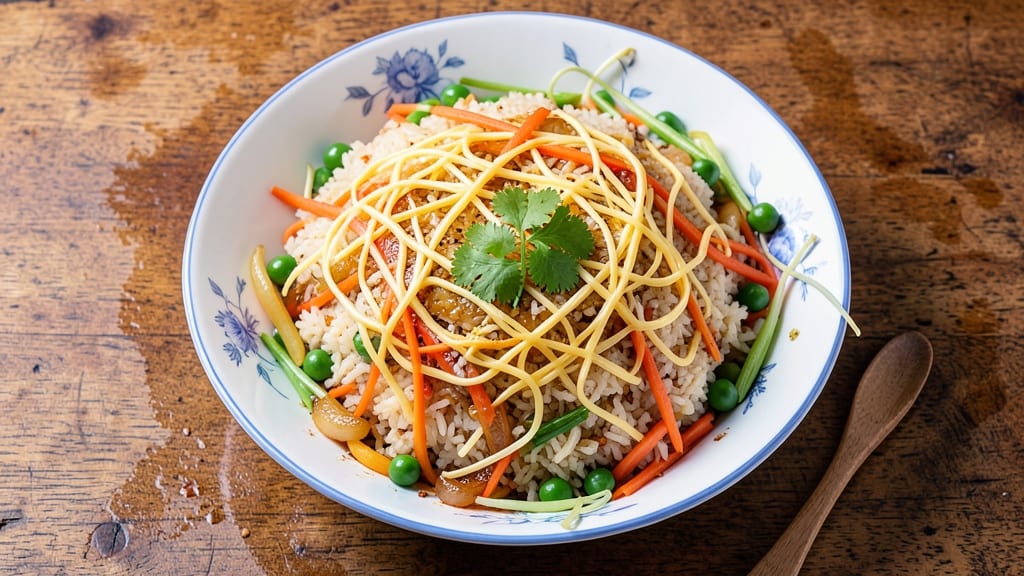
This Chinese vegetable fried rice with egg delivers the perfect balance of wok-tossed crunch and silky egg ribbons in every bite. The secret lies in high-heat stir-frying—achieving that signature wok hei (breath of the wok) aroma while keeping vegetables crisp-tender and eggs perfectly set.
I've refined this vegetarian version to use day-old rice, which absorbs flavors better and prevents mushiness.
What sets this recipe apart is the layered technique: first cooking the aromatics, then adding vegetables in stages based on their cooking times, and finally incorporating the egg just before tossing everything together.
The result is a dish where each ingredient—carrots, peas, bean sprouts, and scrambled egg—retains its distinct texture while harmonizing in flavor. Ready in 20 minutes, this fried rice is restaurant-quality without the fuss.
Ingredients for chinese vegetable fried rice recipe with egg
Day-old rice and fresh vegetables transform into restaurant-quality fried rice with just a wok and high heat.
| Ingredient | Amount | Notes |
|---|---|---|
| Day-Old Cooked White Rice 🍚 | 4 cups | Cold, unseasoned, medium-grain preferred |
| Large Eggs 🥚 | 4 whole | Room temperature for even cooking |
| Carrots 🥕 | 1 cup | Julienned, 1/4-inch thick strips |
| Green Peas 🌱 | ½ cup | Frozen works perfectly |
| Bean Sprouts 🌱 | 1 ½ cups | Fresh, trimmed and rinsed |
| Yellow Onion 🧅 | 1 whole | Thinly sliced, ~1/4-inch pieces |
| Garlic Cloves 🧄 | 4 cloves | Minced, ~1/4 teaspoon each |
| Vegetable Oil 🫒 | 2 tbsp | High smoke point preferred |
| Soy Sauce 🍶 | 2 tbsp | Light or regular, not low-sodium |
| Sesame Oil 🫒 | 1 tbsp | Toasted, for finishing |
| Salt 🧂 | ½ tsp | Diamond Crystal preferred |
| Black Pepper 🌶️ | ¼ tsp | Freshly ground for best flavor |
| Green Onions 🧅 | 3 whole | Thinly sliced, white and green parts |
The rice is non-negotiable—day-old works best as it absorbs flavors without turning mushy. Jasmine or basmati rice holds up better than long-grain white, but any cooked rice will do in a pinch. For the vegetables, fresh bean sprouts from the produce section (not canned) add that signature crunch. Carrots should be julienned evenly—1/4-inch strips cook just right. If using frozen peas, don't thaw them first—they'll release moisture and steam instead of crisping. The yellow onion needs to be sliced thinly; a mandoline makes this step effortless if you're prepping ahead. Garlic should be minced finely but not paste—freshly minced releases more flavor than pre-minced.
No sesame oil? Toasted peanut oil works in a bind, though it'll have a different aroma. Short on green onions? Scallions or chives at double the amount work, but the white part is essential for that classic fried rice flavor. The soy sauce can be swapped for tamari for gluten-free, but light soy has the right balance of salt and umami. For extra protein, add 1 cup of edamame or tofu cubes—they'll cook right along with the vegetables. If your wok isn't seasoned, heat the oil until it smokes for 30 seconds to create that wok hei aroma. And if you're using a nonstick skillet, work in batches to avoid overcrowding—the key to crisp-tender vegetables.
Rice keeps for 5-6 days in the fridge, making this an ideal make-ahead dish. Store cooked fried rice in an airtight container with a thin layer of oil on top to prevent drying. It reheats beautifully—just add a splash of water and toss in the wok over medium heat. For best texture, serve immediately after cooking, but if you need to hold it, keep it warm in a 200°F oven for up to 30 minutes. The egg component is best added fresh, so wait until serving if you're prepping components separately. This recipe scales easily—just double the vegetables and rice for a crowd of 8, keeping the same proportions.
Why You'll Love This Recipe
- One-Pan Magic: I swear by this recipe because it’s basically hands-off after the initial chop. Toss everything—rice, carrots, peas, sprouts—into one hot pan, scramble that egg right in, and let the wok hei (that smoky, charred flavor) do the work. No fancy gadgets, no stress.
- Crispy Egg Bliss: That first bite where the egg’s creamy yolk meets the slightly crispy edges? It’s the kind of texture combo that makes me pause mid-chew. The egg gets perfectly set without turning rubbery, and the veggies stay just tender enough—no mushy peas here.
- Leftover Hero: Between us, this dish begs to be made in bulk. The flavors only get better the next day (yes, even the carrots), and reheating it keeps that satisfying crunch. I’ve fed a crowd with one batch—just double the veggies and call it a day.
- Pantry Staple Power: Honestly, this recipe is my go-to when I’m low on ingredients. Day-old rice? Check. Frozen peas? Fine. A few eggs and a carrot? Done. It’s the ultimate “I’ve got nothing but basics” meal that still tastes like you put in effort. Budget-friendly? Absolutely.
Step-by-step instructions for wok-tossed vegetable fried rice
Master this classic technique for perfectly crisp rice and silky egg ribbons every time.
Prepare the Egg Mixture and Vegetables
Crack the 4 whole large eggs into a bowl and whisk vigorously until the yolks and whites are fully combined and the mixture turns pale yellow. This ensures tender, silky egg ribbons rather than scrambled texture. In a separate bowl, combine the 1 cup julienned carrots, 0.5 cup green peas, 1.5 cups trimmed bean sprouts, 1 whole thinly sliced yellow onion, and 4 cloves minced garlic. Set both mixtures aside while you heat your wok.
I recommend prepping all vegetables at once to maintain even cooking. The julienned carrots should be uniform ¼-inch strips for consistent texture, while the bean sprouts should be thoroughly rinsed to remove any dirt. This prep work ensures everything cooks simultaneously without overcrowding the wok later.
Create the Egg Ribbons
Heat a wok or large skillet over medium-high heat until it's smoking slightly. Add 2 tablespoons vegetable oil and swirl to coat the surface evenly. Pour in the egg mixture and let it sit undisturbed for 5-7 seconds until the edges begin to set. Using a spatula, gently push the cooked edges toward the center while tilting the wok to let uncooked egg flow to the edges. Continue this motion for 10-12 seconds until the eggs form delicate ribbons that are softly set but still slightly runny in the center. Remove and set aside.
This technique creates the signature silky egg texture. If the eggs cook too quickly, reduce the heat slightly. The ribbons should be just set enough to hold their shape when tossed with the rice but still tender enough to melt slightly when eaten. Any faster, and you'll get scrambled eggs instead of the delicate strands we want.
Stir-Fry the Vegetables
Add the remaining 2 tablespoons vegetable oil to the wok and increase heat to high. Add the prepared vegetable mixture and stir-fry for 2-3 minutes until the onions become translucent and the carrots begin to soften slightly. The high heat should create a sizzling sound, indicating proper cooking. Add 2 tablespoons soy sauce, 0.5 teaspoon salt, and 0.25 teaspoon black pepper, stirring constantly to coat the vegetables evenly.
This step develops the foundational flavors. The vegetables should remain slightly crisp-tender rather than fully cooked, as they'll continue cooking when combined with the rice. If the vegetables appear too dry, add 1 tablespoon water to steam them briefly. The soy sauce should be fully incorporated, creating a glossy coating on each vegetable piece.
Combine Rice and Finish
Add the 4 cups day-old cooked white rice to the wok and use a spatula to break up any large clumps. Stir-fry for 2-3 minutes on high heat, using quick, vigorous motions to prevent the rice from sticking. The rice should begin to develop a slightly crisp exterior while remaining tender inside. Add the egg ribbons back to the wok and toss everything together for 1-2 minutes until evenly distributed and heated through.
Here's where the magic happens: the residual heat from the wok creates a textural contrast between the crisp rice edges and silky egg ribbons. If the rice appears too dry, add 1-2 tablespoons water and continue stirring until absorbed. The dish should be hot throughout, with each bite offering a perfect balance of textures and flavors.
Finish with Aromatics and Garnish
Drizzle 1 tablespoon sesame oil over the fried rice and toss gently to distribute evenly. Add the 3 whole thinly sliced green onions and stir just until incorporated. Taste and adjust seasoning if needed—you may want to add an additional ½ teaspoon soy sauce for more umami depth. Transfer to serving plates immediately while still hot.
The sesame oil adds a nutty aroma that elevates the dish, while the green onions provide a fresh contrast to the savory fried rice. Serve immediately for the best texture and flavor. This dish tastes even better the next day as the flavors meld further, making it perfect for meal prep or leftovers.
Pro Tips For Making Chinese Vegetable Fried Rice Recipe With Egg
- Scramble Eggs First: I used to toss the eggs in with everything else, and they’d turn out rubbery—like sad, overcooked rubber bands. Instead, scramble the eggs in a separate pan until just set (soft curds, no gray centers), then push them to one side and let them sit for 10 seconds. That extra second keeps them creamy when they hit the rice.
- Cut Carrots Tiny: Big, chunky carrots turn to mush before the rice is done. Dice them into matchsticks—no bigger than ¼-inch—so they soften fast but still hold shape. Pro move: Soak them in ice water for 10 minutes first; they’ll stay crisp longer.
- Don’t Overcrowd the Wok: I learned this the hard way—dumping everything in at once makes the rice steam instead of sear. Work in batches: start with the rice, then add veggies in order of doneness (bean sprouts last, peas second, carrots first). A crowded pan = soggy rice.
- Use Cold Rice: Fresh rice is a disaster—it’ll turn gluey and gummy. Spread your day-old rice on a tray and refrigerate it for 30 minutes before using. Cold rice browns better and soaks up flavors like a sponge. (Yes, even if you’re impatient like me.)
Make-ahead tips for this chinese vegetable fried rice recipe with egg
Prep Ahead Essentials
Start by cooking and cooling 4 cups of white rice the night before—this is non-negotiable for perfect texture. Spread it on a tray to cool quickly and prevent clumping. Store in an airtight container in the fridge for up to 5 days.
I like to prep vegetables too: julienne 1 cup carrots and trim 1.5 cups bean sprouts while they're fresh, storing them separately in sealed containers. This saves 20 minutes on cooking day. 💡
Egg Prep Shortcut
Whisk the 4 eggs ahead of time and store them in the fridge for up to 12 hours—just whisk again before cooking. I keep the whisked eggs in a small glass jar with a tight lid.
For extra efficiency, mince the 4 garlic cloves and slice the 3 green onions in advance too. These components stay fresh and ready to go in the fridge for 3 days.
Flavor Boost Freezer Hack
Make a quick-pickled onion mixture by combining 1 thinly sliced yellow onion with 1 tbsp rice vinegar and ½ tsp sugar. Store in a sealed container in the freezer for up to 2 months.
When ready to cook, simply thaw and drain before adding to the wok. This adds bright acidity that cuts through the richness of the fried rice. 🌱
Reheating Like a Pro
For best results, reheat fried rice in the wok over medium heat with 1 tbsp water or oil per 2 cups rice. Stir constantly for 3-4 minutes until heated through. If using the microwave, cover with a damp paper towel and heat in 1-minute intervals on 70% power.
The key is moisture—add a splash of water if it looks dry. I find reheated fried rice tastes even better the next day! ⏰
Component Assembly
For meal prep, cook the vegetables and rice separately, then store them in individual containers. When ready to serve, simply reheat the rice and vegetables together in the wok, then add the freshly cooked egg ribbons.
This keeps the egg component silky and prevents sogginess. I also like to portion the sesame oil separately and drizzle it on just before serving to maintain that fresh aroma. 🍚
Nutrition facts
Frequently asked questions
Why does the recipe specify day-old rice?
Freshly cooked rice is too moist and turns mushy when stir-fried. Day-old rice has firmer grains that absorb flavors better and develop slight crispness at the edges when wok-tossed. For best results, spread cooked rice on a tray to cool quickly and store in an airtight container for up to 5 days.
Can I substitute frozen vegetables?
Yes, but with adjustments! Use frozen peas and carrots straight from the freezer—they'll release moisture that helps steam the rice slightly. Drain and pat dry thoroughly before adding to the wok. Skip frozen bean sprouts (they're waterlogged) and fresh ones instead. For extra crispness, stir-fry frozen veggies for 1-2 minutes longer than fresh.
How do I get silky egg ribbons instead of scrambled eggs?
Whisk eggs until completely smooth, then cook on medium-high heat without stirring for the first 5-7 seconds. Let the edges set slightly before gently tilting the wok to create ribbons. The key is patience—if you stir too soon, you'll get scrambled texture. Remove eggs when they're 80% cooked (soft center) to finish with the rice.
What if my wok isn't hot enough?
If your wok isn't smoking when you add oil, increase heat to high and let it preheat for 2-3 minutes longer. A cold wok causes steaming instead of proper searing. For non-wok pans, use a heavy-bottomed skillet and work in batches—overcrowding lowers heat and makes everything soggy. The rice should sizzle when added.
Can I make this gluten-free?
Swap regular soy sauce for tamari or coconut aminos (use same amount). For extra umami, add 1 teaspoon gluten-free fish sauce or ½ teaspoon MSG. Check all ingredients (like sesame oil) for gluten cross-contamination warnings if needed. The flavor remains rich and savory without soy sauce.