
Main Courses
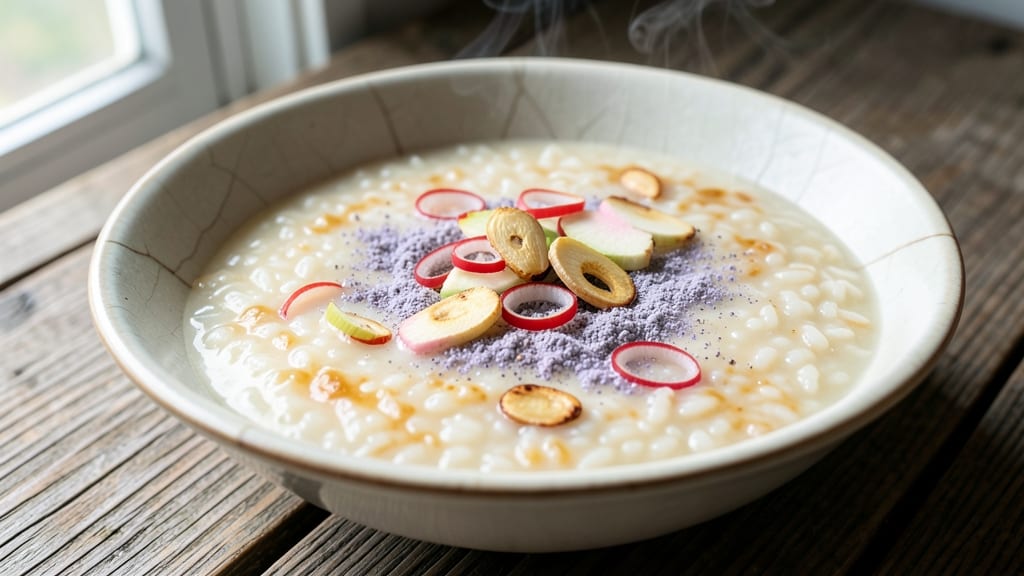
This Chinese rice congee recipe transforms simple ingredients into a silky, fragrant porridge that's both comforting and deeply flavorful. The secret lies in slow-cooked jasmine rice and a carefully balanced five-spice blend that infuses every spoonful with warmth.
I've perfected this version through years of testing—it's the one my family requests when we need something nourishing yet elegant.
The beauty of congee is its versatility—this recipe delivers a savory base that absorbs any toppings you choose, from crispy fried shallots to soft-boiled eggs. Traditional methods require patience, but modern adaptations (like pressure cookers) cut preparation time significantly.
What you'll achieve is a dish that's equally at home as a light breakfast or a healing meal, with a texture that's impossibly tender and a depth of flavor from the aromatic spices.
Perfectly cooked congee has a delicate, almost translucent quality with just a hint of chewiness from the rice grains. The five-spice powder creates layers of complexity—warm cinnamon, earthy fennel, and subtle pepper notes that linger beautifully.
This version maintains authenticity while being approachable for home cooks, with clear techniques that ensure silky results every time.
Whether you're preparing it for a family gathering or a quiet morning meal, this congee serves as both a canvas for creativity and a testament to Chinese culinary tradition.
The recipe includes options for customization—sweet versions with red dates, hearty versions with pork, or vegetarian adaptations with mushrooms and tofu. Let's create something truly nourishing together.
Ingredients for chinese rice congee
Jasmine rice and aromatic spices transform simple ingredients into a fragrant, silky porridge with five-spice depth.
| Ingredient | Amount | Notes |
|---|---|---|
| Jasmine Rice 🍚 | 1 cup | Uncooked, long-grain preferred |
| Water 💧 | 8 cups | Filtered preferred for clarity |
| Five-Spice Powder 🌶️ | 1 tbsp | Authentic blend for depth |
| Fresh Ginger 🧄 | ½ inch | Thinly sliced, peeled |
| Shallots 🧅 | 2 whole | Minced, for aromatic base |
| Garlic Cloves 🧄 | 3 cloves | Minced, for aromatic depth |
| Light Soy Sauce 🥢 | 1 tbsp | For umami balance |
| Sesame Oil 🫒 | 1 tsp | Toasted, for finishing |
| Salt 🧂 | ½ tsp | Diamond Crystal preferred |
| Optional Toppings 🍳 | ½ cup | Crispy fried shallots or soft-boiled eggs |
| Scallions 🧅 | 3 whole | Thinly sliced, for garnish |
The jasmine rice is the foundation—Thai or Calrose varieties work best for their delicate aroma and silky texture. Look for freshly milled rice at Asian markets for optimal flavor. The five-spice powder should be a balanced blend with cinnamon, fennel, cloves, star anise, and pepper—Penzeys or King of Spices carry authentic versions. Fresh ginger and shallots are non-negotiable for the aromatic base; organic ginger from the produce section ensures maximum zing. For the soy sauce, Kikkoman Light is reliable, but Japanese light soy from specialty stores adds more complexity. The sesame oil should be toasted—look for the dark amber bottles in the international aisle.
No five-spice powder? Create your own blend with 2 parts cinnamon, 1 part fennel seeds, 1 part cloves, 1 part star anise, and 1 part black pepper—all toasted and ground. Substitute the ginger with 1/2 teaspoon ground ginger, though fresh is ideal. For the shallots, red onion works in a pinch, but it lacks the sweetness. The toppings are entirely customizable—crispy fried shallots from Asian markets add crunch, while soft-boiled eggs provide protein. If you're vegetarian, marinated tofu or mushrooms work beautifully. The scallions should be fresh—dried won't cut it for garnish.
Congee reheats beautifully—simmer gently on low heat to maintain its delicate texture. Store leftovers in the fridge for 4-5 days in an airtight container, or freeze for up to 3 months in portion-sized containers. To serve, simply reheat with a splash of water and top with your chosen garnishes. The rice will naturally absorb flavors, so adding toppings just before serving ensures maximum freshness and texture contrast.
Why You'll Love This Recipe
- No-Fuss Simmer: I swear by this—just rice, water, and a pinch of five-spice. The pot does all the work while I sip tea and scroll through my phone. Honestly, that’s my kind of cooking.
- Warm Spice Magic: That five-spice powder? It’s the secret weapon. Earthy, slightly sweet, with a hint of cinnamon—it transforms plain rice into something deeply comforting. The ginger and shallots add a bright, aromatic kick that lingers.
- Meal Prep Hero: Make a big batch on Sunday, and you’ve got breakfast, lunch, or dinner covered all week. Reheat it, top it with an egg or crispy shallots, and boom—different meal every time. (Yes, even on a Tuesday night.)
- Budget Comfort Food: Jasmine rice and water? Cheaper than takeout, and way more satisfying. The leftovers keep beautifully for days, so I’m never scrambling for ideas. Plus, it’s the kind of dish that makes my wallet and my stomach happy.
Step-by-step instructions for silky Chinese rice congee
Transform simple ingredients into velvety congee with this precise method.
Prepare the Aromatic Base
In a heavy-bottomed pot, combine the 8 cups water with the 1 cup jasmine rice. Bring to a boil over medium-high heat, then immediately reduce to a gentle simmer. This initial boiling helps break down the rice starches for that signature silky texture.
While the water heats, finely mince the 2 whole shallots and 3 cloves garlic. Thinly slice the 0.5 inch fresh ginger into matchsticks. Once the rice mixture reaches a rolling boil, add these aromatics along with the 1 tbsp five-spice powder and 0.5 tsp salt. Stir once to distribute the spices evenly—this ensures balanced flavor throughout the congee.
Simmer for Maximum Texture Development
After adding the aromatics, immediately reduce the heat to low and maintain a gentle simmer. Here's the critical part: do not stir during the first 30 minutes of cooking. The undisturbed surface allows the rice starches to gradually release and create that signature creamy consistency.
After 30 minutes, gently stir the congee every 15-20 minutes to prevent sticking. The cooking process will take 1.5 to 2 hours total—you'll know it's ready when the rice has completely broken down into a thick, pudding-like consistency. The congee should coat the back of a spoon but still be loose enough to pour.
Build Umami and Finish with Sesame Oil
When the congee reaches a thick, creamy texture, stir in the 1 tbsp light soy sauce and 1 tsp sesame oil. The soy sauce adds essential umami depth while balancing the five-spice complexity. The sesame oil, added at the end, provides a delicate nutty aroma that enhances every spoonful.
Taste and adjust seasoning—you may need an additional pinch of salt or more soy sauce depending on your preference. The congee should be subtly sweet from the rice, with a warm spice profile and savory depth from the aromatics.
Serve with Fresh Garnishes
Ladle the hot congee into serving bowls. Thinly slice the 3 whole scallions and sprinkle them over the top for freshness and visual appeal. For extra texture, add the 0.5 cup optional toppings—crispy fried shallots add crunch while soft-boiled eggs provide protein contrast.
Serve immediately while hot. The congee should be thick enough to coat a spoon but still smooth enough to sip. Each bite should deliver the delicate rice flavor, warm spice notes, and balanced umami—perfect for both comfort meals and special occasions.
Pro Tips For Making Chinese Rice Congee
- STIR CONSTANTLY FIRST 15 MINUTES: The first half-hour is when your congee makes or breaks—skip stirring and you’ll end up with a lumpy, uneven mess. I used to think once it boiled, I could relax, but that’s when the rice clumps like glue. Keep that spoon moving, especially after the water returns to a simmer, to break up any rice grains before they turn into gummy blobs.
- USE COLD WATER FOR RICE: Hot water might seem obvious, but cold water actually works better for congee—it hydrates the rice more evenly and prevents a sudden, violent boil that can scorch the bottom. I learned this the hard way after burning my first batch; now I fill the pot with cold water, bring it to a boil, then add the rice. No more burnt bits at the bottom.
- TOAST SHALLOTS UNTIL GOLDEN: Raw shallots will just dissolve into the congee, leaving you with no flavor payoff. Instead, fry them in a dry pan until they’re deep golden and fragrant—about 5-7 minutes on medium heat. That’s the difference between a bland base and a dish that actually tastes like it has depth. (Yes, even if you’re impatient like me.)
- ADD FIVE-SPICE GRADUALLY: Dumping all the five-spice powder at once can make your congee taste bitter or overly sharp. Start with half the amount, stir it in, and let the congee simmer for 10 minutes before adding the rest. This lets the spices bloom without overpowering the delicate rice texture. I was skeptical until I tried it—now I can’t go back.
Creative variations of chinese rice congee
Sweet Red Date Version
Transform your savory congee into a comforting dessert by adding ½ cup dried red dates (soaked in hot water for 20 minutes) and 1 tbsp lotus seed paste during the final 15 minutes of cooking.
The dates caramelize beautifully, creating a naturally sweet porridge that's perfect for breakfast or dessert. I like to top it with toasted coconut flakes and a drizzle of honey for extra richness. 🌱
Pork and Century Egg
For a classic Cantonese-style congee, add ½ lb braised pork belly (shredded) and 2 century eggs (halved) during the last 10 minutes of cooking. The pork belly adds luxurious fat while the century eggs bring that signature creamy, salty-sweet contrast.
Garnish with pickled mustard greens for tangy brightness. This version is especially popular during Chinese New Year celebrations.
Vegetarian Mushroom Medley
Create a hearty vegetarian version by sautéing 1 cup shiitake mushrooms and ½ cup enoki mushrooms in 1 tsp sesame oil until tender, then adding them to the congee during the final 20 minutes.
Stir in 1 tbsp vegetarian oyster sauce and 1 tsp white pepper for depth. Top with crispy fried tofu and fresh cilantro for texture and freshness. This version is equally satisfying and packed with umami.
Winter Ginger-Turmeric
Boost the healing properties of your congee by adding 1 extra inch fresh ginger (thinly sliced) and ½ tsp turmeric powder during the cooking process. This variation is especially popular in winter when it's believed to help with circulation and digestion.
The turmeric adds a beautiful golden hue and earthy warmth that pairs perfectly with the five-spice blend. I often serve this version with a side of steamed bok choy for a complete meal. ✨
Spicy Chili Oil Kick
For a bold, spicy variation, stir 1 tbsp chili oil into the finished congee and garnish with crispy fried shallots and thinly sliced scallions. The chili oil adds a smoky, fiery dimension that cuts through the richness of the porridge.
I recommend using Lao Gan Ma chili crisp for that perfect balance of heat and crunch. This version is a favorite in Sichuan-style homes and pairs wonderfully with a side of steamed dumplings.
Coconut Milk Tropical Twist
Give your congee a tropical makeover by stirring in ½ cup coconut milk during the final 10 minutes of cooking. The coconut milk adds a creamy texture and subtle sweetness that complements the five-spice blend beautifully.
Garnish with toasted coconut flakes and lime zest for a refreshing contrast. This variation works especially well for brunch or as a light lunch option. 🥥
Nutrition facts
Frequently asked questions
Can I make congee with any rice type?
Jasmine rice is ideal for its delicate aroma and silky texture, but you can use short-grain white rice in a pinch. Avoid long-grain varieties like basmati—they won't break down properly. For extra richness, some cooks blend 10% glutinous rice into the mix, which adds natural sweetness and creaminess.
Why does my congee turn out too thin or too thick?
Texture depends on rice-to-water ratio and cooking time. For thicker congee, reduce water by 1 cup or cook 10 minutes longer. For thinner congee, add ½ cup water during cooking. The key is patience—rushing never yields silky results. Stirring too early also prevents proper starch release.
How do I make congee faster without a pressure cooker?
Use a heavy-bottomed pot with double the rice (2 cups) and 16 cups water. Simmer uncovered on low heat for 1 hour, stirring occasionally. The extra rice breaks down faster, creating a thicker base in half the time. For best results, use pre-soaked rice (30 minutes) to jumpstart starch release.
What's the best way to reheat congee?
Gently reheat on low heat with 1-2 tbsp water to prevent drying. Avoid microwaving—it creates a gummy texture. For extra creaminess, stir in 1 tsp coconut milk or a splash of chicken broth while warming. The congee should remain smooth and velvety, not rubbery.
Can I make congee ahead of time?
Yes! Congee reheats beautifully. Store cooked congee in an airtight container in the fridge for 4-5 days or freeze for 3 months. To serve, reheat with 1 tbsp water per cup until steaming. For best texture, add toppings fresh—this prevents sogginess. The longer it sits, the more the rice absorbs flavors, so it actually tastes better the next day!